• When the silhouette of a pedestrian or bicycle is unclear (such as when they are
wearing a raincoat, long skirt, etc.)
• When a pedestrian or bicycle is bending forward or squatting
• When a pedestrian or bicycle is moving at high speed
• When a pedestrian is pushing a stroller, wheelchair, bicycle or other vehicle
• When a detectable object blends in with the surrounding area, such as when it is
dim (at dawn or dusk) or dark (at night or in a tunnel)
• When the vehicle has not been driven for a certain amount of time after the hybrid
system was started
•
While turning left/right or a few seconds after turning left/right
•
While driving around a curve and a few seconds after driving around a curve
•
When turning left/right and an oncoming vehicle is driving in a lane 3 or more lanes
from the vehicle
•
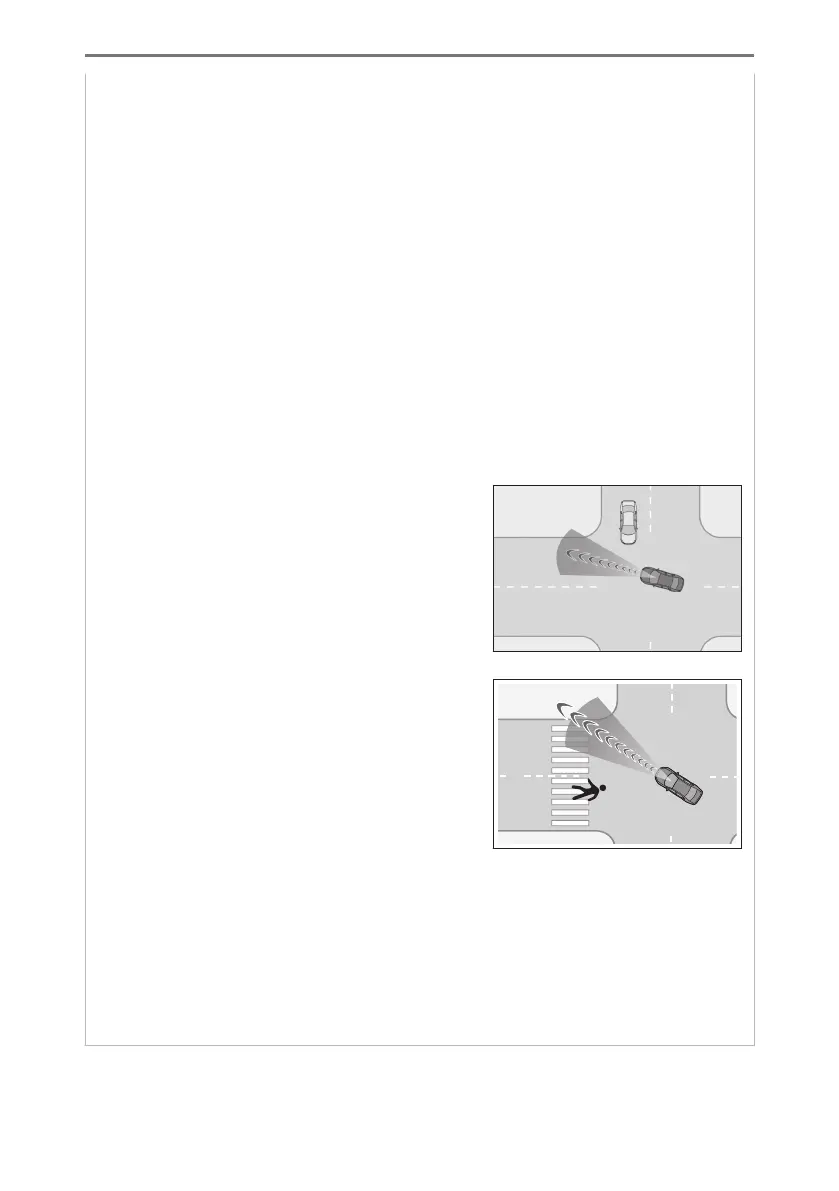
When turning left/right and the direction of the
vehicle differs greatly from the direction traffic
flows in the oncoming lane
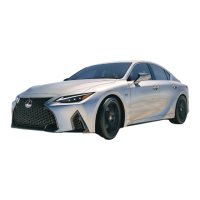
• When turning left/right and approaching a pe-
destrian which was traveling in the same direc-
tion as the vehicle and continues straight
● In addition to the preceding, in certain situations, such as the following, the emergency
steering assist may not operate properly:
• When a detectable object is too close to the vehicle
• When there is insufficient space to perform evasive steering maneuvers or an
obstruction exists in the evasion direction
• When there is an oncoming vehicle
6-2. Using the safe driving support functions
406



 To Next Page