EasyManua.ls Logo

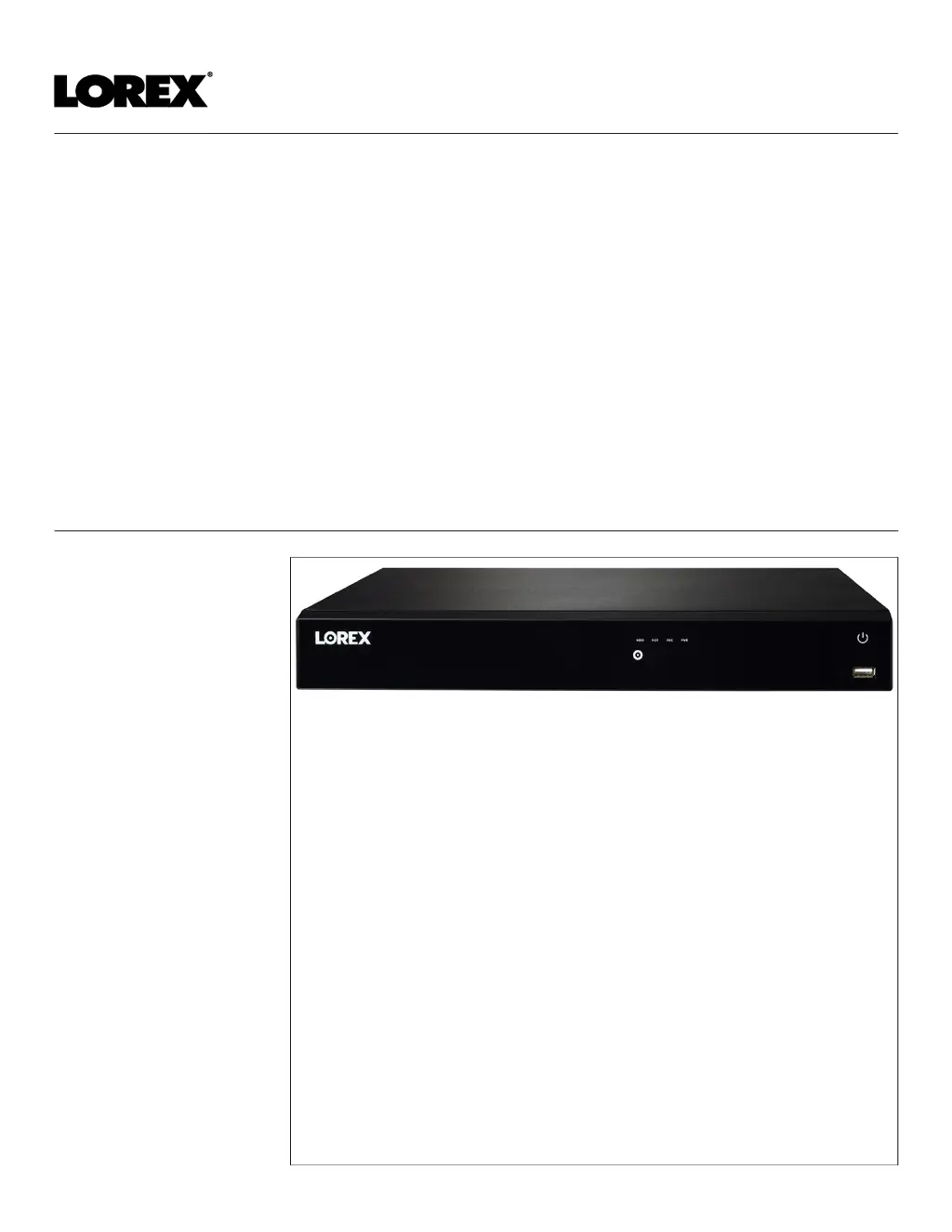
Lorex N861 Series - User Manual

Lorex N861 Series
138 pages
Print Icon
To Next Page IconTo Next Page
Loading...
User Manual
N861 Series

Table of Contents

Questions and Answers

  • T
    Teresa CraigJul 27, 2025
    What to do if there is no picture on my Lorex Network Hardware monitor/TV?
    • D
      Debbie PooleJul 27, 2025
      If you're not seeing a picture after connecting your monitor/TV to the Lorex Network Hardware system, first power off both the monitor/TV and the system. Then, power on the monitor/TV, followed by the system. Also ensure that you have selected the correct input channel on your monitor/TV to which the system is connected. Check that the video cable is securely connected to both the system and the monitor/TV.
  • A
    Andrew GonzalezAug 1, 2025
    Why is my Lorex Network Hardware system not receiving power?
    • S
      Samantha SimmonsAug 1, 2025
      If your Lorex Network Hardware system isn't powering up, check that the power adapter cable is securely connected to the back of the unit and to the power outlet. Confirm that the system is powered on by checking for lit LED indicators on the front. If connected to a power bar or surge protector, try plugging directly into the wall outlet. Test the outlet with another device to ensure it's providing power.
  • W
    wonggarrettAug 5, 2025
    What to do if my Lorex Network Hardware mouse is not detected?
    • M
      Melanie LoweryAug 5, 2025
      If the mouse isn't detected by your Lorex Network Hardware system, ensure the mouse cable is firmly connected to a USB port. If that doesn't work, power off the system by disconnecting the power cable, then firmly connect the USB mouse to a USB port. Reconnect the power cable to the DC 12V port on the rear panel to power the system back on.
  • L
    Lori DawsonAug 9, 2025
    What to do if my Lorex Network Hardware hard drive is not detected?
    • R
      Robert FrancoAug 9, 2025
      If the hard drive isn't being detected by your Lorex Network Hardware system, start by removing the housing and checking that the hard drive cables are firmly connected. If there is no hard drive, open the housing and install a compatible hard drive. Make sure to format the drive after installing.
  • R
    Richard HughesAug 13, 2025
    Why am I not receiving email notifications from my Lorex Network Hardware?
    • R
      ricardoandersonAug 14, 2025
      If you are not receiving email notifications from your Lorex Network Hardware, first ensure you have configured email notification. Also, make sure that 'Send Email' is checked for the specific events you want to receive notifications for.
  • C
    Carolyn SmithAug 18, 2025
    What to do if there is no picture on selected Lorex Network Hardware channels?
    • D
      dianefrancisAug 18, 2025
      If you're not seeing a picture on selected channels or a camera picture isn't being displayed on your Lorex Network Hardware, check the camera video cable and connections. Disconnect and reconnect the cable at both the system and the camera. Try moving the camera to another channel or using a different cable. If that doesn't work, visit lorex.com/compatibility and navigate to N861 Series for a list of all compatible cameras. If you have multiple PTZ cameras connected to the recorder’s PoE ports, the camera power requirement may surpass the recorder’s power output. Lorex PTZ cameras come with a power adapter, which you can use to power the camera instead of the recorder’s PoE ports.
  • P
    Phyllis FreemanAug 22, 2025
    How to stop the beeping during motion detection on Lorex Network Hardware?
    • M
      melissaochoaAug 22, 2025
      To stop the system from beeping during motion detection on your Lorex Network Hardware, uncheck the Buzzer option in the motion detection configuration screen.

Summary

Important Safeguards

General Precautions

Covers essential safety advice for operating the product, including handling, cleaning, and environmental considerations.

Basic System Setup

STEP 1: Connect cameras

Guides through the initial connection of cameras to the NVR for setup verification.

STEP 2: Connect router

Explains how to connect the recorder to your router for network access and updates.

STEP 3: Connect mouse

Instructs on connecting the USB mouse for system navigation.

STEP 4: Connect monitor

Details how to connect a monitor to the recorder for viewing the system interface.

STEP 5: Connect power

Guides on connecting the power adapter and powering up the recorder.

STEP 6: Upgrade Firmware to Latest Version (If Available)

Explains how to upgrade the system firmware for enhanced functionality and connectivity.

Connecting Cameras to the Local Area Network (LAN)

Details connecting IP cameras via a local network for flexible installation options.

Recording

Configuring Recording Quality

Details how to customize video stream quality settings for Main and Sub Streams.

Setting the Recording Schedule

Explains how to create a custom recording schedule for continuous or event-based recording.

Configuring Hard Drive Overwrite

Details settings for managing hard drive space by overwriting old recordings.

Playback

Playing Back Video from the Hard Drive

Guides on how to search and play back recorded video files stored on the system's hard drive.

Motion Detection

Configuring Motion Detection

Details how to set up and configure motion detection preferences for each camera.

Active Deterrence

Automatic Deterrence Settings

Guides on configuring automatic triggering of warning lights and sirens based on motion.

Manually Activate Deterrence Features

Explains how to manually trigger deterrence features like warning lights and sirens.

Smart Motion Detection

Configuring Person & Vehicle Detection

Details how to set up smart detection for people and vehicles on compatible cameras.

Searching for Person & Vehicle Detection Events (Smart Search)

Guides on using the Smart Search feature to filter and find specific detection events.

Managing Passwords and User Accounts

Changing Passwords

Provides instructions for modifying the passwords for administrator and user accounts.

Using the Main Menu

Upgrading Camera Firmware

Explains the process for updating firmware on connected IP cameras through the NVR.

Selecting DHCP or Static IP Address (TCP;IP)

Guides on configuring IP address settings for network connectivity.

Configuring System Ports (Connection)

Details how to configure system ports for remote connectivity and port forwarding.

Configuring IP Filter

Explains how to configure permissions for external IP addresses accessing the unit.

Configuring Email Alerts

Guides on setting up the system to send email alerts for various events.

Configuring Video Loss Settings

Details how the system reacts to video loss events and how to configure related settings.

Configuring Hard Drive Warnings

Explains how to set up notifications for hard drive issues like errors or fullness.

Configuring Network Warnings

Guides on configuring alerts for network connection loss or IP/MAC conflicts.

Configuring Fan Warnings

Details how to set up alerts for issues with the system's cooling fan.

Configuring Alarm Input Devices

Explains how to connect and configure external alarm input devices like sensors.

Controlling Alarm Output Devices

Guides on enabling, disabling, and manually activating alarm output devices like sirens.

Formatting the Hard Drive

Provides instructions for formatting the hard drive to erase all saved data.

Configuring General System Settings

Explains how to configure miscellaneous system-wide settings like language and video standard.

Setting the Monitor Resolution (Display)

Guides on configuring the system's monitor resolution and other display settings.

Configuring Sequence Mode

Details how to set up sequence mode for cycling through camera views automatically.

Upgrading Firmware Manually

Details the process for manually upgrading system firmware using a USB thumb drive.

Automatic Firmware Upgrades

Explains how the system automatically checks for and installs firmware updates.

Pan;Tilt;Zoom (PTZ) Cameras

Connecting PTZ Cameras to the Recorder

Details how to connect PTZ cameras to the recorder using Ethernet cables.

DDNS Setup (Advanced)

STEP 1: Port Forwarding

Explains the necessity of port forwarding for DDNS connectivity.

STEP 2: Create a Lorex Account

Guides on creating a Lorex account for system management and warranty activation.

STEP 5: Enable DDNS on the Recorder

Explains how to configure the recorder with DDNS information for remote access.

Troubleshooting

Lorex N861 Series Specifications

General IconGeneral
SeriesN861 Series
TypeNetwork Video Recorder (NVR)
Operating SystemEmbedded Linux
Video CompressionH.265, H.264
Network ProtocolsTCP/IP, DHCP, DNS, DDNS, SMTP, UPnP
Remote ViewingLorex Home App (iOS & Android)
Network Interface1 Ethernet port
Audio Input/Output1 audio input, 1 audio output
Operating Temperature-10°C to 55°C (14°F to 131°F)

Related product manuals