EasyManua.ls Logo

marposs E20N - User Manual

Default Icon
16 pages
Print Icon
To Next Page IconTo Next Page
Loading...
Manual code No. D2200004UA
Operator’s Manual
E20
E20E20
E20
N
NN
N
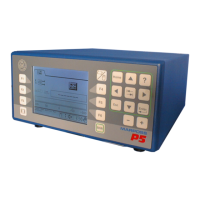
GRINDER ACOUSTIC CONTROLLER

Other manuals for marposs E20N

Question and Answer IconNeed help?

Do you have a question about the marposs E20N and is the answer not in the manual?

Summary

RoHS Directive Information

Marposs Commitment to RoHS

Marposs supports product quality and environmental protection by voluntarily removing regulated substances.

Preface

Operator Target and Maintenance Warning

Manual is for machine operators; maintenance requires authorized personnel.

E20 N Configuration and Front Panel

E20 N Configuration Types

Describes E20N connectivity for GAP and CRASH control with one or two microphones.

Front Panel Diagrams

Illustrates the front panel layout for different E20N configurations (1 GAP, 1 CRASH, 2 GAP, GAP+CRASH).

Front Panel Elements Description

Explains the function of LEDs, controls, and keys on the E20N front panel.

GAP Control Programming

Background Noise Characteristics

Defines background noise as a characteristic of the application and its types (stable/variable).

Stable Background Noise Programming

Procedure for programming GAP control with stable, repetitive background noise using fixed gain control.

Variable Background Noise Programming

Procedure for programming GAP control with variable background noise using automatic gain control.

CRASH Control Programming

Programming Procedure

Steps to set sensitivity for CRASH control, simulating conditions and adjusting the threshold.

Troubleshooting and Maintenance

Alarm Conditions and Operations

Details alarm conditions for cable continuity and microphone efficiency, with operations to be carried out.

Ordinary Maintenance Procedures

Includes cleaning the electronic unit and contactless microphone with specific instructions.

Extraordinary Maintenance Warning

Highlights that all special maintenance operations must be performed by authorized personnel.

Summary

RoHS Directive Information

Marposs Commitment to RoHS

Marposs supports product quality and environmental protection by voluntarily removing regulated substances.

Preface

Operator Target and Maintenance Warning

Manual is for machine operators; maintenance requires authorized personnel.

E20 N Configuration and Front Panel

E20 N Configuration Types

Describes E20N connectivity for GAP and CRASH control with one or two microphones.

Front Panel Diagrams

Illustrates the front panel layout for different E20N configurations (1 GAP, 1 CRASH, 2 GAP, GAP+CRASH).

Front Panel Elements Description

Explains the function of LEDs, controls, and keys on the E20N front panel.

GAP Control Programming

Background Noise Characteristics

Defines background noise as a characteristic of the application and its types (stable/variable).

Stable Background Noise Programming

Procedure for programming GAP control with stable, repetitive background noise using fixed gain control.

Variable Background Noise Programming

Procedure for programming GAP control with variable background noise using automatic gain control.

CRASH Control Programming

Programming Procedure

Steps to set sensitivity for CRASH control, simulating conditions and adjusting the threshold.

Troubleshooting and Maintenance

Alarm Conditions and Operations

Details alarm conditions for cable continuity and microphone efficiency, with operations to be carried out.

Ordinary Maintenance Procedures

Includes cleaning the electronic unit and contactless microphone with specific instructions.

Extraordinary Maintenance Warning

Highlights that all special maintenance operations must be performed by authorized personnel.

Overview

The E20N is a Grinder Acoustic Controller manufactured by Marposs S.p.A. It is designed for industrial applications and is not intended for connections to a public mains network. Instead, it connects to a power network supplied from a high or medium voltage transformer. The device conforms to EMC directive 2004/108/CE and Electrical Safety directive 73/23/CEE, with manufacturing in accordance with EN 61010-1 specifications. The manual, code D2200004UA, was issued in September 1995 and updated in January 2006. Marposs S.p.A. is located at Via Saliceto 13, Bentivoglio (BO), Italia, and their website is www.marposs.com.

Marposs S.p.A. emphasizes its commitment to social responsibility and environmental protection by voluntarily pursuing the progressive removal of regulated substances from its products, aligning with the Directive 2002/95/EC "RoHS." This initiative aims to reduce environmental risk without compromising product quality and reliability.

The E20N is primarily operated by machine operators whose tasks include checking the system's correct operation through machine logic signals and making adjustments to optimize programming and intervention times for production. All servicing and special maintenance operations must be performed by authorized personnel to maintain warranty validity.

Function Description:

The E20N Grinder Acoustic Controller is designed to monitor and control grinding processes by detecting ultrasonic sound. It offers two primary control functions: GAP control and CRASH control.

  • GAP Control: This function manages the grinding cycle by defining an appropriate ultrasonic limit value. This limit is empirically determined based on the application's characteristics, specifically the background noise. The system detects the sound generated by the grinding wheel, typically spinning at rest with the coolant off, to establish a baseline.
  • CRASH Control: This acts as an ALARM signal, triggered when the grinding wheel collides with the workpiece or other machine parts due to malfunction or incorrect programming.

Configurations:

The E20N is available in several configurations:

  • E20N with one GAP channel: Connected to a single microphone for GAP control.
  • E20N with one CRASH channel: Connected to a single microphone for CRASH control.
  • E20N with two GAP channels in switching: Can be connected to one or two microphones for GAP control, with two independent and switching channels. If two microphones are used, each channel is assigned to a specific microphone. Only one channel is active at a time, with channel 1 automatically selected upon power-on.
  • E20N with one GAP channel + one CRASH channel: Connected to one or two microphones for both GAP and CRASH control. Channel 1 is typically for GAP control, and Channel 2 for CRASH control. If two microphones are used, each channel is connected to a given microphone, and both channels are active simultaneously.

Important Technical Specifications:

  • Manual Code: D2200004UA
  • Compliance: EMC 2004/108/CE, Electrical Safety 73/23/CEE, EN 61010-1
  • Power Source: Industrial power network (high or medium voltage transformer)
  • Background Noise Acquisition Time (for variable gain control): 250 ms

Usage Features:

The E20N features a front panel with several elements for operation and programming:

  • LED Bargraph Scale (A): A 20-segment LED display visualizes the sound detected by the microphone. The scale's color changes from 6.5, indicating the command's triggering point.
  • LEDs for Channel Selection (A1, A2): A1 indicates channel 1 selection, and A2 indicates channel 2 selection.
  • Programming Section of GAP Control (B): Used for setting GAP control parameters.
  • Programming Section of CRASH Control (C): Used for setting CRASH control parameters.
  • AGC SET Key: Enables the Automatic Gain Control (AGC) function during GAP control programming, adjusting sensitivity automatically.
  • 1/2 Key: Manually selects channel 1 or channel 2.

GAP Control Programming:

The GAP control programming procedure depends on the nature of the background noise:

  • Stable and repetitive background noise:

    1. Select the desired channel using the 1/2 key.
    2. Set selector 1 to the right position (LED 3 lights up) to choose fixed gain control.
    3. Rotate potentiometer 4 counterclockwise to "zero."
    4. Bring the wheel almost into contact with the workpiece under normal working conditions (spinning wheel, rotating workpiece, coolant on).
    5. Adjust sensitivity on potentiometer 4 to amplify the displayed noise slightly below 6.5 on the bargraph scale, just before LED 5 switches off.
    6. Verify programming by performing a few cycles to ensure the gap command triggers correctly.
    • Note: Reprogramming may be necessary if the wheel or workpiece type changes. For dressing cycle control, ensure the command triggers upon contact between dresser and wheel and releases upon discontinuity.
  • Variable and oscillating background noise:

    1. Select the desired channel using the 1/2 key.
    2. Set selector 1 to the left position (LED 2 lights up) to choose automatic (variable) gain control (AGC feature).
    3. Rotate potentiometer 4 counterclockwise to "zero."
    4. Bring the wheel almost into contact with the workpiece under normal working conditions.
    5. Press and hold the AGC SET UP key while adjusting sensitivity on potentiometer 4 to amplify the displayed noise slightly below 6.5 on the bargraph scale, just before LED 5 switches off.
    6. Verify programming by performing a few cycles to ensure the gap command triggers correctly.
    • Warning: The background noise acquisition time is 250 ms. The grinding wheel must reach the workpiece, reference pin, or dresser in a time greater than this.
    • Note: Reprogramming may be necessary if the wheel or workpiece type changes. For dressing cycle control, ensure the command triggers upon contact between dresser and wheel and releases upon discontinuity.

CRASH Control Programming:

  1. Select the CRASH channel using the 1/2 key (if present).
  2. Set sensitivity on potentiometer 1 to approximately the center of its range (40-60), or to the same value as GAP control for dual-channel units.
  3. Simulate several cycles and all possible machine conditions (grinding, loading, unloading, dressing) to identify the maximum noise condition. Adjust sensitivity to keep the displayed value just below 6.5 on the bargraph display (triggering point).
    • If the CRASH limit value is much lower than GAP programming, it may be necessary to program sensitivity 10-20% lower than GAP control or disable crash control during normal machine conditions that exceed the crash value.

Maintenance Features:

  • Troubleshooting: The E20N provides alarm conditions for cable continuity and microphone efficiency.

    • Alarm of cable continuity: Checks if the microphone connection is interrupted (e.g., cut cable, disconnected microphone).
    • Alarm of microphone efficiency: Checks both correct microphone operation and proper interfacing between fixed and revolving sensors (for contactless transmission microphones).
    • Action: Verify the integrity of the connection cable, correct connections, and proper interfacing/cleaning of transmission surfaces for contactless microphones. If the alarm persists, contact maintenance personnel.
  • Ordinary Maintenance:

    • Cleaning of the electronic unit: Use a damp cloth to clean the external side and front panel. Do not use solvents or abrasive products.
    • Cleaning of the contactless microphone: For microphones with contactless transmission (codes 3424802000 + 3424802011), periodically clean the transmission faced surfaces (e.g., with compressed air) according to usage conditions.
  • Extraordinary Maintenance: All special maintenance operations must be carried out by authorized personnel. These interventions are typically for unexpected mechanical or electrical failures requiring specific technical competence.

marposs E20N Specifications

General IconGeneral
Brandmarposs
ModelE20N
CategoryController
LanguageEnglish

Related product manuals