OWNER’S/OPERATOR’S MANUAL 20.0
16. MAINTENANCE
16- 14
BRAKES
Front brake
WARNING
Once a bottle of brake fluid is opened, use what is necessary and
discard the rest. Do not store or use a partial bottle of brake fluid.
Brake fluid is hygroscopic, meaning it rapidly absorbs moisture from the
air. This causes the boiling temperature of the brake fluid to drop, which
can lead to early brake fade and the possibility of serious injury.
The front brake is hydraulic disc brakes which is depressing the brake
pedal. These brakes are self-adjusting and require no adjustment.
The following checks are recommended to keep the brake system in
good operating condition. How often they need checking depends upon
the type of driving that has been done.
Keep fluid level in the master cylinder reservoirs. Normal
functioning of the diaphragm is to extend into the reservoir as fluid lever
drops. If the fluid lever is low and the diaphragm is not extended, a leak
is indicated and the diaphragm should be replaced. Always fill the
reservoir as indicated whenever the cover is loosened or removed to
insure proper diaphragm operation. Use DOT 3 brake fluid.
Check brake system for fluid leaks.
Check brake for excessive travel
or spongy feel.
Check friction pads for wear,
damage and loosened.
Check security and surface
condition of the disc.
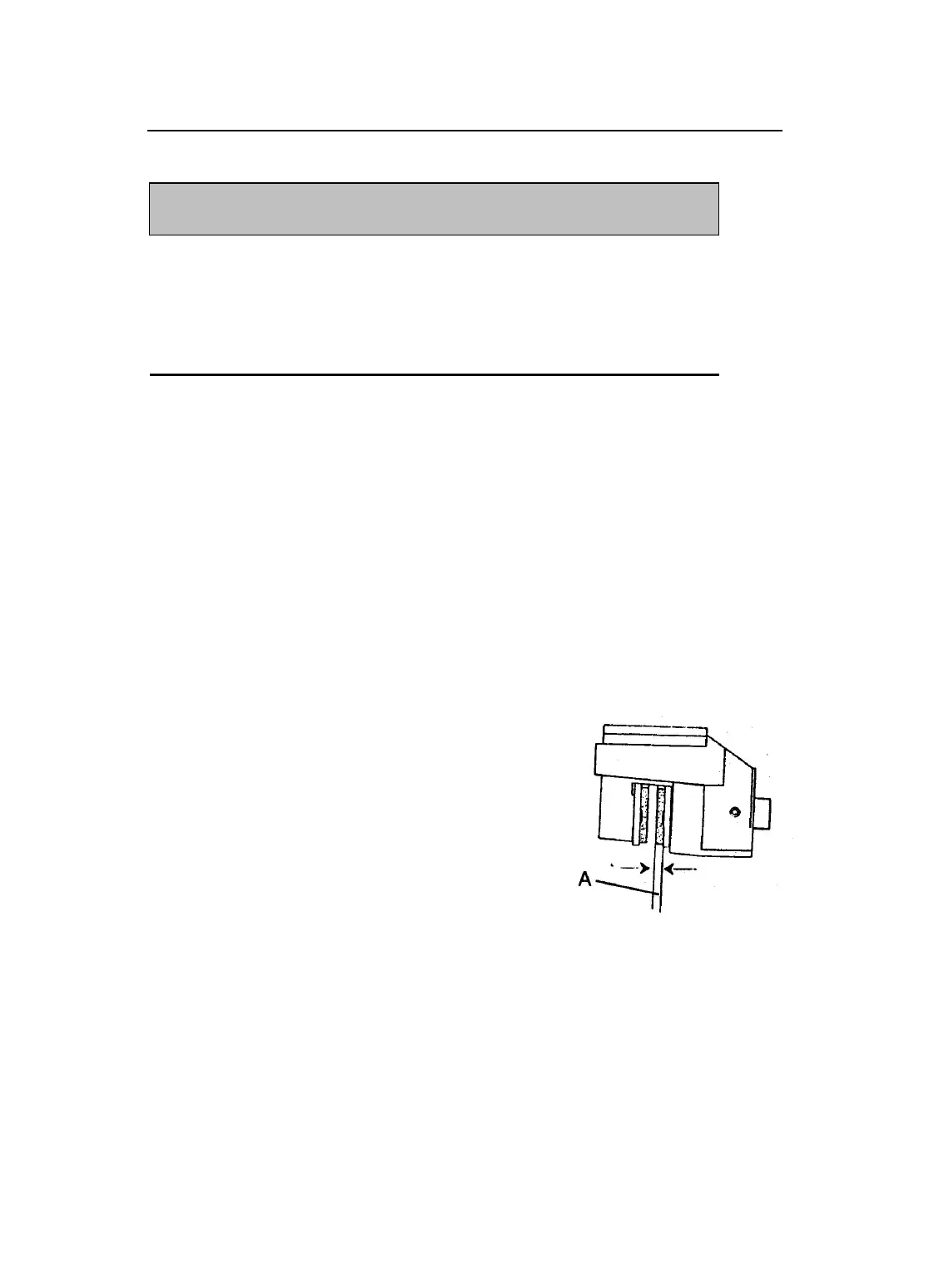
Pads should be changed when
friction material is worn to 3/64”(1mm).(A)
Rear Brake
The rear brake is a hydraulic disc type brake which is activated by
the same pedal which activates the front brake system is self
adjusting and requires no maintenance other than periodic checks
of the pads for wear
Pads should be changed when the friction material is worn to
3/64”(1mm).
Inspect the brake disc and pad wear surface for excessive wear.


 To Next Page