CLUTCH SPRING ADJUSTMENT
If clutch slip occurs the most probable cause is either incorrect cable adjustment or
absence of free movement of the internal clutch lever. If both are found to be correct
the clutch spring adjusting nuts may require adjustment.
To obtain access to clutch spring adjusting nuts, remove the domed clutch cover (secured
by eight screws.)
With the slotted driver provided on one of the thin spanners In the tool kit, screw each
nut, in turn, fully home, then unscrew exactly four complete turns.
Before replacing the domed clutch cover, test for slip by starting up the engine, engaging
top gear, and applying the rear brake when it should be possible to pull up the engine on
full throttle without slip occurring.
If to cure slip it is found necessary to further tighten the adjusting nuts this is a clear
Indication that either the clutch springs have lost their tension, the inserts are. so worn
that they require renewal or that they have become impregnated with oil.
In the two former instances renewals are necessary, but if oil is the cause of slip this may
be rectified by soaking the plates in petrol and allowing to dry off. If inserts are glazed
roughen with sand paper.
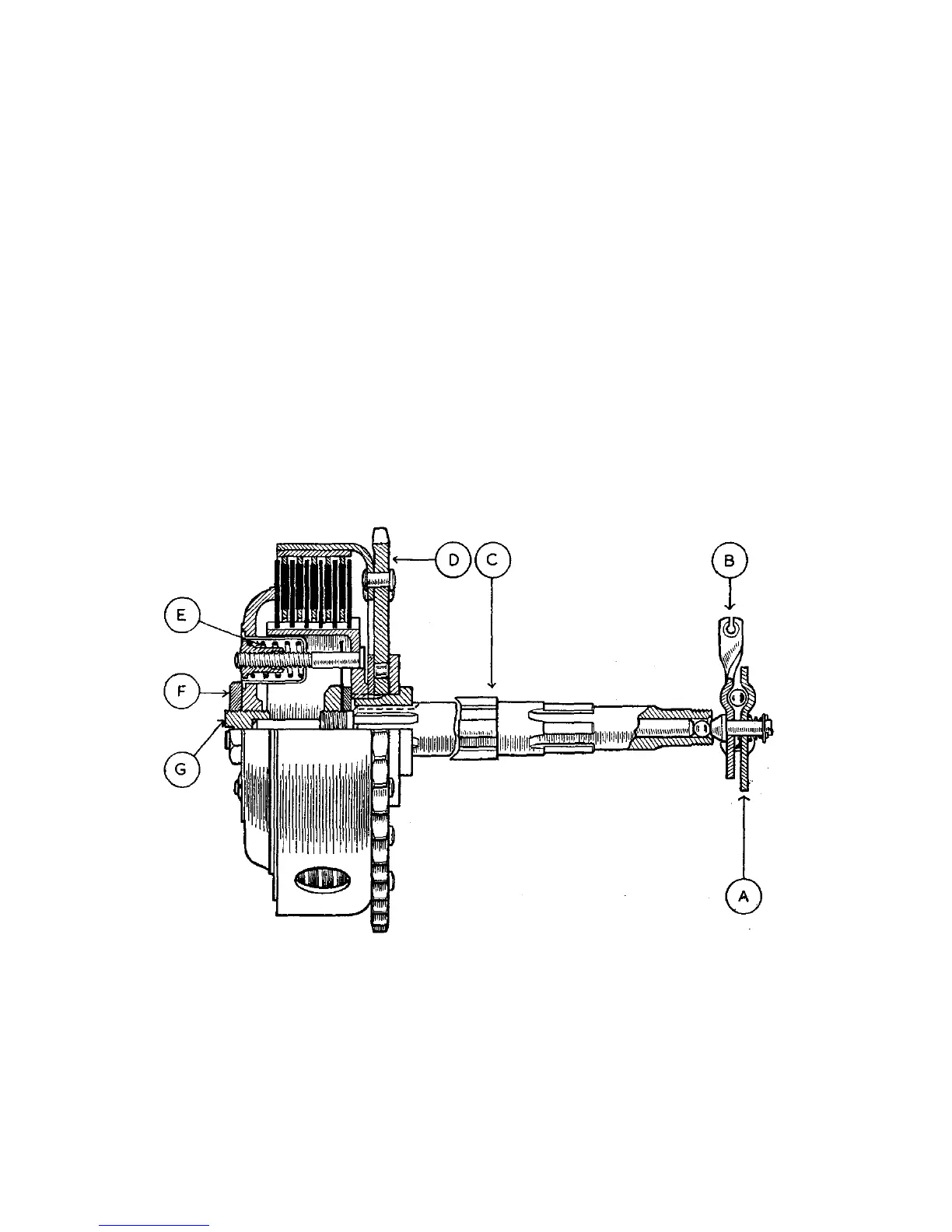
Showing clutch, gear box main shaft and clutch operating mechanism
A
B
C
D
FIXED CLUTCH INTERNAL ACTUATING
PLATE
CLUTCH INTERNAL OPERATING LEVER
GEAR BOX MAINSHAFT
CLUTCH SPROCKET
E
F
G
CLUTCH SPRING
LOCK NUT FOR CLUTCH ROD THRUST
CUP
THRUST CUP (in clutch pressure plate) FOR
CLUTCH ROD
46



 To Next Page