CHAPTER 1: WELCOME ABOARD! 5
Sources of CO
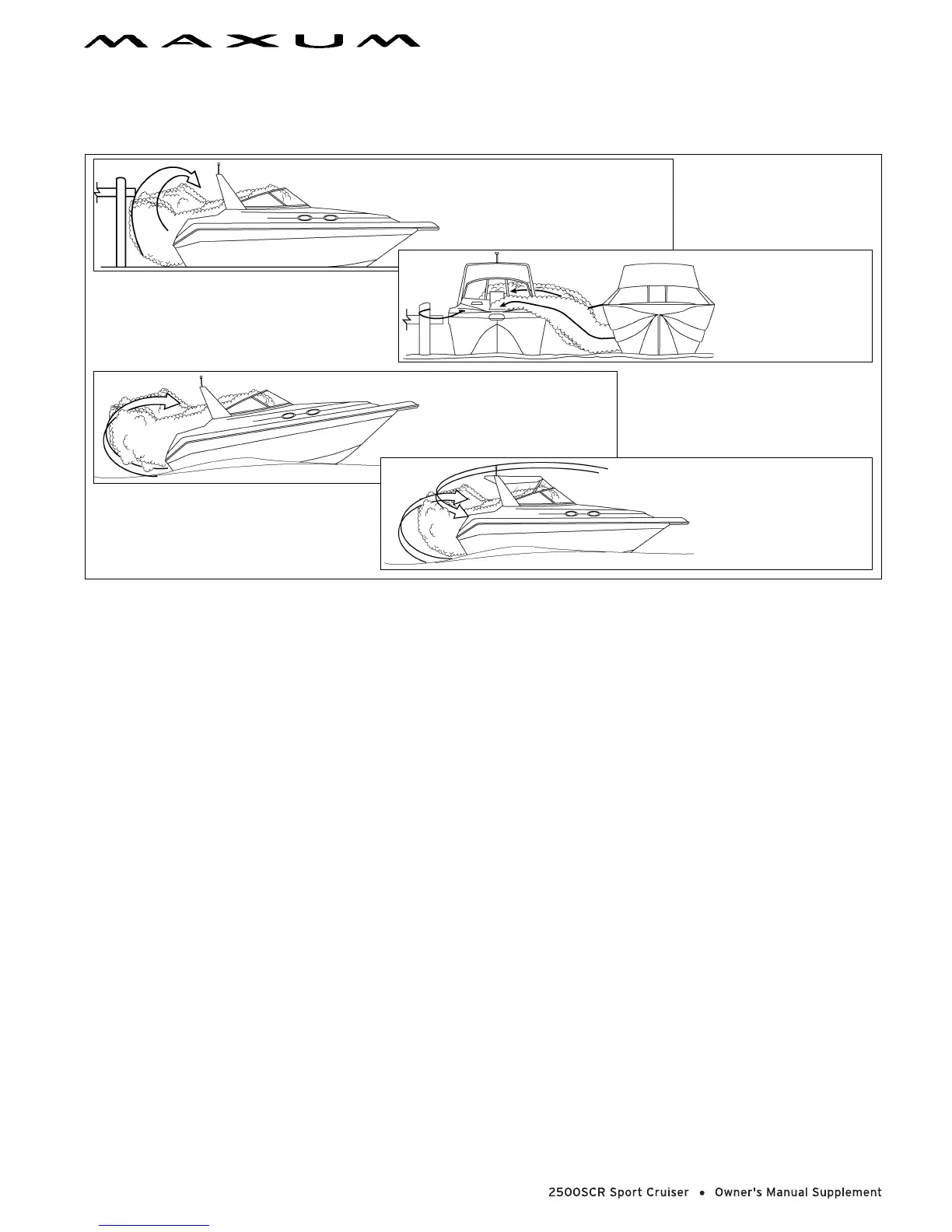
Sources of CO include:
To correct stationary situations (a) and/or (b):
• Close all of the windows, portlights and hatches.
• If possible, move your boat away from the source of the CO.
To correct running situations (c) and/or (d):
• Trim the bow down.
• Open the windows and canvas.
• When possible, run the boat so that the prevailing winds will help dissipate the engine exhaust.
Immediately take corrective action if CO is detected or suspected (see, Carbon Monoxide Alarm System, below).
Carbon Monoxide Alarm System
• Your boat features a carbon monoxide (CO) alarm system.
• Do not disconnect the alarm system.
• Read and understand the manufacturer’s instructions for your CO alarm system. If you did not receive an instruc-
tion manual, call (800) 383-0269 and one will be mailed to you.
• If your boat is not equipped with a carbon monoxide alarm, consider purchasing one from your dealer or marine
supply store.
What To Do If Carbon Monoxide Is Detected
• Immediately ventilate and evacuate any enclosed spaces that are occupied by people and reset your CO alarm.
• Immediately move anyone showing any symptoms of CO poisoning into fresh air.
• See a doctor if any symptoms persist. If the person is unconscious, immediately administer oxygen or CPR and
call for emergency help.
c. Running boat with
trim angle of bow
too high.
a. Using engine or generator
when boat is moored in a
confined space.
b. Mooring close to
another boat that
is using its engine,
generator or any
other CO source.
d. Running boat with-
out through ventila-
tion (station wagon
effect).



 To Next Page