MFJ-464 Instruction Manual CW Keyer/Reader
6
Basic Operation
The MFJ-464 is simple to operate. The Power button controls power to the unit. Start sending
with a paddle or keyboard. Adjust the volume and speed to your preference. If the speed is still
too fast or too slow, adjust the speed using the Set dial control.
All characters or code sent by the user are played on the sidetone speaker. This allows the user
to hear what he is keying, typing, or sending with a computer. Only when the keyer is used with
a paddle is the code sent as soon as it is keyed. When using a keyboard or keyer terminal, you
may type ahead of the code that is being transmitted. This allows you to enter words and phrases
faster than the transmitted code. This permits smoother code with less pauses because you can
fix misspelled words and think of the right phrase to use while your previous sentence is being
sent.
When you are in command mode, memory save, or configuration mode, the code sent to the
speaker is not sent to the Keying Output or your radio. This keeps all erroneous code off of the
air.
How to Use the Menu System
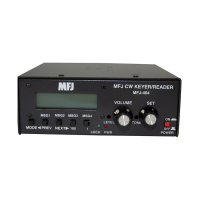
You may set up the MFJ-464 to perform any of its many functions by making the appropriate
selections from its menu system. This system consists of four main mode menus, 19 setup mode
menus and three quick mode menus. You make your selections using the five buttons under the
LCD display
Scrolls through the main mode menus and setup mode menus when press briefly. To
enter the setup mode, press and hold this button for two seconds. To exit the setup mode,
press this button to go back to the main mode.
• MSG1/Prev
Play/program message 4 or select step of 1 in setup mode.
The main mode menus are arranged in a "wrap-around" structure, so that momentarily pressing
the Mode button will bring up another main menu in a sequence. Figure 5 shows the sequence of
the main mode menus. When power is turned on, the main menu displayed is the one that was
displayed when the unit was last turned off.
The setup mode menus are also arranged in a "wrap-around" structure, so that pressing the
Previous or Next button will bring up another setup menu in a sequence. Figure 5 shows the
sequence of the setup mode menus. When entering the setup mode, the setup menu displayed is
the one that was last used.


 To Next Page