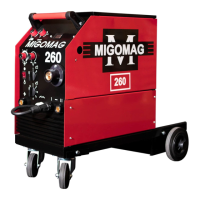
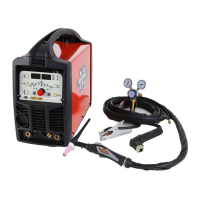
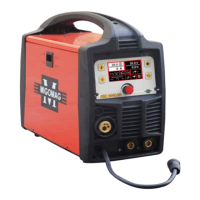
Migomag SIM 200 LCD
Model No ASIM200LCD
26
1. The BURN-THROUGH METHOD welds two overlapped pieces of metal together by
burning through the top piece and into the boom piece. With the burn-through method,
larger wire diameters tend to work beer than smaller diameters. Wire diameters that
tend to work best, with the burn-through method are 0.035 inch self-shielding ux-core
wire. Do not use .030 inch self-shielding ux core wires when using the burn-through
method unless the metal is VERY thin or excessive ller metal build-up and minimal
penetraon is acceptable. Always select the HIGH heat seng with the burn-through
method and tune in the wire speed prior to making a spot weld.
2. The PUNCH AND FILL METHOD produces a weld with the most nished appearance
of the three spot weld methods. In this method, a hole is punched or drilled into the
top piece of metal and the arc is directed through the hole to penetrate into the boom
piece. The puddle is allowed to ll up the hole leaving a spot weld that is smooth and
ush with the surface of the top piece. Select the wire diameter, heat seng, and tune
in the wire speed as if you were welding the same thickness material with a connuous
bead.
3. The LAP SPOT METHOD directs the welding arc to penetrate the boom and top pieces,
at the same me, right along each side of the lap joint seam. Select the wire diameter,
heat seng, and tune in the wire speed as if you were welding the same thickness
material with a connuous bead.
7. Electrode
The welding electrode is a rod coated with a layer of ux. When welding, electrical
current ows between the electrode (rod) and the grounded metal work piece. The
intense heat of the arc between the rod and the grounded metal melts the electrode and
the ux. The most popular electrodes are:
• Kobe -6010 E6010 tensile strength deep penetrang applicaons.
• Kobe RB-26 E6013 tensile strength used for poor t up applicaons
• Kobe LB-52U E7016 tensile strength used for high deposion and fast travel speeds
with light penetraon
• Kobe LB-52-18 E7018 70,000 PSI tensile strength, Used for out of posion and tacking.
Used for out of posion and tacking.
8. Selecng the Proper Electrode
There is no golden rule that determines the exact rod or heat seng required for every
situaon. The type and thickness of metal and the posion of the work piece determine
the electrode type and the amount of heat needed in the welding process. Heavier and
thicker metals required more amperage. It is best to pracce your welds on scrap metal
which matches the metal you intend to work with to determine correct heat seng and
electrode choice. See following some helpful trouble shoong ps to determine if you are
using a correct electrode.


 To Next Page