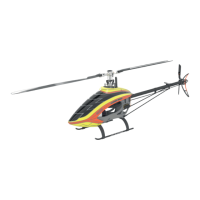
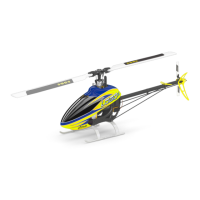
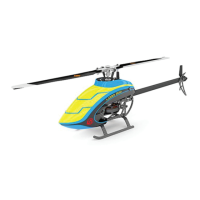
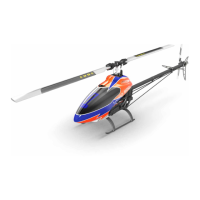
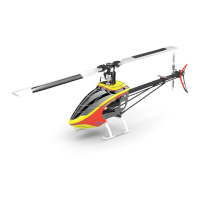
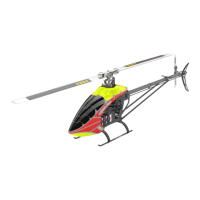
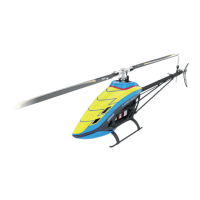
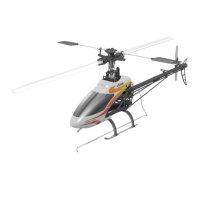
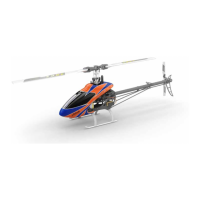
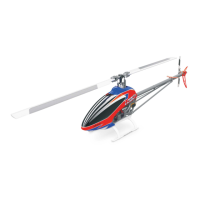
The Mikado LOGO 500 is a high-performance model helicopter designed for experienced pilots. It is not recommended for novices due to its complex system and the basic knowledge required for its operation. The manual, version V1.1, provides comprehensive instructions for assembly, setup, and safe operation.
Function Description:
The LOGO 500 is a radio-controlled (R/C) model helicopter, primarily intended for outdoor flight. It is designed to perform various maneuvers, including 3D flying, and offers a robust platform for advanced aerobatics. The helicopter's design emphasizes precision, stability, and responsiveness, making it suitable for competitive flying and demanding flight styles. The V-Bar system, a key component, provides advanced electronic stabilization, enhancing flight performance and making the helicopter highly controllable. The modular design allows for easy maintenance and component replacement.
Important Technical Specifications:
- Max. rotorhead RPM: 2000
- Max. collective range: +/- 12°
- Max. rotor blade size: 500 mm - 550 mm
- Max. LiPo Akku size: 6S 5000 mAh
- Pinions:
- Module 0.7, diameter 5 mm: 12, 13, 14, 15, 16, 17, 18, 19 teeth (12 teeth for max. 6S LiPo)
- Module 0.7, diameter 6 mm: 15, 16, 17, 18 teeth
- Counterbearing (for very hard 3D flying):
- #4134 (25 mm, 5 mm shaft)
- #4148 (25 mm, 6 mm shaft)
- #4373 (30 mm, 6 mm shaft)
- Chassis Components: The chassis includes parts like the mainframe (e.g., #4091, #1329), tail boom supports (e.g., #4058), landing skids (e.g., #4290, #4288), and various screws and bearings.
- Tail Rotor Components: Features a belt-driven tail rotor with specific parts such as the tail rotor hub (e.g., #2462), tail blades (e.g., #2461), and various shafts and linkages.
- Main Gear & Tail Rotor Assembly: Includes the main gear (e.g., #10x16x0,5), autorotation hub (e.g., #10x16x0,5), and swashplate (e.g., bag 3 components).
- V-Bar Rotor Head: Comprises the V-Bar head components (e.g., #4041 for LOGO 500, #4042 for LOGO 600), including various links, balls, and shafts, designed for precise control and stabilization.
Usage Features:
- Assembly: The manual provides a step-by-step guide for assembling the helicopter, starting with the mainframe, then the tail rotor and tail boom, main gear, V-Bar rotor head, servo installation, motor mounting, and canopy mounting. Each step is illustrated with detailed diagrams and part lists from specific bags (e.g., Bag 1, Bag 5, Bag 12).
- Servo Installation: Instructions detail the correct positioning of servo arms for the tail rotor, aileron, elevator, and rudder, ensuring proper control throws and centering. Specific attention is given to installing Futaba servos, which may require distance plates.
- Motor Mounting: Emphasizes correct motor pinion installation and gear backlash adjustment. The pinion must be aligned with the main gear, and there should be no gear backlash or excessive pressure on the main gear's running surface. Optional counterbearings are recommended for demanding 3D flying.
- Radio and Battery Setup: Guides the user on mounting the V-Bar gyro, receiver, and battery. The battery should be secured with Velcro.
- V-Bar System: The V-Bar electronic stabilization system is integral to the LOGO 500's performance, providing enhanced flight stability and precise control. The manual references specific V-Bar head components for both LOGO 500 and LOGO 600 models.
- Safety Instructions: Crucial for safe operation, these instructions advise operating in spacious areas away from people, children, and residential areas. It warns against flying in windy or wet weather. Pilots must check the R/C system and batteries before each flight and ensure all screws are tightened. Novice pilots are strongly advised to seek assistance from experienced pilots for assembly and pre-flight adjustments and never fly alone.
Maintenance Features:
- Regular Checks: Before each flight, ensure all screws are tightened and replace any broken or defective parts immediately.
- Greasing: Apply grease to bearings during assembly, such as the 5x8x0.5 bearing in the tail rotor assembly and the rotor shaft.
- Swashplate Adjustment: The swashplate driver must be adjusted so that the balls on the inner and outer rings are positioned exactly along the longitudinal axis of the helicopter.
- Motor Cooling: Avoid touching the motor immediately after use, as it can be hot enough to cause burns.
- Troubleshooting: If the model shows irregular behavior, immediately stop operation, turn off power, disconnect batteries, and investigate/fix the problem before flying again.
- Part Replacement: The manual details various components with their part numbers, facilitating easy identification and replacement of worn or damaged parts. This includes chassis parts, tail rotor components, and V-Bar head parts.

 Need help?

 To Next Page
 General