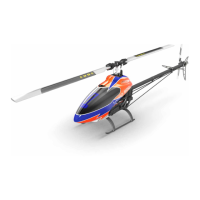
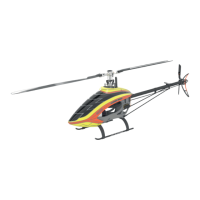
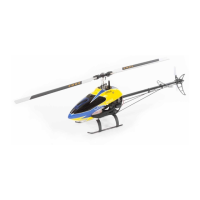
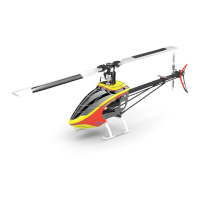
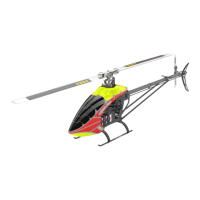
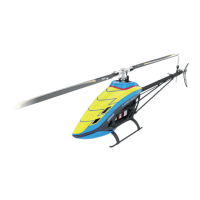
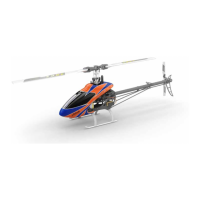
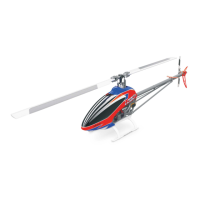
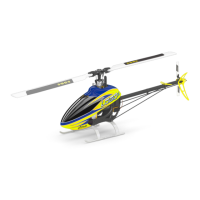
The Mikado LOGO 200 is a high-performance RC helicopter designed for enthusiasts with some experience in assembling and operating such complex machines. This manual provides comprehensive instructions for its assembly, setup, and maintenance, emphasizing safety and proper handling.
Function Description
The LOGO 200 is a radio-controlled helicopter capable of advanced flight maneuvers. It is designed to be assembled by the user from various components, including the main frame, rotor head, tail boom, servos, and electronic speed controller (ESC). Once assembled and properly configured with a VBar NEO mini flight controller, the helicopter can be controlled remotely to perform a wide range of aerial movements. Its primary function is to provide an engaging and challenging flying experience for hobbyists, from moderate flights for beginners to high-performance aerobatics for experienced pilots. The helicopter's design incorporates a robust main frame, a precise rotor head for control, and a tail motor system for stability and directional control. The electronic components, including the VBar NEO mini, manage the flight dynamics, motor speed, and servo movements, translating pilot inputs into precise helicopter actions.
Usage Features
The LOGO 200 offers several usage features that cater to both assembly and flight:
- Modular Assembly: The helicopter is designed with a modular structure, allowing users to assemble it step-by-step. This includes distinct sections for the main frame (motor mounting, top and lower frame assembly, landing gear mounting), rotor head (bearing installation, assembly, pitch links mounting), tail motor and boom mounting, servo mounting and linkaging, and electronic component installation (VBar NEO mini, battery, canopy). Each section is detailed with diagrams and part lists to guide the user through the process.
- Precision Control System: The VBar NEO mini flight controller is central to the helicopter's operation, providing advanced stabilization and control. It integrates with the servos to manage the main rotor's pitch and cyclic movements, and with the tail motor for yaw control. The wiring diagram for the VBar NEO mini is provided, ensuring correct connection of the ESC, tail motor, and servos.
- Adjustable Components: Key components like the main rotor blades and tail blades are designed for precise mounting. The manual highlights the importance of not overtightening blade bolts to allow for proper movement and adjustment. Servo linkaging is also a critical setup feature, ensuring that the servos accurately translate control inputs to the rotor head.
- Battery System: The helicopter utilizes a 3s 650mAh battery, which is secured using a battery plate, velcro (hard and soft), and a velcro strap. A "Battery Lock" mechanism is indicated, ensuring the battery remains securely in place during flight.
- Canopy Design: The canopy is designed for easy installation and removal, with canopy grommets for secure attachment. The manual suggests placing the rotor head perpendicular to the boom to facilitate easier canopy installation.
- Safety Protocols: The manual emphasizes several safety features and protocols for operation. These include ensuring all screws are secured before powering on, frequent inspections for wear and tear, using only original Mikado parts, and always removing main and tail rotor blades when programming or testing the radio system. It also specifies safe operating distances and conditions, such as avoiding crowded areas, adverse weather, and high-tension wires.
- Troubleshooting Guidance: Users are advised to land immediately and turn off power if the helicopter behaves unusually, and to meticulously check and fix any problems before continuing operation, preventing further damage or accidents.
Maintenance Features
Maintaining the LOGO 200 is crucial for its longevity and safe operation. The manual provides several guidelines and features to aid in maintenance:
- Regular Inspections: The manual stresses the importance of frequent pre- and post-flight inspections to check for loose screws, signs of deterioration, or wear on any parts. This proactive approach helps prevent failures during flight.
- Component Replacement: Users are instructed to exchange any parts that show signs of deterioration or wear. The manual includes a comprehensive "Spare Parts List" with product names and part numbers for various components, such as the rotor head yoke, main blade holders, shaft kit, rotor head refurbish kit, VTX 177 blades, swashplate, main shaft bearings, motor, servo arm and linkage set, servo set, tail boom mount, upper frame set, anti-rotation bracket, complete frame set, complete tail rotor set, tail boom, tail fin, tail motor mounting set, tail motor, tail prop, complete hardware set, blue/yellow canopy, battery, and dual ESC controller. This list simplifies the process of identifying and ordering replacement parts.
- Lubrication: The "Rotor Head - Bearing Installation" section specifically mentions "Apply Grease" to the thrust bearings, indicating a maintenance step for smooth and efficient operation of the rotor head.
- Threadlock Application: For securing screwed connections, the manual recommends using securing glue like Loctite 243 (blue). It advises following the Loctite manufacturer's recommendations and allowing proper curing time before flying the model. This ensures that critical fasteners remain tight under vibration and stress.
- Tool Requirements: A list of necessary tools is provided, including threadlock, small screwdrivers, grease, ball link pliers, a pitch gauge, and hex wrenches of various sizes (1.25, 1.3, 1.5, 2, 2.5). Having these tools readily available facilitates proper assembly and maintenance tasks.
- Post-Crash Assessment: In case of an unusual flight behavior or a crash, the manual advises a thorough check of all radio gear and components to identify and fix the problem before resuming operation. This prevents cascading failures and ensures the helicopter is safe to fly.
- Electronic Component Care: While not explicitly detailed as maintenance, the careful installation and wiring of the VBar NEO mini and ESC, as outlined in the manual, are crucial for preventing electronic failures and ensuring reliable performance. The use of 1mm double-sided tape for mounting the VBar NEO mini suggests a method for secure installation that also allows for removal if needed.

 Need help?
 General

 To Next Page