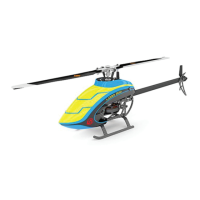
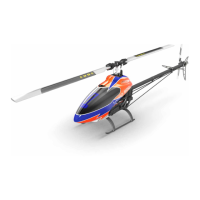
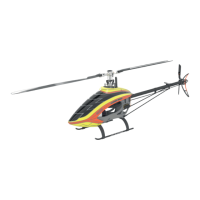
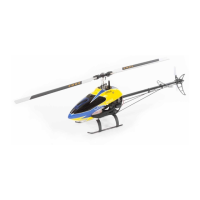
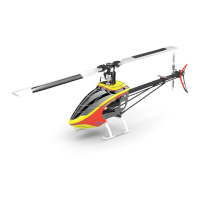
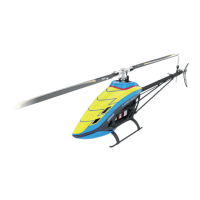
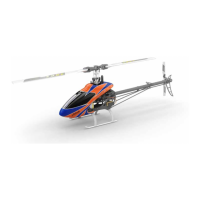
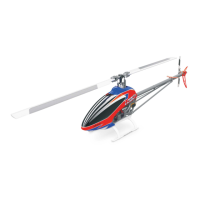
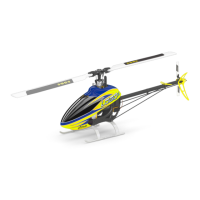
The Mikado LOGO 700 is a high-performance RC helicopter designed for experienced enthusiasts. It is not suitable for beginners and requires prior experience in assembling and operating RC helicopters of similar size (e.g., LOGO 400 to LOGO 600). This manual provides comprehensive instructions for the assembly, setup, and maintenance of the LOGO 700, emphasizing safety and proper handling.
The helicopter's function is to provide an advanced and thrilling remote-controlled flying experience. Its robust design and precision engineering allow for complex maneuvers and high-speed flight, catering to pilots who demand exceptional performance and reliability from their models. The LOGO 700 is built with a focus on durability and ease of maintenance, ensuring that pilots can spend more time flying and less time on repairs.
Usage Features:
The LOGO 700 is designed for outdoor operation in designated areas where RC model flying is permitted. It is crucial to maintain a safe distance from people, animals, houses, and other obstacles. The helicopter should never be operated indoors or in crowded places. Adverse weather conditions such as rain, snow, hail, or strong winds should be avoided to prevent damage and ensure safe flight.
The assembly process, while partially pre-assembled, requires careful attention to detail. Many structural components are pre-screwed but not yet secured with Loctite. Users must apply Loctite 243 (blue) to all screws and connections throughout the assembly to ensure structural integrity. It is essential to allow proper curing time for the Loctite before the first flight.
The manual highlights several key assembly steps that contribute to the helicopter's performance and safety:
- Chassis Assembly: This involves mounting the main frame components, landing struts, and various small parts. Specific attention is given to the correct positioning of hex lock nuts and the use of mounting plates tailored to different servo sizes.
- Servo Mounting: The servos are critical for control, and their correct installation is vital. The manual instructs on securing servo wires to prevent damage and ensuring proper alignment of roll links.
- Main Gear Assembly: This section details the installation of the main gear, emphasizing the application of grease to bevel gears and the one-way bearing. Proper axial play of approximately 1 mm for the main gear is crucial for smooth operation. A flexible silicone tube is provided to assist in mounting the main gear bolt.
- Motor Installation: The pinion's correct positioning on the motor shaft, ensuring the grub screw aligns with the flat spot, is detailed. The motor and pinion must be pushed against the main gear, and the herringbone gear design aids in proper alignment. Minimal backlash between the main gear and pinion is required, with a check recommended after the first few flights.
- Tail Rotor Assembly: This involves careful assembly of the tail rotor components, including the application of grease to bevel gears. Specific instructions are given for distinguishing and installing disks with different inner diameters, ensuring a tight fit for the smaller inner diameter disk on the tail shaft. Ball links must be mounted 90° to each other.
- Torque Tube Assembly: The torque tube, which transmits power to the tail rotor, requires precise assembly. Ball bearing mounted plastic sleeves are pushed onto the torque tube and secured with 10 mm adhesive shrink tubing. Before insertion, the tail boom must be clean, and grease applied to the rubber O-rings and the inside of the tail boom.
- Tail Boom Mounting: The tail boom must be pushed all the way into the chassis, and all six screws securing it must be firmly tightened. Proper alignment of the drilled holes for rotation prevention is essential, followed by fixing the tail boom with M3x10 hex screws from both sides.
- Tail Boom Brace: The tail boom braces provide structural support. Carbon tubes for the push rod need sanding before gluing ball link adapters, and ball links must be mounted 90° to each other.
- Swashplate Assembly: The swashplate ball may be tight initially, requiring a few drops of oil for break-in. When mounting ball links, one side will clip on easily, while the other may be tighter, and the "Gabriel" brand name must face outwards.
- Rotor Head Assembly and Linkage: This section details the assembly of the rotor head, including the application of grease to O-rings and the inner surface of the yoke. Final tightening of specific screws (M4x25, M3x30, M3x25) is done after mounting and adjusting the rotor head and linkages. Ball links on the rotor head also have a specific orientation, with the "Gabriel" brand name facing outwards.
- Wiring RC Components: Proper wiring is crucial for functionality and safety. All wires must be placed to prevent damage from sharp edges during operation. The provided fabric tube and edge guard should be used for protection. The manual recommends using a BEC that can provide two power leads to the receiver/RC components.
- Mounting ESC/Battery: The battery plate should be inserted into the chassis, and if initially difficult, a small amount of silicone oil can be applied to the edges. Before each flight, both quick-release mechanisms must secure the battery plate.
- Canopy and Overview: The canopy is mounted via four attachment points, with front points for guiding and rear points using rubber grommets. A special feature is the fully closed back part, connected by pins and magnets. Care must be taken when mounting and dismounting the canopy over the rotor shaft. An edge protector strip, included in the kit, should be fixed with speed glue.
Maintenance Features:
Regular maintenance is paramount for the safe and reliable operation of the LOGO 700. The manual stresses the importance of frequent checks for deterioration or wear on all parts. Failure to conduct these inspections increases the risk of damage and injury. Only original Mikado parts and recommended electronic components should be used for replacements.
Key maintenance aspects include:
- Pre-flight and Post-flight Inspections: Before each flight, all screws and hardware must be secured. A single loose screw can lead to loss of control and a crash. After flights, components that run hot, such as the ESC and motor, should be allowed ample time to cool down before handling.
- Greasing and Lubrication: Specific components, such as the main gear bevel gears, one-way bearing, torque tube O-rings, and rotor head O-rings and yoke inner surface, require regular greasing as instructed during assembly. This ensures smooth operation and reduces wear.
- Wire Protection: The fabric tube and edge guard provided in the kit are essential for protecting RC component wires from damage. These should be regularly checked for wear and replaced if necessary.
- Canopy Security: Before each flight, the canopy's secure attachment must be verified. A loose canopy can negatively impact flight performance or even cause a crash.
- Gear Mesh Check: After the initial flights, the gear mesh between the pinion and main gear should be checked to ensure minimal backlash, which is crucial for efficient power transmission and preventing premature wear.
- Troubleshooting: If the helicopter exhibits unusual or strange behavior, it must be landed immediately, and power turned off. A thorough check of all radio gear and components is required to identify and fix the problem before resuming operation. Addressing irregularities promptly prevents cascading failures and increased risk.
The LOGO 700 is a sophisticated model that demands a responsible approach to assembly, operation, and maintenance. Adhering to the instructions and safety guidelines in this manual will ensure a rewarding and safe flying experience.

 Need help?
 General

 To Next Page