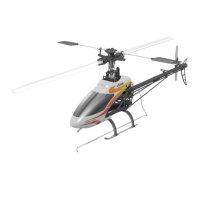
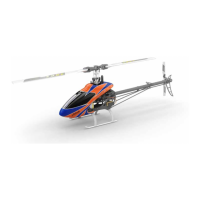
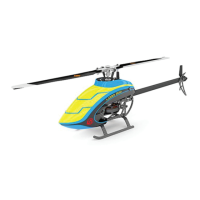
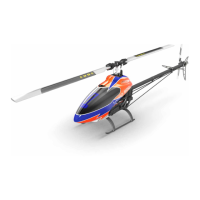
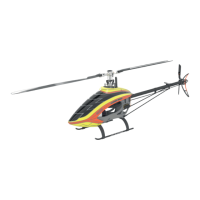
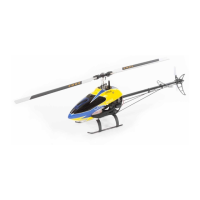
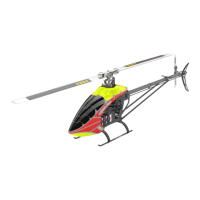
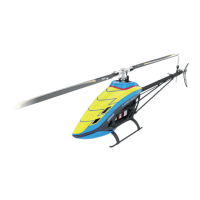
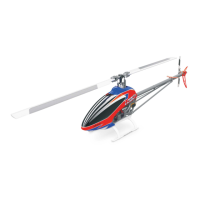
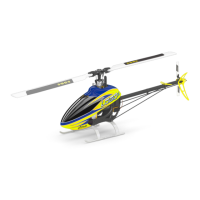
The Mikado LOGO 480 is a high-performance remote-controlled (RC) helicopter designed for enthusiasts with prior experience in handling and flying RC helicopters. This manual provides comprehensive instructions for assembly, setup, and safe operation of the LOGO 480, emphasizing the importance of meticulous attention to detail and adherence to safety guidelines.
Function Description
The LOGO 480 is an RC helicopter designed for flight, offering precise control and maneuverability. Its primary function is to provide an engaging and challenging flying experience for hobbyists. The helicopter's design incorporates a main rotor system for lift and thrust, a tail rotor for yaw control, and a sophisticated electronic control system to manage flight dynamics. The assembly process involves integrating various mechanical and electronic components, including the mainframe, landing struts, tail rotor, tail boom, main gear, swashplate, rotor head, motor, and RC components. Once assembled and properly configured, the helicopter is controlled via a remote control unit, allowing the pilot to execute various flight maneuvers. The use of a Power-BEC equipped YGE 90 LV controller, specifically pre-programmed for LOGO helicopters, ensures optimal performance and power management. This controller integrates an internal governor for constant head speed and a pre-programmed BEC voltage, making it suitable for 6S LiPo batteries without further adjustments.
Usage Features
The LOGO 480 comes partially pre-assembled, with structural components already screwed together. However, all screws must be secured with thread lock (Loctite 243 blue) by the user to ensure structural integrity. The manual provides detailed, step-by-step instructions for each assembly stage, from mounting servos to installing the motor and wiring RC components.
Key usage features include:
- Modular Assembly: The helicopter is built from distinct modules such as the mainframe, tail boom, and rotor head, allowing for systematic assembly and easier maintenance.
- Servo Integration: The manual details the precise mounting of servos within the mainframe, ensuring correct alignment and function for flight control.
- Tail Rotor and Tail Boom Assembly: Instructions cover the assembly of the tail rotor, including the application of grease to bearings and thread lock to specific sections, crucial for smooth and reliable tail control. The tail boom is also assembled with attention to securing components and ensuring proper alignment.
- Main Gear Installation: The main gear assembly involves careful positioning of the belt pulley and checking the direction of the tail rotor. Grease application to the one-way bearing is highlighted for optimal performance.
- Swashplate and Rotor Head Assembly: These critical components require precise assembly, including securing ball links and applying silicon oil or grease to O-rings and the spindle shaft for smooth operation. The manual emphasizes the importance of proper ball link mounting for ease of clipping.
- Motor Installation and Gear Mesh Setting: The process involves mounting the motor, motor plate, and carefully setting the gear mesh between the pinion and main gear. The manual stresses the importance of minimal gear mesh and proper alignment of herringbone teeth, noting that the main gear's slight axial play is normal. Thread lock is essential for securing the pinion.
- RC Component Wiring: Detailed wiring instructions are provided for connecting the YGE controller to the Mini-VBar, including guidance on shortening cables, soldering connectors, and securing them against short-circuiting. The manual also advises on the placement of the controller for heat dissipation and connecting additional power supplies.
- Battery Mounting: The battery is secured on a tray using Velcro, with instructions to ensure all cables are carefully placed and firmly connected to prevent disconnections during flight.
- Canopy Attachment: The canopy attaches via four points, with rubber grommets at the back. Users are advised to handle the canopy carefully during mounting and dismounting to avoid damage and to check its security before each flight. Optional edge protectors can be mounted for added protection.
- Pre-Flight Checks: Before the first flight and subsequent flights, users must perform critical checks, including verifying the direction of the main and tail rotor rotation (both clockwise), checking gear backlash and wear, and ensuring all cables and connectors are secure and undamaged. The manual strongly advises removing main and tail rotor blades during initial motor and controller tests.
Maintenance Features
Regular maintenance is crucial for the safe and reliable operation of the LOGO 480. The manual highlights several key maintenance practices:
- Frequent Inspections: Users must frequently inspect the model for signs of deterioration or wear on any parts. This includes checking screws, hardware, and all mechanical components.
- Part Replacement: Any parts showing signs of wear or damage must be exchanged immediately to prevent increasing the risk of failure or injury. Only original Mikado parts and recommended electronic components should be used.
- Thread Lock Application: The consistent use of thread lock (Loctite 243 blue) on all screws and threaded connections during assembly and reassembly is a fundamental maintenance practice to prevent loosening due to vibrations. Proper curing time for the thread lock is also emphasized.
- Greasing and Lubrication: Specific components, such as tail rotor bearings, one-way bearings in the main gear, and O-rings/spindle shaft in the rotor head, require the application of grease or silicon oil. This lubrication ensures smooth operation and reduces wear.
- Gear Mesh Adjustment: The gear mesh between the pinion and main gear should be checked before each flight. If necessary, the gear mesh must be adjusted, or the gears replaced if they show significant wear.
- Cable and Connector Integrity: All cables and connectors must be checked before each flight to ensure they are whole, undamaged, and firmly connected. Protection against rubbing on sharp edges using edge protectors and braided sleeving is recommended.
- Cool-down Time: Components that run hot, such as the ESC and motor, should be allowed ample cool-down time before handling to prevent burns.
- Troubleshooting: In case of unusual or strange helicopter behavior, the pilot must land immediately, turn off the power, and meticulously check all radio gear to identify and fix the problem before resuming operation. This proactive approach prevents minor issues from escalating into more severe failures.

 Need help?
 General

 To Next Page