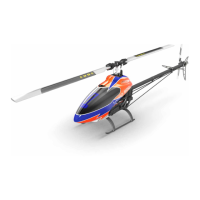
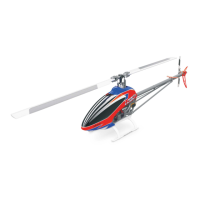
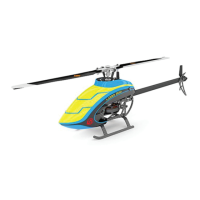
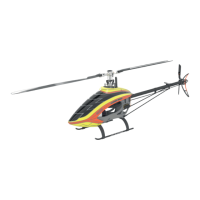
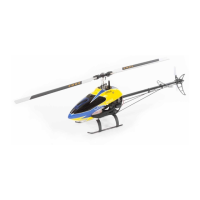
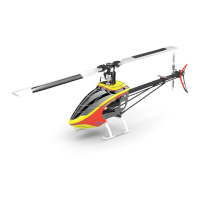
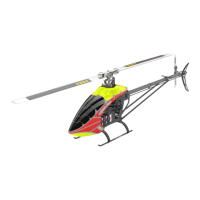
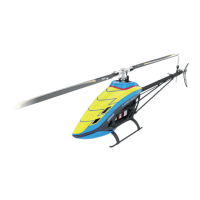
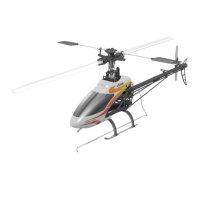
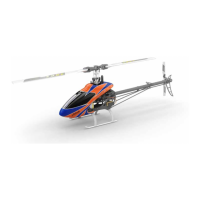
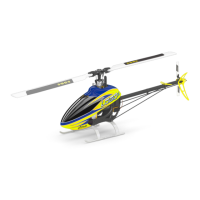
This document is a comprehensive manual for the Mikado LOGO 600 SX Model Helicopter, providing detailed instructions for assembly, operation, and maintenance. It is designed for model helicopter enthusiasts, particularly those with some prior experience, as the LOGO 600 SX is described as a complex system not recommended for novices.
Function Description:
The Mikado LOGO 600 SX is a high-performance model helicopter designed for advanced flight maneuvers. Its primary function is to provide an engaging and challenging remote-controlled flying experience. The helicopter utilizes a V-Stabi (flybarless) rotor head system, which contributes to its precise control and agile flight characteristics. The manual guides users through the construction of the mainframe, tail rotor, tail boom, main gear, and rotor head, culminating in a fully functional model. The integration of a V-Bar gyro system further enhances stability and control, making it suitable for intricate aerobatics. The helicopter's design emphasizes modularity, allowing for systematic assembly and easier maintenance of individual components.
Usage Features:
The manual outlines various usage features, primarily focusing on the assembly and setup required before flight. Key features include:
- Modular Assembly: The helicopter is designed with distinct modules such as the mainframe, tail rotor, tail boom, main gear, and V-Bar rotor head, each with its own set of parts and assembly instructions. This modularity simplifies the construction process and facilitates troubleshooting or replacement of parts.
- V-Bar Rotor Head System: The LOGO 600 SX features a V-Stabi (flybarless) rotor head, which is a modern control system that eliminates the need for a mechanical flybar. This system relies on an electronic gyro (V-Bar gyro) to provide stability and precise control inputs, allowing for more direct and responsive flight.
- Servo Installation: Detailed instructions are provided for installing the servos for aileron, elevator, and rudder control, including specific measurements (e.g., 16 mm for aileron/elevator, 14-16 mm for rudder) to ensure correct geometry and optimal performance. The manual also notes specific considerations for Futaba servos, such as adding a distance plate for aileron servos.
- Motor and Pinion Installation: The manual meticulously describes the process of mounting the motor, motor plate, and pinion, emphasizing the importance of correct pinion alignment with the main gear to prevent wear and ensure smooth operation. It also details how to set the gear backlash, a critical step for the longevity and efficiency of the drivetrain.
- Battery and Radio System Setup: Instructions cover the positioning of the LiPo battery for receiver power supply and the attachment of the battery using Velcro straps. The manual also illustrates the placement of the V-Bar gyro and Mini V-Bar, which are integral to the helicopter's flight control system.
- Safety Guidelines: A prominent section on safety instructions emphasizes operating the model in spacious areas away from people, avoiding specific hazardous conditions (e.g., residential areas, windy weather), and performing pre-flight checks. It also warns against operating with loose screws or damaged parts and advises novice pilots to seek assistance from experienced individuals.
Maintenance Features:
The manual incorporates several maintenance-related instructions and recommendations to ensure the helicopter's longevity and safe operation:
- Greasing and Lubrication: Specific instructions are given for applying grease to bearings and sleeves, particularly in the tail rotor assembly, to ensure smooth movement and reduce friction. Silicon oil or grease is also recommended for O-rings and the spindle shaft in the V-Bar rotor head.
- Threadlock Application: The manual specifies where to apply Loctite (threadlock) to screws, particularly in the tail rotor hub, to prevent loosening due to vibrations during flight. It also highlights areas where Loctite should not be applied to avoid hindering smooth operation.
- Screw Tightening: Emphasis is placed on ensuring all screws are tightened before flying, with a warning that a single loose screw can lead to a major accident. Specific instructions are provided for tightening pivot bolts in the swashplate assembly, advising against overtightening to prevent breakage.
- Part Replacement: Users are instructed to replace all broken or defective parts with new ones, as damaged components can lead to crashes. This highlights the importance of regular inspection and timely replacement of worn or damaged elements.
- Pre-flight Checks: The manual stresses the importance of checking the R/C system prior to operation, including battery strength, and performing all necessary maintenance. It also advises investigating any irregular behavior immediately and not operating the model until the problem is resolved.
- Ball Link Orientation: Instructions for attaching ball links specify that the engraved number should be on the outer surface pointing towards the user, ensuring correct orientation for optimal control linkage.
- Regular Inspections: Although not explicitly listed as a "maintenance feature," the safety guidelines implicitly encourage regular inspections of the helicopter's components to identify any issues before they lead to accidents.

 Need help?
 General

 To Next Page