EasyManua.ls Logo

Minolta IIIF - Statement of Fcc Compliance

Minolta IIIF
32 pages
Print Icon
To Next Page IconTo Next Page
To Previous Page IconTo Previous Page
Loading...
(English)
—
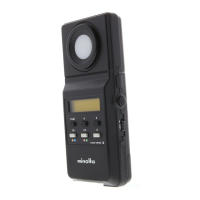
The
Minolta
Color
Meter
IIIF
helps
to
ensure
consistent
results
when
taking
color
photographs
using
either
ambient
or
flash
light.
It
measures
the
light
illuminating
the
subject
and
determines
the
filtration
required
to
reproduce
subject
colors
correctly.
Readings
are
provided
for
both
light-balancing
filters
(as
required
mired
shift
or
Kodak
Wratten
filter
numbers)
and
color-compensating
filters
(as
density),
In
addition,
the
photographic
color
temperature
of
the
illumination
can
also
be
displayed.
The
meter
can
be
set
to
determine
the
required
filters
for
any
of
three
film
types:
Daylight
(balanced
to
5500K),
Type-A
Tungsten
(balanced
to
3400K),
or
Type-B
Tungsten
(balanced
to
3200K).
Either
ambient
or
flash
measurements
can
be
taken.
Ambient
measurements
can
be
taken
under
illumination
levels
from
EV3
to
EV16.3
at
ISO
100.
Flash
measurements
can
be
taken
for
flash
power
levels
corresponding
to
apertures
(at
the
meter
position)
of
from
f/2.8
to
f/80
(at
ISO
100);
they
can
be
taken
with
or
without
a
sync
cord,
and
shutter
speeds
from
1/500
to
1
sec.
can
be
selected.
For
flash
measurements,
the
meter
measures
the
mixed
flash
and
ambient
light,
since
this
is
what
will
actually
illuminate
the
subject,
at
the
selected
shutter
speed.
After
measurement,
the
shutter
speed
can
be
changed,
effectively
changing
the
ratio
of
flash
to
ambient
light;
by
noting
the
change
in
required
filtration,
you
can
predict
the
effect
on
the
image
color.
In
addition,
the
Color
Meter
IF
can
subtract
out
the
ambient
light
to
display
the
results
for
only
the
light
from
the
flash.
To
allow
you
to
adjust
the
meter
to
your
color
preferences,
correction
values
can
be
set
in
any
of
the
meter’s
nine
memory
channels.
Once
these
values
have
been
set,
the
meter
will
automatically
adjust
measurement
calculations
to
ensure
that
colors
are
reproduced
according
to
your
expectations.
Please
take
a
moment
to
read
this
manual
before
using
the
Color
Meter
INF
for
the
first
time,
and
keep
it
handy
for
future
reference.
STATEMENT
OF
FCC
COMPLIANCE
This
device
complies
with
Part
15
of
the
FCC
Rules.
Operation
is
subject
to
the
following
two
conditions:
|
(1)
This
device
may
not
cause
harmful
interference,
and
(2)
this
device
must
accept
any
interference
received,
including
interference
that
may
cause
undesired
operation.
Changes
or
modifications
not
approved
by
the
party
responsible
for
compliance
could
void
the
user's
authority
to
operate
the
equipment.
This
equipment
|
|
has
been
tested
and
found
to
comply
with
the
limits
for
a
Class
B
digital
device,
pursuant
to
Part
15
of
the
|
FCC
Rules.
These
limits
are
designed
to
provide
reasonable
protection
against
harmful
interference
in
a
residential
installation.
This
equipment
generates,
uses
and
can
radiate
radio
frequency
energy
and,
if
not
installed
and
used
in
accordance
with
the
instructions,
may
cause
harmful
interference
to
radio
communications.
|
However,
there
is
no
guarantee
that
interference
will
not
occur
in
a
particular
installation.
If
this
equipment
|
does
cause
harmful
interference
to
radio
or
television
reception,
which
can
be
determined
by
turning
the
|
equipment
off
and
on,
the
user
is
encouraged
to
try
to
correct
the
interference
by
one
or
more
of
the
following
measures:
Reorient
or
relocated
ihe
receiving
antenna.
Increase
the
separation
between
the
equipment
and
receiver.
i
Connect
the
equipment
into
an
outlet
on
a
circuit
different
from
that
to
which
the
receiver
is
connected.
Consult
the
dealer
or
an
experienced
radio/TV
technician
for
help.
STATEMENT
OF
DOC
COMPLIANCE
|
This
digital
aparatus
does
not
exceed
the
Class
B
limits
for
radio
noise
emission
from
digital
apparatus
set
as
out
in
the
Radio
Interference
Regulations
of
the
Canadian
Department
of
Communication.

Related product manuals