MOONEY SECTION VII
MODEL M20J AIRPLANE AND SYSTEMS DESCRIPTION
INTRODUCTION
Acquiring a working knowledge of the aircraft's controls and equipment is
one of your important first steps in developing a fully efficient operating techni-
que. This Airplane and Systems Section describes location, function, and
operation of systems' controls and equipment. It is recommended for you,
the pilot, to familiarize yourself with all controls and systems while sitting in
the pilot's seat and rehearsing the systems operations and flight procedures
portions of this manual.
AIRFRAME
The
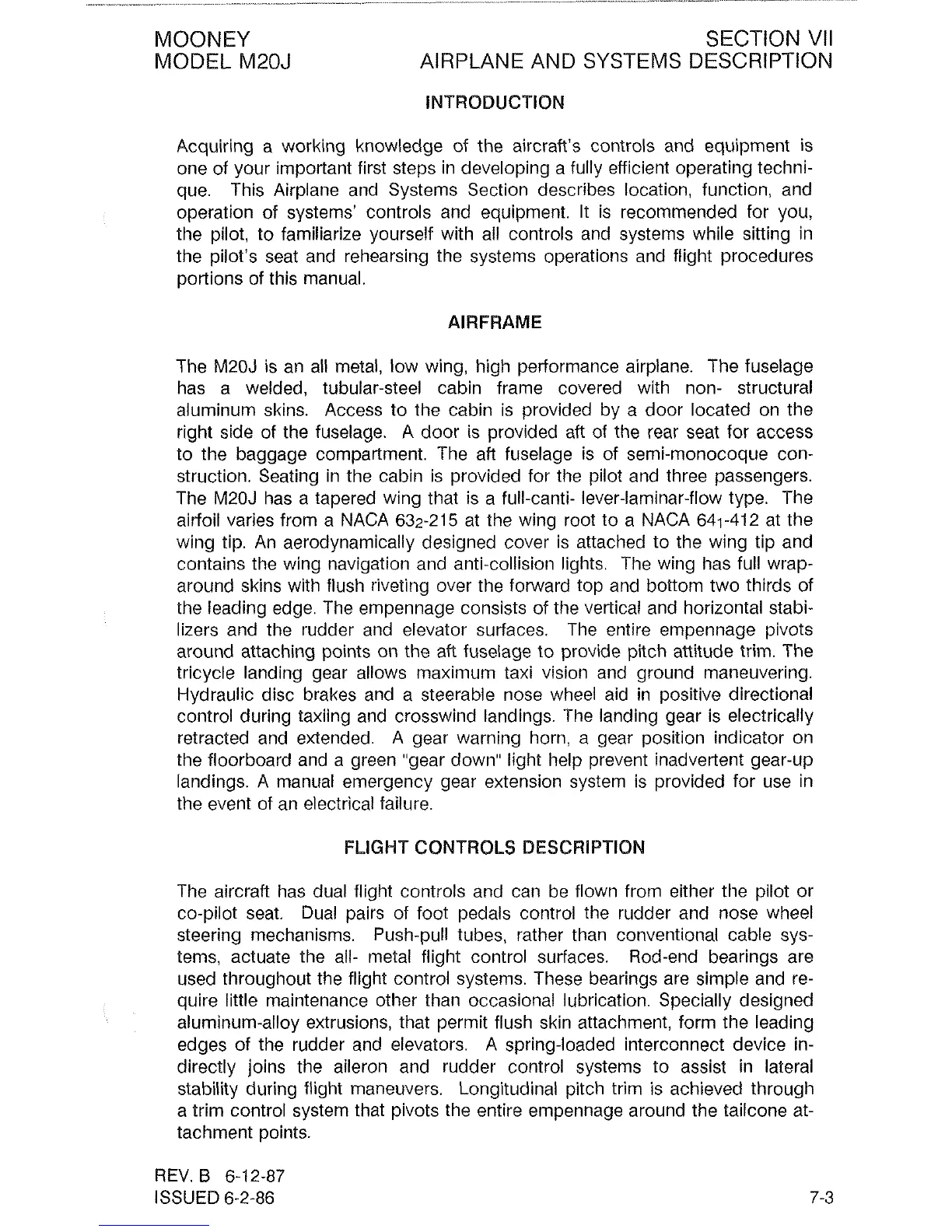
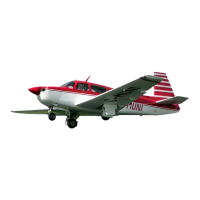
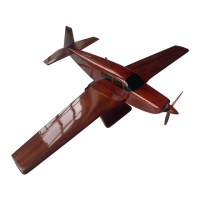
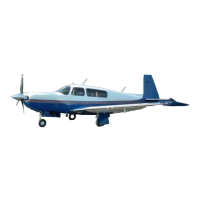
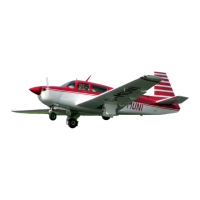
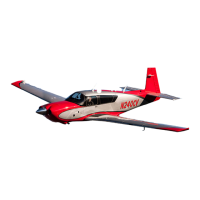
M20J is an all metal, low wing, high performance airplane. The fuselage
has a welded, tubular-steel cabin frame covered with non- structural
aluminum skins. Access to the cabin is provided by a door located on the
right side of the fuselage.
A
door is provided aft of the rear seat for access
to the baggage compartment. The aft fuselage is of semi-monocoque con-
struction. Seating in the cabin is provided for the pilot and three passengers.
The
M20J has a tapered wing that is a full-canti- lever-laminar-flow type. The
airfoil varies from a NACA 632-215 at the wing root to a NACA
641-412 at the
wing tip. An aerodynamically designed cover is attached to the wing tip and
contains the wing navigation and anti-collision lights. The wing has full wrap-
around skins with flush riveting over the forward top and bottom two thirds of
the leading edge. The empennage consists of the vertical and horizontal stabi-
lizers and the rudder and elevator surfaces. The entire empennage pivots
around attaching points on the aft fuselage to provide pitch attitude trim. The
tricycle landing gear allows maximum taxi vision and ground maneuvering.
Hydraulic disc brakes and a steerable nose wheel aid in positive directional
control during taxiing and crosswind landings. The landing gear is electrically
retracted and extended. A gear warning horn, a gear position indicator on
the floorboard and a green "gear down" light help prevent inadvertent gear-up
landings.
A
manual emergency gear extension system is provided for use in
the event of an electrical failure.
FLIGI-IT CONTROLS DESCRIPTION
The aircraft has dual flight controls and can be flown from either the pilot or
co-pilot seat. Dual pairs of foot pedals control the rudder and nose wheel
steering mechanisms. Push-pull tubes, rather than conventional cable sys-
tems, actuate the all- metal flight control surfaces. Rod-end bearings are
used throughout the flight control systems. These bearings are simple and re-
quire little maintenance other than occasional lubrication. Specially designed
aluminum-alloy extrusions, that permit flush skin attachment, form the leading
edges of the rudder and elevators A spring-loaded interconnect device in-
directly joins the aileron and rudder control systems to assist in lateral
stability during flight maneuvers. Longitudinal pitch trim is achieved through
a trim control system that pivots the entire empennage around the
tailcone at-
tachment points.
REV.
B
6-12-87
ISSUED 6-2-86




 To Next Page