1. Most refrigerants are heavier than air and sink to the floor or
accumulate in low areas.
2. Place the end of the sampling line in an area that provides the
instrument with a representative sample; ventilation Smoke Tubes
(P/N 458480) are useful in determining air flow patterns in ambient
sampling areas.
3. Properly exhaust the instrument to a safe area or to outside
atmosphere.
4. Ensure the sampling area is free of particulate matter and
condensing moisture; ensure sample lines will not draw moisture
up into the line.
NOTE: The sample gas must be adequately filtered before
entering the instrument. End-of-sample-line filters must be
used with the unit. These filters must be installed at the
end of all sample lines.
5. Ensure the end of the sampling line is unobstructed to allow the
sample to flow freely to the instrument.
6. Keep sample lines as short as possible to reduce transport time.
Ensure that tubing radii are wide enough to prevent kinking
or bending. Otherwise, an obstruction may occur, preventing
the instrument from sampling the intended area.
7. DO NOT:
• back-pressure the exhaust line or
• connect it to a vacuum source or
• install a flow meter in the exhaust line.
ALWAYS :
connect an exhaust line that is vented to a safe area or
an outside atmosphere.
Diffusion Units
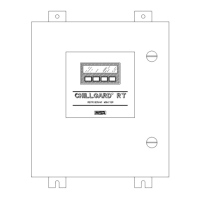
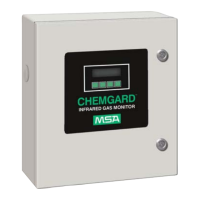
Diffusion units sample the refrigerant gas located at the base of the
refrigerant monitor. The visual indication for the unit is located on the
front of the unit. Other outputs are on the device can be used to provide
gas concentration, alarm status, and instrument status indications.
Consider the following guidelines when selecting the location for the
sampling point(s):
"
CAUTION
2-2


 To Next Page