41
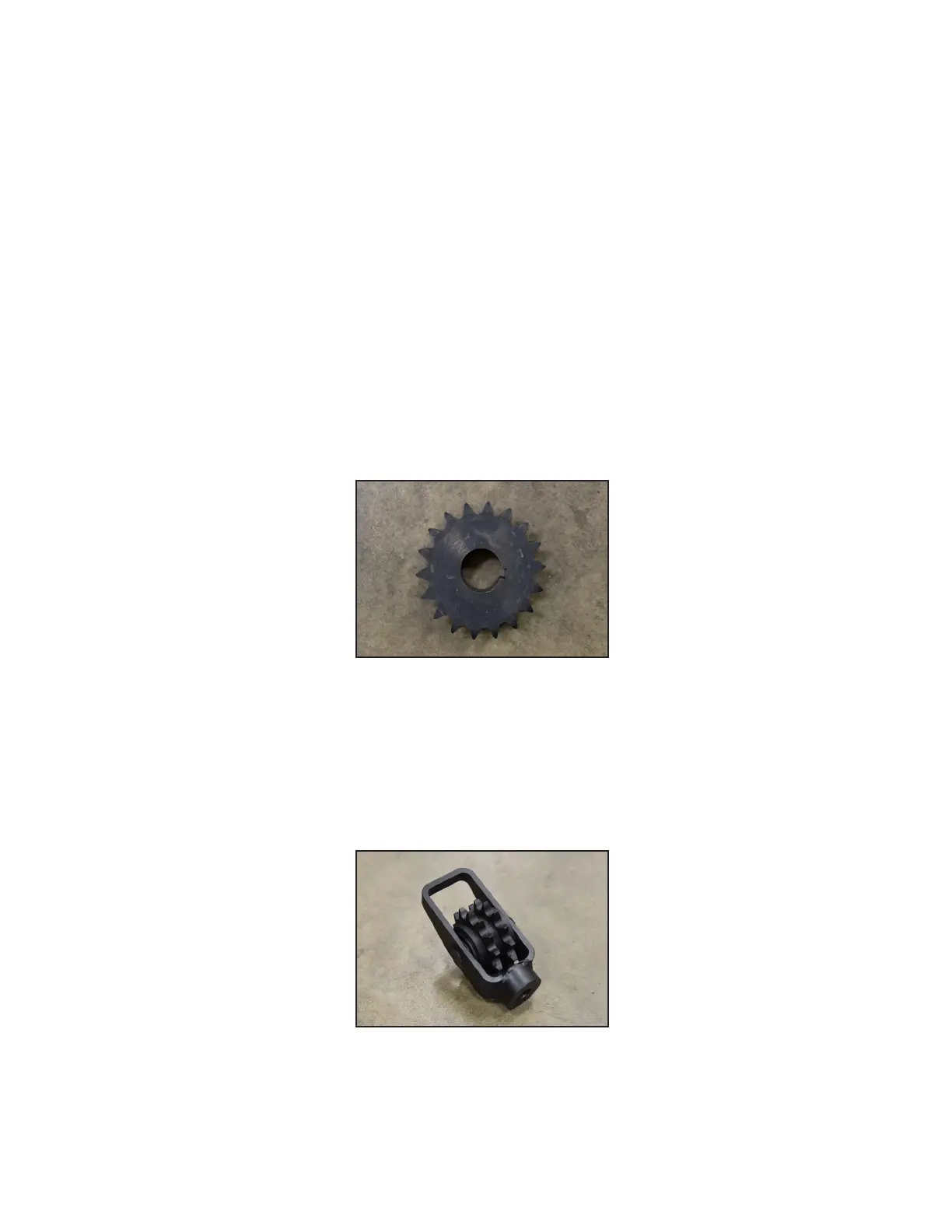
Figure-1
Sprocket
Chains
There are (3) major components to a chain system: tensioners, sprockets and the chains themselves. Each part
should be inspected for condition. Even if the chains are adjusted, worn components can cause improper driving
characteristics and possible damage.
Signs of Worn Chain Adjustment and/or Components
• When driving, there is a “popping” or “binding” noise especially when turning.
• Chain is rusty or seized, and does not move freely.
• Chain appears to be rubbing the body and/or frame components.
• Chain is “skipping” across the sprocket teeth rather than engaging.
• Chain slack is more than 1/4” (see Inspecting Slack).
• Worn bearings can also cause chain noises due to wobbling axles (see Bearings).
Sprocket Inspection
Each sprocket has teeth around its radius. When the chain moves, it spins the sprocket and thus turns the axle. If
the teeth are broken, short, skinny or rounded, the sprocket needs replaced. If the sprocket can significantly wob-
ble on the axle, the axle and sprocket should be replaced. See Removal under Axles.
Tensioner Style “A” Inspection
This tensioner is a contained, unserviceable unit. There is a single sprocket that spins on bearings. Ensure the
sprocket teeth are in healthy condition. Then, grab the sprocket and attempt to wiggle it in all directions. If there
is significant movement, the bearings are worn out and the tensioner needs replaced. Note: When replacing the
tensioner, ensure it is reinstalled in the same orientation as removed.
Figure-2
Tensioner A


 To Next Page