
 Need help?
Do you have a question about the Nemaxx 330 and is the answer not in the manual?
Welcome and overview of the manual's content for the inflatable boat.
Explains safety symbols (Danger, Warning) and general safety advice for boat operation.
Advises obtaining and following local regulations for operating the boat on specific waters.
Covers rescue aids, not overloading, adult supervision, and proper seating.
Details safety during operation, including familiarizing others, engine safety, and awareness of surroundings.
Emphasizes not exceeding the maximum recommended payload and number of persons allowed.
Explains boat design categories (A-D) based on wind force and wave height.
Explains the information found on the boat's type plate, including design category and maximum load.
Presents key specifications of the boat, such as size, load capacity, and dimensions.
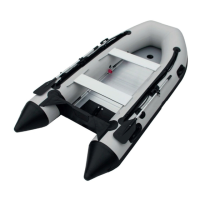
Identifies boat parts via diagrams of rear, front, and side views.
Illustrates and labels tow rings and lift handles on the front of the boat.
Identifies keel air chamber valve and air chamber valves on the side view.
Details the step-by-step process for installing the floor plates and side profiles.
Guides on how to install the seat before fully inflating the boat.
Explains the boat's valves and how to operate them for inflation and deflation.
Details connecting the pump, inflating to correct pressure, and avoiding overpressure.
Provides detailed steps for inflating side and keel air chambers to recommended pressure.
Describes the use and securing of paddles, oars, and oarlocks.
Covers safe mounting, positioning, and securing of the outboard engine.
Outlines the procedure for starting the outboard engine safely.
Details the process of draining air evenly from all chambers for deflation.
Explains how to fold the boat for storage or transport, ensuring deflation.
Provides instructions on safely lifting the boat out of water and towing it.
Lists essential checks before commissioning the boat for safe use.
Focuses on distributing weight for optimal stability and buoyancy.
Details safe driving at speed, handling waves, and specific situations like driving alone.
Covers engine angle, mounting security, and turning techniques for safe operation.
Addresses risks from air leaks, damage during landing, and sunlight exposure.
Covers dangers related to smoking, refueling, high altitudes, and water hazards.
Recommends suitable cleaning agents and advises against harsh chemicals.
Provides instructions for repairing small holes using the provided kit.

 To Next Page
 General