27
Tips
•A highly reflective or whitish (bright) subject may cause underexposure. In this case,
adjust exposure compensation toward the + side. Likewise, when shooting a dark sub-
ject with little reflection that might cause overexposure, compensate toward the – side.
...
If it is hard to decide on the level of compensation, it is best to take the same
shot several times with different exposures.
• When exposure compensation is active, the exposure-compensation indicator
appears at the top of the viewfinder.
• Remember to return the exposure-compensation indicator to the “0” after shooting.
Exposure-Compensation Indicator
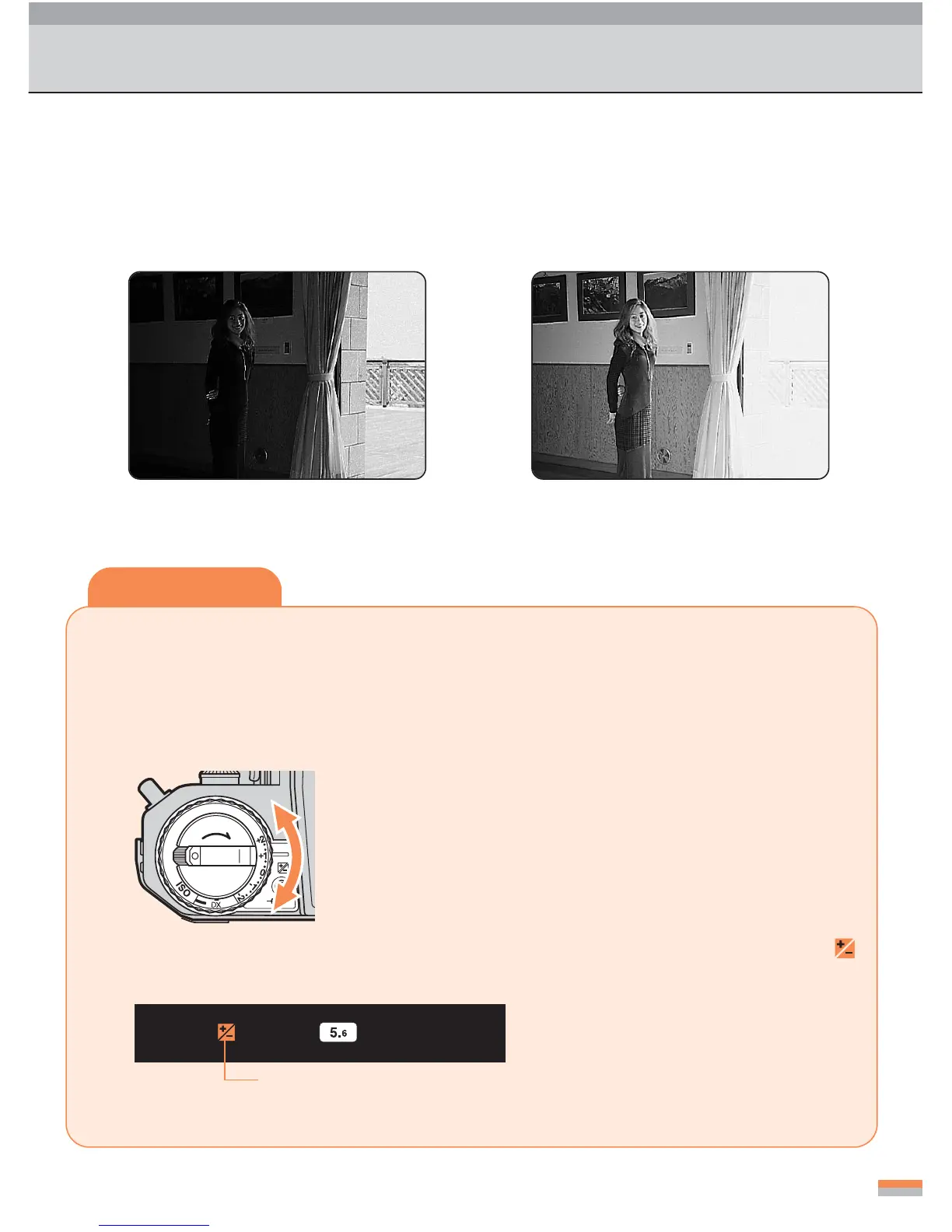
If there is an extreme difference in brightness between the main subject and the
background (e.g., a person surrounded by heavy shadows), it may be difficult to get the
correct exposure. In this case, or when you want to achieve a certain effect, exposure
compensation is recommended.
Example: Before compensation
Example: After compensation
(compensated toward the + side)
...
Without exposure compensation,
the face is underexposed.
...
With exposure compensation, you
get sufficient brightness on the
face.
Exposure-compensation indicator


 To Next Page