28 47_processor_Regatta_um_UK_40
8.6 Calibrating for drift
Drift angle is not easy to evaluate, calculate or measure. It is linked to the hull shape, the
design and presence of centerboards, foils, canting keel… Current is also a factor to
consider.
The drift angle is determined between the longitudinal axis of the boat and the progression
vector over the water surface. The issue being that the boat progresses on the longitudinal
axis of the wetted area, which makes an angle with the longitudinal axis of the boat when
heeling.
There are two methods to adjust the calibration for drift.
8.6.1 Using a drift calibration adjustment value:
This value is found on the Multigraphic or Multidisplay
Menu ► Sensor ► Leeway angle ►Calibration
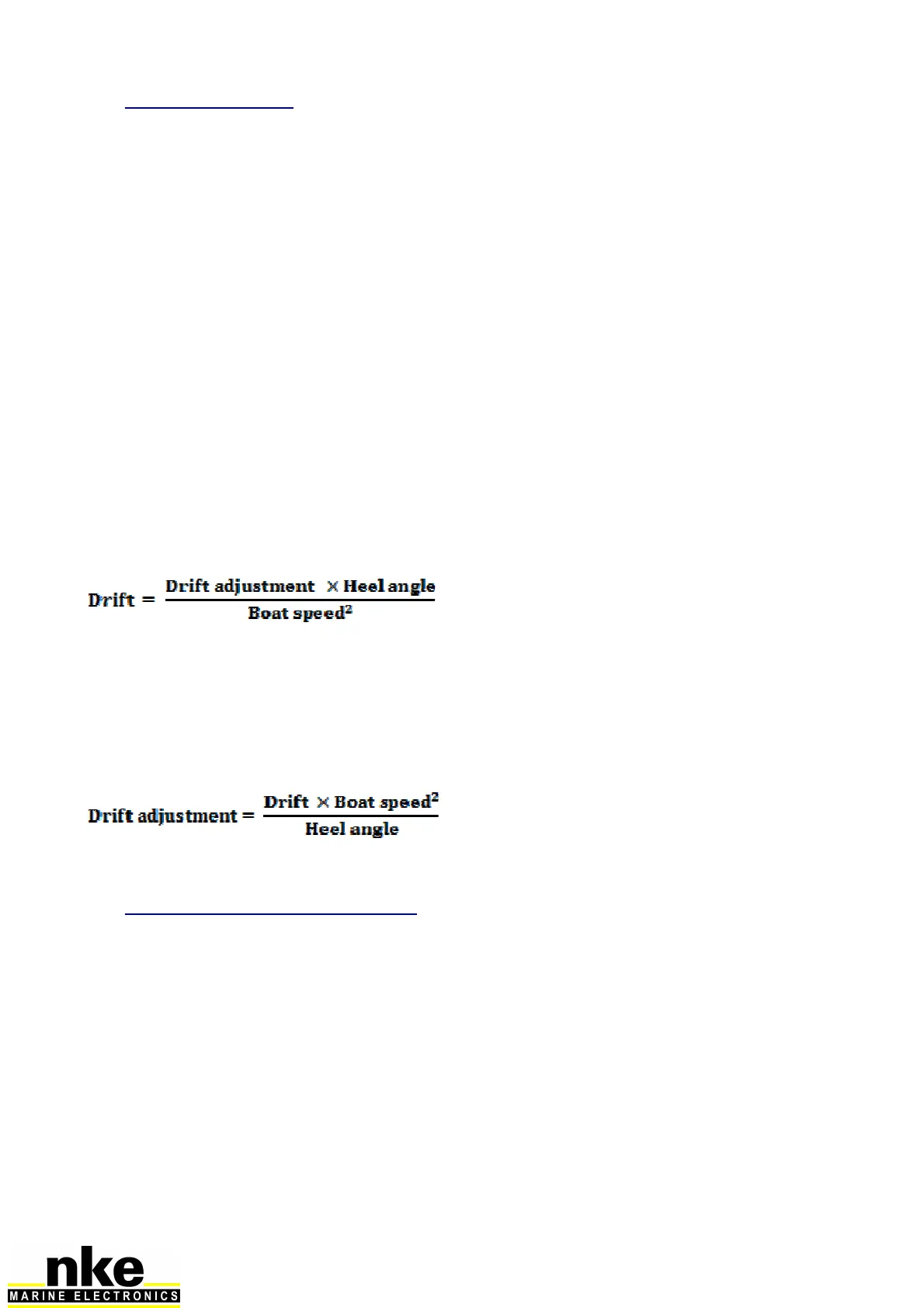
The drift formula is as below:
Where drift unit is degrees, heel angle unit is degrees, boat speed unit is knots and drift
will be °/nd². Drift adjustment is a global value applying to any navigation conditions. You
can either use an average value for any conditions or change that value for each wind
force. The drift angle against boat speed and heel angle can be found in the polar provided
by the architect. The drift adjustment values can be recalculated with the formula below,
and averaged.
8.7 Calibrating Apparent Wind Angle
Calibrating the Apparent Wind Angle will adjust the mast alignment error and apply
corrections for the wind shear effects.
This can be done only if the rig (backstays, headstay, kicker…) and sail tuning is
absolutely identical on port and starboard whilst sailing and carrying out the calibration.
The helmsman must keep focused on the telltales and completely ignore any information
coming from electronic instruments to avoid influences. Boat speed and heel must also be
identical from one side to the other. Set the correct sails for the weather conditions. We
recommend at least four legs are sailed in order to compare the readings and determine
an offset value to apply.
Inhibit the true wind correction table and reset the wind shear adjustment value. This can
be done from the home page by pressing on the « Calibration » button, and then choose
« Constants » (refer to § 6.2).


 To Next Page