Call control procedures 5-17
Digital Switching Systems DMS-250 ISDN Reference Manual MWC14 (CSP14)
generated at this switch is used for billing purposes by the interexchange
carrier.
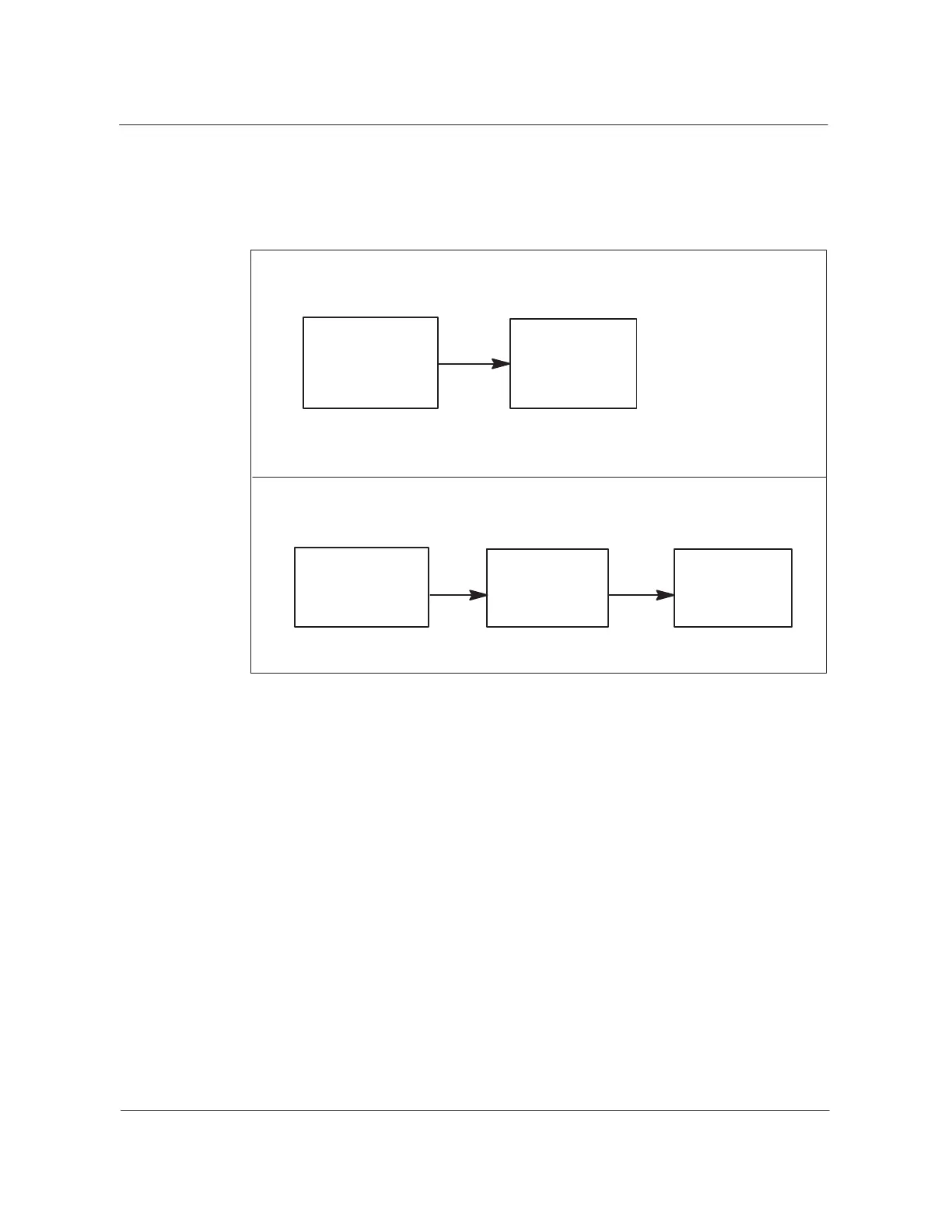
Figure 5-9
Billing record processing: DMS-250 switch to EVS ARU
Scenario 1: Terminating DMS-250 billing record is used to bill the call
DMS-250
EVS
ARU
Originating trunk class = operator service trunk
Terminating trunk class = operator service trunk
PRI
Scenario 2: Terminating DMS-250 billing record is not used to bill the call
DMS-250
EVS
ARU
Originating trunk class =
Terminating trunk class =
DMS-250
ISUP
PRI
Terminating
Terminating
when INWATXLA=N.
when INWATXLA=Y.
operator service trunk
operator service trunk
If the call does not terminate to a EVS ARU (for example, when a switch
transfers the call, as shown in Figure 5-9, scenario 2), the terminating trunk
class of the billing record contains the value “operating service trunk.” This
indicates that the CDRs or PNRs generated at the switches are not used for
billing purposes.
Initial Address Message
The SS7 Initial Address Message (IAM) sent from the originating switch to
the EVS switch contains the Network Specific Facilities parameter as
currently implemented. This parameter indicates whether the call was a
virtual network (VNET) or 800, 900, or PRISM call.
The IAM for all calls contains the Generic Digits parameter. This parameter
contains the originating switch identifier and originating trunk group of the
call. The IAM for 800 and 900 calls also contains the Generic Address
parameter. Generic Address parameter contains the 800 or 900 number
dialed.




 To Next Page