While use of a dehumidifier is not a “cure-all”, ventilation,
and moisture reduction continue to be important, operation of
the dehumidifier will reduce the amount of outside air needed
for ventilation. Heating load on the furnace will be reduced,
and the interior will be less drafty.
Dripping Ceilings Vents
During cold weather and even in short term occupancy,
condensation frequently forms on ceiling vents and may even
accumulate to the point of dripping onto the surfaces below.
This is frequently misinterpreted as a “leaking” roof vent but
is most often condensation drippage.
Interior Odor
New units may have a strong odor and even cause eye and
lung irritation when closed in hot weather. This is due to glues
used in production of forest products (plywood, paneling,
etc.). This condition passes with time, but in an extreme
condition, open the door, windows, and vents to allow the
interior to “air out” for several hours.
Fire and Safety
The hazard and possibility of fire exists in all areas of life, and
the recreational lifestyle is no exception. Your camper is a
complex device made up of many materials – some of them
flammable. But like most hazards, the possibility of fire can be
virtually eliminated by recognizing the danger and practicing
common sense safety and maintenance habits.
Recreational vehicle fires are generally caused by unattended
food cooking on the stove or in the oven, faulty or damaged
wiring and electrical devices, fuel leaks (both gasoline and
propane), or carelessness. The most common careless acts
include smoking in bed, leaving children unattended and
cleaning with flammable liquids.
Consider These Fire Safety Suggestions:
Before refueling your truck or any fuel tank near your camper,
be sure to turn off all pilots and appliances in your camper.
Consider the cause and severity of the fire and the risk
involved before trying to put it out. If the fire is major or is fed
by gasoline, propane, or any type of oil product, stand clear of
the vehicle, and wait for the fire department or other
emergency assistance.
If fire damages your camper, do not use it until it has been
thoroughly examined and the cause of the fire is found and
fixed.
All occupants of the camper should become familiar with the
audible sound of the smoke, propane leak and
CO detectors. If an alarm sounds, investigate the cause. Do not
remove the detector to silence the alarm.
Teach everyone in the camper how to use the entry door
locking system and emergency exits. Occasionally open the
emergency exit to prevent the seal from sticking. Always keep
the dead bolt on the entry door in working condition.
Fire Extinguishers
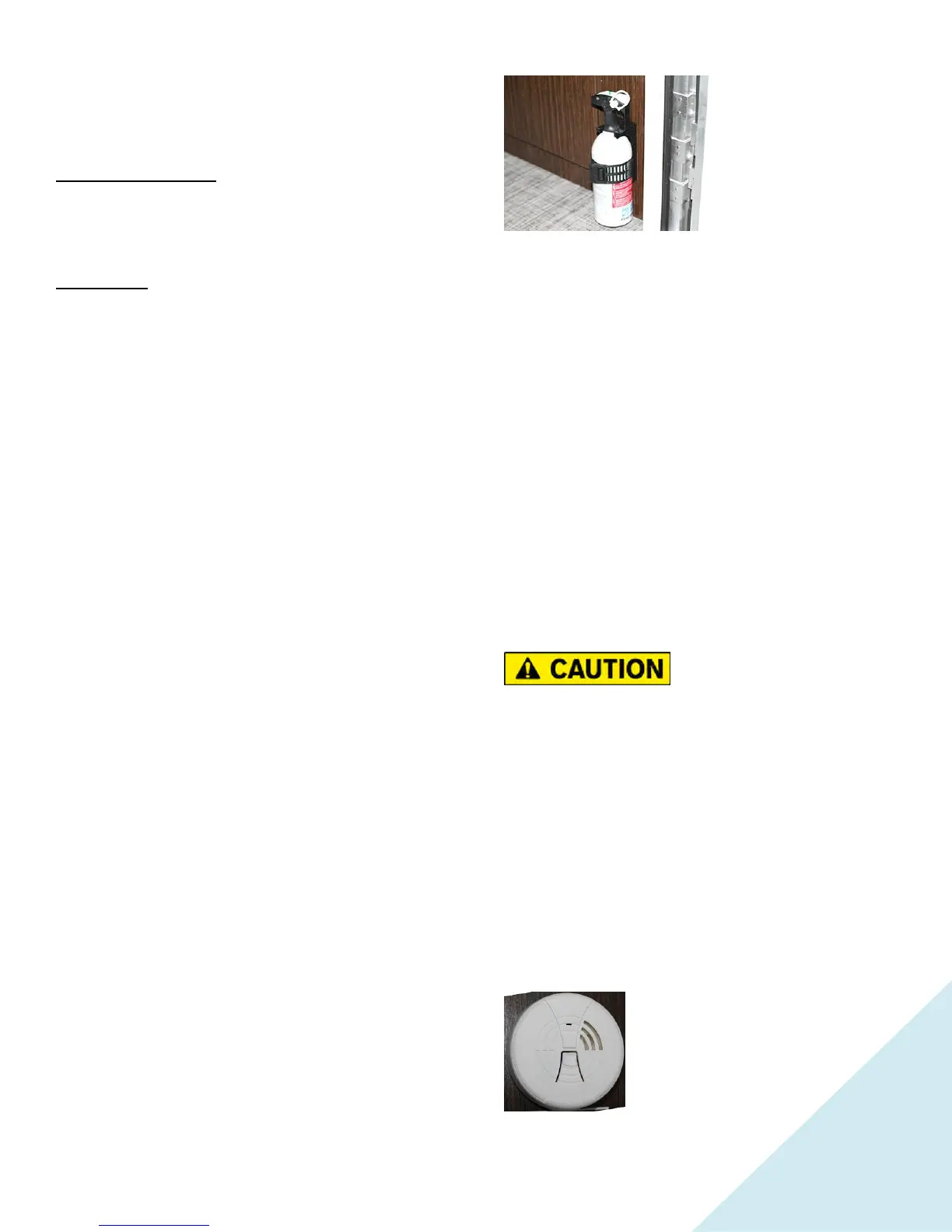
The fire extinguisher in your camper is located near the main
entry door. Your fire extinguisher should be replaced
immediately after use or discharge.
The fire extinguisher
furnished with your
camper is rated for
Class B (gasoline,
grease, flammable
liquids) and Class C
(electrical) fires since
these are the most
common types of fires
in recreational vehicles. Read the instructions on the fire
extinguisher. Know how and when to use it. You and your
family should be familiar with its operation. If you find it
necessary to use the fire extinguisher, stand 45 degrees from
the flame and spray side to side, starting at the top of the
flame. Use caution to avoid standing upwind or uphill. If
flames are climbing, spray vertical and work the retardant
downwards. Dry chemical flame retardant should be cleaned
away as soon as possible.
If you decide it is safe to fight a fire with an extinguisher
TIP: Use the ‘PASS’ method. Familiarize yourself and all
occupants with this procedure;
Pull the pin (some extinguishers may have a cartridge
you need to push).
Aim the nozzle at the base of the fire.
Squeeze the handle to release the extinguishing
agent.
Spray the base of the fire. (If you aim at the flames,
you won’t extinguish the fire.)
Avoid inhaling the dry chemicals from the fire extinguisher.
Although non-toxic, they could cause temporary irritation.
When the fire is out, clean the area as soon as possible. The
dry chemical may cause surface damage if left too long.
DO NOT use water to extinguish a fire.
Water can spread some types of fire and electrocution is
possible.
Smoke Detector
Most fire casualties are caused by inhalation of toxic fumes
(smoke) from a fire and not by flame. The smoke detector
responds to smoke that enters the sensing chamber. It does not
sense gas, heat, or flame. A ceiling mounted, battery powered
smoke detector is in the living /cooking area of your camper.
Please read the smoke detector Owner’s Manual for details on
testing and caring for this important
safety device.
Smoke detectors may not have time to
alarm before the fire causes damage,
injury or even death.
A smoke detector works only for
detecting smoke, not fire. The alarm will
sound only if smoke reaches the sensor.


 To Next Page