10) Pour 2 to 3 cups of RV Antifreeze down each drain to
fill the drain traps with antifreeze.
Draining the water system alone will not provide adequate
cold weather protection. If the camper is to be unheated during
freezing temperatures, consult your dealer for the best
winterizing procedure for your climate. Your dealer can
supply you with one of the special non-toxic antifreezes that
are safe and approved for use in RV water systems. Follow the
instructions furnished with the antifreeze.
Do not use automotive or windshield washer antifreeze in the
camper water system. These could be harmful if swallowed.
Winterizing with RV Antifreeze
1) Make sure the water pump switch is off.
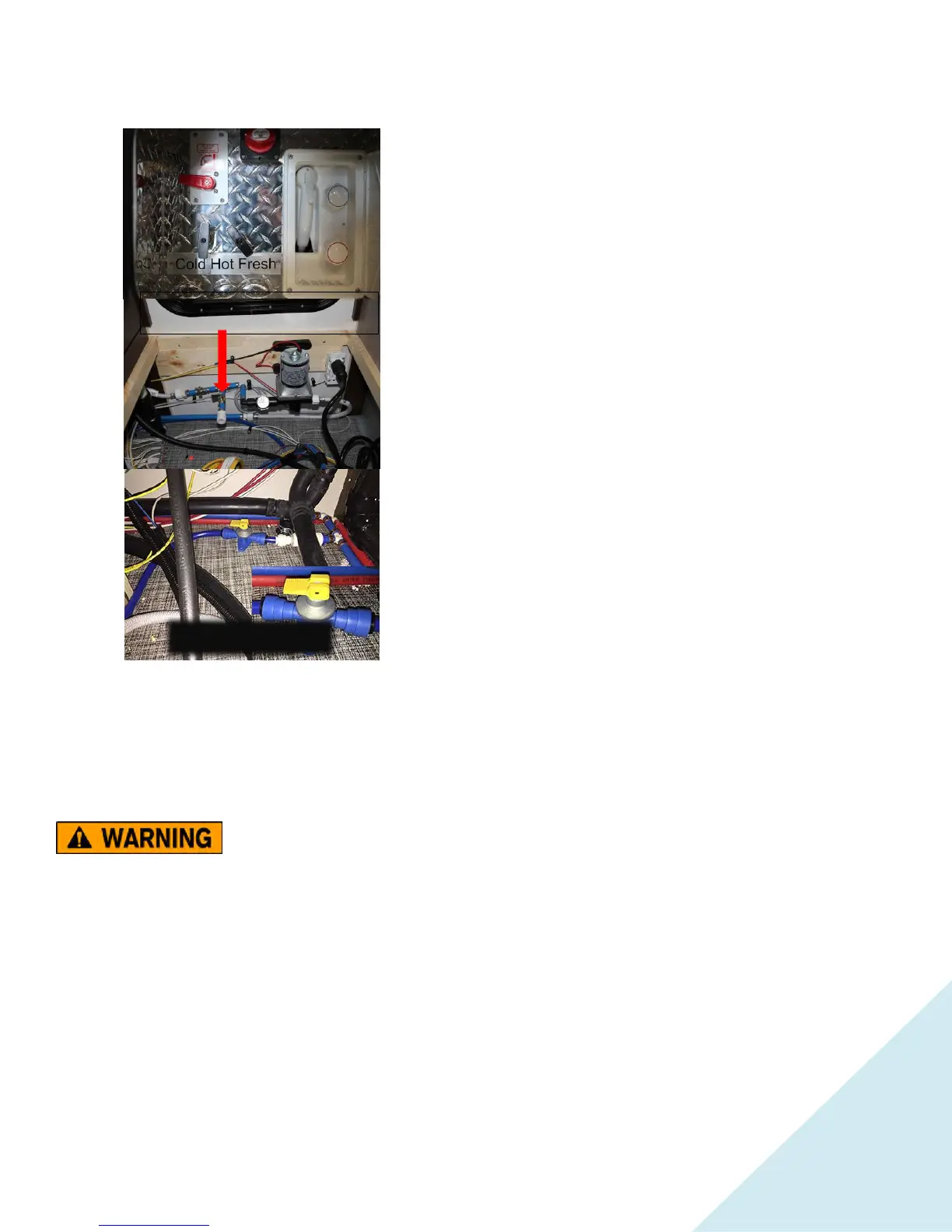
2) Insert the hose from the winterizing valve into a
container of RV approved non-toxic antifreeze.
3) Turn the water heater bypass valve to Bypass
position and drain the water heater by opening the
safety relief valve.
4) Open faucets to relieve pressure. (Hot and Cold)
Open the hot and cold low point drains.
5) Drain the water tank by opening the tank drain and
leave open to drain completely.
6) After the system is completely drained, close all
faucets and turn off the low point drain valves.
7) Turn the winterize valve to “Winterize” position.
8) Turn ON the water pump switch.
9) Open the hot water faucet farthest from the water
tank. When antifreeze appears, let at least one cup
run down the drain to winterize the P-trap. Do the
same to all other water outlets, hot and cold,
including shower, toilet, and outside shower.
10) Turn OFF the pump switch.
11) Open a water faucet to relieve pressure, and then
close.
12) The procedure is complete.
Water Heater Bypass 2017 Models
The water heater bypass valve is located behind the water
heater and is used when winterizing the water system for
storage. By rotating the lever to the bypass position, antifreeze
will not enter the water heater requiring less antifreeze to
protect the water system plumbing. Follow the instructions
shown on the valve.
NOTE: Be sure to drain the water heater by opening the drain
plug at the bottom of the heater and open the pressure relief
valve.
To De-Winterize:
1) First, fill the water tank.
2) Turn the winterizing valve to normal flow position.
3) Turn the water heater bypass valve to “bypass”; this
will keep antifreeze from entering the water heater.
4) Turn ON the water pump switch.
5) Open the water faucet farthest from water tank,
catching antifreeze in a container for future use, until
clear water appears. Shut off the faucet. Do this to all
other faucets and the showerhead, including outside
shower.
6) Turn the water heater bypass valve to normal flow
position.
7) Open a hot water faucet until water appears.
8) Your system is now ready for use.
Reactivating Camper after Storage
The following procedure checklist assumes that you stored the
camper with care. If you didn’t and extensive freeze damage
or other serious deterioration may have occurred, please
consult your Nücamp RV Dealer Service Center for advice.
Outside Area
1) Thoroughly inspect the outside of the camper and
open all doors and compartments. Check for animals
or insect intrusion, water damage or other
deterioration.
2) Remove all appliance vent, ceiling vent and air
conditioner coverings. Be sure all furnace, water
heater, and refrigerator openings are clear and free of
debris or insect nests, webs, etc.
NOTE: Spiders and other small insects climb into
burner tube(s). The spiders create webs, build nests
and lay eggs. These webs and nests can be very
small, but they are very strong and can block the flow
of gas.
Mud Daubers are another insect to watch out for. It is
not uncommon for Mud Daubers to build their mud


 To Next Page