HeatWater.com | WaterService@nyle.com | (800) 777-6953 | Rev. IM-E360-060523 HeatWater.com | WaterService@nyle.com | (800) 777-6953 | Rev. IM-E360-060523
Installation: Optional Ducting & Ventilation
40
Installation: Optional Ducting and Ventilation
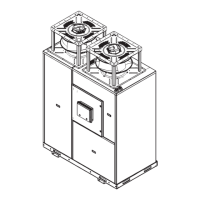
e-Series heat pumps draw air in through the evaporator coil, and discharge air
from the top of the unit at the fans. A standard installation would discharge this
area to the front of the unit, using the ductless cowl accessory. This is typical of
outdoor installations.
Heat pumps with exposed fans on top of the unit must always cover
and protect the fans. This is achieved with ducting or with a ductless
cowl accessory. Failure to cover the fans can result in damage to the
unit and/or severe personal injury or death. NEVER operate the fans if
they are not covered and protected.
Interior, ductless applications require very close considerations to
heat gains and losses to avoid overcooling the space, and/or reducing
the heat pump eciency or performance. These calculations should
be undertaken by a qualified engineer, and should take into account
current and future uses of the space. For example, if the heat gain
from a large steam boiler allows the siting of a large heat pump in
a mechanical room, the lifespan and likely replacement plan for that
boiler needs to be considered.
Note that while air source heat pumps do cool their discharge
air, cooling is entirely dependent upon the need for hot water
production. Since the unit cannot be controlled to any particular
setpoints for cooling, it can only be considered as a supplement for
another, primary cooling system.
In most indoor installations, ducting will be required to operate safely and
eciently. Ducting allows the unit to draw in outdoor air, and/or to discharge air to
the outdoors, or to control both intake and discharge air movement. Ducting can
significantly reduce freeze risks, and it can simplify maintenance access and/or
provide superior protection to many potential outdoor locations.
e-Series heat pumps draw air in through the evaporator coil, and discharge air from
the top of the unit at the fans. A standard installation would discharge this area
to the front of unitof the unit, using the ductless cowl accessory. This is typical of
outdoor installations.


 To Next Page