EasyManua.ls Logo

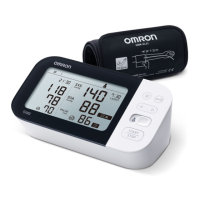
Omron BP7350CAN - User Manual

Omron BP7350CAN
48 pages
Print Icon
To Next Page IconTo Next Page
Loading...
EN
FR
3787149-9A
7 Series Upper Arm / Au Bras Série 7
Blood Pressure Monitor /
Tensiomètre
Model / Modèle BP7350CAN
Instruction Manual
/
Guide de l’utilisateur

Questions and Answers

  • F
    fbairdAug 20, 2025
    What to do if my Omron Blood Pressure Monitor displays 'E1' or the arm cuff does not inflate?
    • B
      Brenda HollandAug 20, 2025
      The 'E1' symbol appears, or the arm cuff does not inflate, due to a few potential reasons: * The air plug may not be fully inserted into the monitor. Make sure the air plug is securely inserted. * The arm cuff might not be applied correctly. Ensure the arm cuff is applied correctly and try another measurement. * There may be an air leak in the arm cuff. If so, replace the arm cuff with a new one.
  • F
    Fred MccallAug 22, 2025
    What to do if my Omron BP7350CAN Blood Pressure Monitor displays 'E2' or a measurement cannot be completed after the arm cuff inflates?
    • C
      chelseawintersAug 22, 2025
      The 'E2' symbol appears, or a measurement cannot be completed after the arm cuff inflates, due to these reasons: * You may be moving or talking during the measurement, or the arm cuff is not inflating sufficiently. Remain still and do not talk during measurements. If 'E2' appears repeatedly, manually inflate the arm cuff until the systolic pressure is 30 to 40 mmHg above your previous readings. * Your systolic pressure may be above 210 mmHg, preventing a measurement. Manually inflate the arm cuff until the systolic pressure is 30 to 40 mmHg above your previous readings.
  • A
    Ashley HinesAug 25, 2025
    What to do if my Omron BP7350CAN displays 'Err' and cannot connect to a smart device?
    • S
      Stacey SmithAug 25, 2025
      The 'Err' symbol appears when the monitor cannot connect to a smart device or transmit data correctly. Follow the instructions shown in the “OMRON connect US/CAN” app. If the symbol persists after checking the app, contact customer service.
  • A
    Andrea ButlerAug 26, 2025
    What to do when the battery symbol flashes on my Omron BP7350CAN Blood Pressure Monitor?
    • P
      Pamela EverettAug 26, 2025
      When the battery symbol flashes, it indicates that the batteries are low. It is recommended to replace all 4 batteries with new ones.
  • M
    Micheal BatesAug 28, 2025
    What to do if my Omron Blood Pressure Monitor displays a battery symbol or turns off unexpectedly?
    • F
      Felicia HarperAug 28, 2025
      If the battery symbol appears, or the monitor turns off unexpectedly during a measurement, it means the batteries are depleted. Immediately replace all 4 batteries with new ones.
  • J
    Jacob ParkerAug 30, 2025
    What to do if nothing appears on the display of my Omron BP7350CAN Blood Pressure Monitor?
    • M
      Michelle WilsonAug 30, 2025
      If nothing appears on the display, it could be due to depleted batteries or improperly aligned battery polarities. Check the battery installation to ensure proper placement.
  • C
    Christopher HarringtonSep 1, 2025
    Why are the readings on my Omron Blood Pressure Monitor too high or too low?
    • A
      Andrew PattonSep 1, 2025
      Blood pressure varies constantly, and many factors, including stress, time of day, and how you apply the arm cuff, may affect your blood pressure. Review the instructions on proper usage.
  • A
    Angela MorrisSep 3, 2025
    Why does 'Err' appear on my Omron BP7350CAN?
    • K
      Katherine AndrewsSep 3, 2025
      The 'Err' symbol appears because the monitor has malfunctioned. Try pressing the [START/STOP] button again. If the “Err” symbol continues to appear, you should contact customer service.
  • L
    Lauren RyanSep 5, 2025
    Why does 'E3' appear on my Omron BP7350CAN Blood Pressure Monitor?
    • S
      Stephen WebbSep 5, 2025
      The 'E3' symbol appears if the arm cuff is inflated exceeding the maximum allowable pressure. Avoid touching the arm cuff or bending the air tube during the measurement. If inflating the arm cuff manually, please refer to the instructions.
  • J
    Jennifer BergSep 7, 2025
    Why does 'EE' appear on my Omron BP7350CAN Blood Pressure Monitor?
    • A
      andreawatsonSep 7, 2025
      The 'EE' symbol appears if you move or talk during a measurement, or if vibrations disrupt the measurement. Remain still and do not talk during a measurement.

Summary

Introduction

Safety, Intended Use, and Contraindications

Covers essential safety guidelines, intended use, and contraindications for the monitor.

Product Inspection and Symbol Reference

Instructions for receiving inspection and where to find symbol explanations.

Important Safety Information

General Warnings and Precautions

Highlights critical warnings, potential hazards, and general safety instructions.

Data Transmission Safety Notes

Details about radio frequency emissions and usage restrictions for data transmission.

Important Safety Information

AC Adapter and Battery Handling

Guidelines for safe handling and usage of the AC adapter and batteries.

Usage Cautions and Potential Hazards

Describes potential hazards leading to minor injury or equipment damage during use.

Important Safety Information

Measurement Best Practices

Tips for accurate readings, including rest, environment, and avoiding talking.

Data Transfer Integrity Warning

Warning about not interrupting data transfer by removing batteries or AC adapter.

Important Safety Information

AC Adapter Detailed Handling

Specific instructions on handling AC adapter cables and storage.

Battery Detailed Usage

Detailed instructions on battery insertion, type, and handling fluid.

1. Know Your Monitor

Product Contents and Overview

Lists package contents and identifies key monitor and arm cuff components.

1. Know Your Monitor

Monitor Back and Side Features

Identifies connection ports and battery compartment on the monitor's rear and sides.

Arm Cuff Components Identification

Details the parts of the arm cuff, including air plug and tube.

1.3 Display and Symbols

Display Indicators A-H

Explains common display symbols like Average, Memory, Systolic BP, and Heartbeat.

Display Indicators I-R

Explains other display symbols like Bluetooth, Battery, High BP, and Movement Error.

1.3 Display and Symbols

Detailed Symbol Explanations (A-J)

Detailed explanation of various display symbols and their meanings, including Bluetooth status.

Detailed Symbol Explanations (K-R)

Further explanation of symbols for Sync, Battery, High BP, OK, Movement Error.

1.3 Display and Symbols

Irregular Heartbeat Symbol Interpretation

Explains the symbol for irregular heartbeat detection and its interpretation.

Pulse Rate Display

Indicates how pulse rate is displayed after measurement.

1.3 Display and Symbols

Irregular Heartbeat Definition and Display

Provides detailed definition and visual representation of irregular heartbeat detection.

Pulse Rate Display Clarification

Clarifies the display of pulse rate after measurement.

1.4 Classification of BP (Blood Pressure)

Adult Blood Pressure Categories

Presents the ACC/AHA guidelines for classifying blood pressure categories in adults.

Warning: Avoid Self-Diagnosis

Reiterates the warning against self-diagnosis and emphasizes consulting a physician.

2. Preparation

2.1 Installing Batteries

Step-by-step guide on how to insert batteries into the monitor correctly.

2. Preparation

2.2 Setting the Date and Time

Instructions for manually setting the date and time on the monitor.

2. Preparation

Confirming and Storing Date;Time Settings

Continues the process of setting date and time, including confirmation and storage.

2.3 Blood Pressure Measurement Tips

Ensuring Accurate Readings

Tips for accurate readings, including stress, environment, and timing.

Pre-Measurement Cautions

Safety cautions regarding activities before taking a measurement like eating or drinking.

2.4 Applying the Arm Cuff

Connecting the Arm Cuff to Monitor

Instructions for plugging the arm cuff into the monitor's air jack.

Cuff Placement - Clothing Advice

Advises removing tight clothing from the arm during measurement for comfort.

2.4 Applying the Arm Cuff

Arm Cuff Placement on Left Upper Arm

Detailed steps for positioning the arm cuff on the left upper arm.

Arm Cuff Placement on Right Upper Arm

Specific instructions for applying the arm cuff to the right arm.

2.5 Sitting Correctly

Proper Posture for Measurement

Guidelines for maintaining a relaxed and correct posture during measurement.

2.6 Selecting a User ID

User ID Selection for Memory

Instructions on how to select a user ID for storing readings.

3. Using Your Monitor without a Smart Device

3.1 Taking a Measurement

Step-by-step guide to taking a blood pressure measurement without a smart device.

Measurement Process Details

Details the steps from pressing start to displaying results, including symbols.

3. Using Your Monitor without a Smart Device

Turning Off Monitor and Wait Times

How to turn off the monitor and recommended wait times between measurements.

Guest Mode Operation Instructions

Instructions for using the monitor in guest mode without storing readings.

3. Using Your Monitor without a Smart Device

Manual Measurement for High Systolic Pressure

Procedure for taking measurements when systolic pressure exceeds 210 mmHg.

Caution: Over-inflation Risk

Warning about potential bruising from inflating the cuff too high.

4. Using Your Monitor with a Smart Device

4.1 Pairing Your Monitor with a Smart Device

Steps for connecting the monitor to a smart device via Bluetooth.

OMRON Connect App Installation Guide

Guidance on downloading and installing the OMRON connect app.

4. Using Your Monitor with a Smart Device

Confirming Smart Device Connection

How to verify the monitor is successfully connected to the smart device.

4.2 Taking a Measurement with App

Instructions for taking measurements when using the smart device app.

4.3 Disabling;Enabling Bluetooth

Bluetooth Function Control

How to enable or disable the Bluetooth function on the monitor.

Warning: RF Restrictions

Safety warning regarding RF usage in restricted areas like aircraft or hospitals.

5. Using Memory Function

5.1 Viewing Stored Readings

Steps to access and view past blood pressure readings stored in the monitor.

Scrolling Through Memory Data

How to scroll through stored readings using the buttons.

5.2 Viewing the Average Reading

Calculating and Displaying Average Readings

Instructions on how to view the average of recent readings.

6. Other Settings

6.1 Deleting All Stored Readings

Procedure to clear all stored blood pressure readings from the monitor.

6.2 Restoring Your Monitor to the Default Settings

Resetting Monitor to Factory Defaults

How to reset the monitor to its original factory default settings.

7. Error Messages and Troubleshooting

Troubleshooting Errors E1 and E2

Explains possible causes and solutions for E1 (no inflation) and E2 (measurement failure).

7. Error Messages and Troubleshooting

Troubleshooting Errors E3, E4, E5, Pulse Issues

Details causes and solutions for errors related to cuff pressure, movement, and pulse detection.

7. Error Messages and Troubleshooting

Troubleshooting Connectivity and Data Errors

Explains error codes related to Bluetooth connection, data transfer, and date/time.

7. Error Messages and Troubleshooting

Troubleshooting Battery and Display Issues

Covers problems related to depleted batteries, no display, and incorrect readings.

Troubleshooting Communication and General Problems

Addresses issues with smart device communication and other general problems.

8. Maintenance

General Maintenance and Warranty

General maintenance advice and warning about modifications voiding the warranty.

Proper Storage Instructions

Guidelines for properly storing the monitor and arm cuff.

8.3 Cleaning

Cleaning the Monitor and Arm Cuff

Instructions on how to clean the monitor and arm cuff safely.

8.4 Disposal

Product Disposal Regulations

Advice on disposing of the monitor and accessories according to local regulations.

9. Optional Accessories

List of Available Accessories

Lists optional accessories like Easy Wrap ComFit Cuff and AC Adapter.

9. Optional Accessories

Using the Optional AC Adapter

Instructions on how to connect and use the optional AC adapter.

10. Specifications

Device Technical Specifications

Technical details of the monitor, including model, ranges, accuracy, and power.

10. Specifications

Physical and Dimensional Specifications

Details on weight, dimensions, cuff circumference, memory, and contents.

Safety and Compliance Standards

Information on protection against electric shock and applied parts.

10. Specifications

Wireless Communication Interference Notes

Explains potential interference from other wireless devices operating on similar frequencies.

10. Specifications

Product Pictogram Explanations

Explains pictograms used on the product, like artery positioning and cuff compatibility.

11. FCC;ISED Statement

FCC Caution and Interference Correction

Details FCC rules, compliance conditions, and measures to correct interference.

11. FCC;ISED Statement

RF Exposure and Compliance

States compliance with FCC/ISED radiation exposure limits and RF energy levels.

12. Limited Warranty

Warranty Coverage and Service

Outlines the warranty period for the monitor and arm cuff and how to obtain service.

Warranty Disclaimers and Legal Limitations

Details OMRON's warranty disclaimers and limitations on liability.

12. Limited Warranty

Customer Service Contact Information

Provides website and toll-free number for customer service inquiries.

Omron BP7350CAN Specifications

General IconGeneral
Device TypeUpper Arm Blood Pressure Monitor
Measurement MethodOscillometric
Irregular Heartbeat DetectionYes
ConnectivityBluetooth
Power Source4 AA batteries or AC adapter
Average ReadingYes
AC AdapterOptional
TechnologyIntelliSense
Cuff Size22-42 cm
Memory60 readings
DisplayLCD
Warranty5-year warranty

Related product manuals