Guide Bar
83 Mechanical Timber Harvesting Handbook
Guide Bar Troubleshooting
Rail Conditions
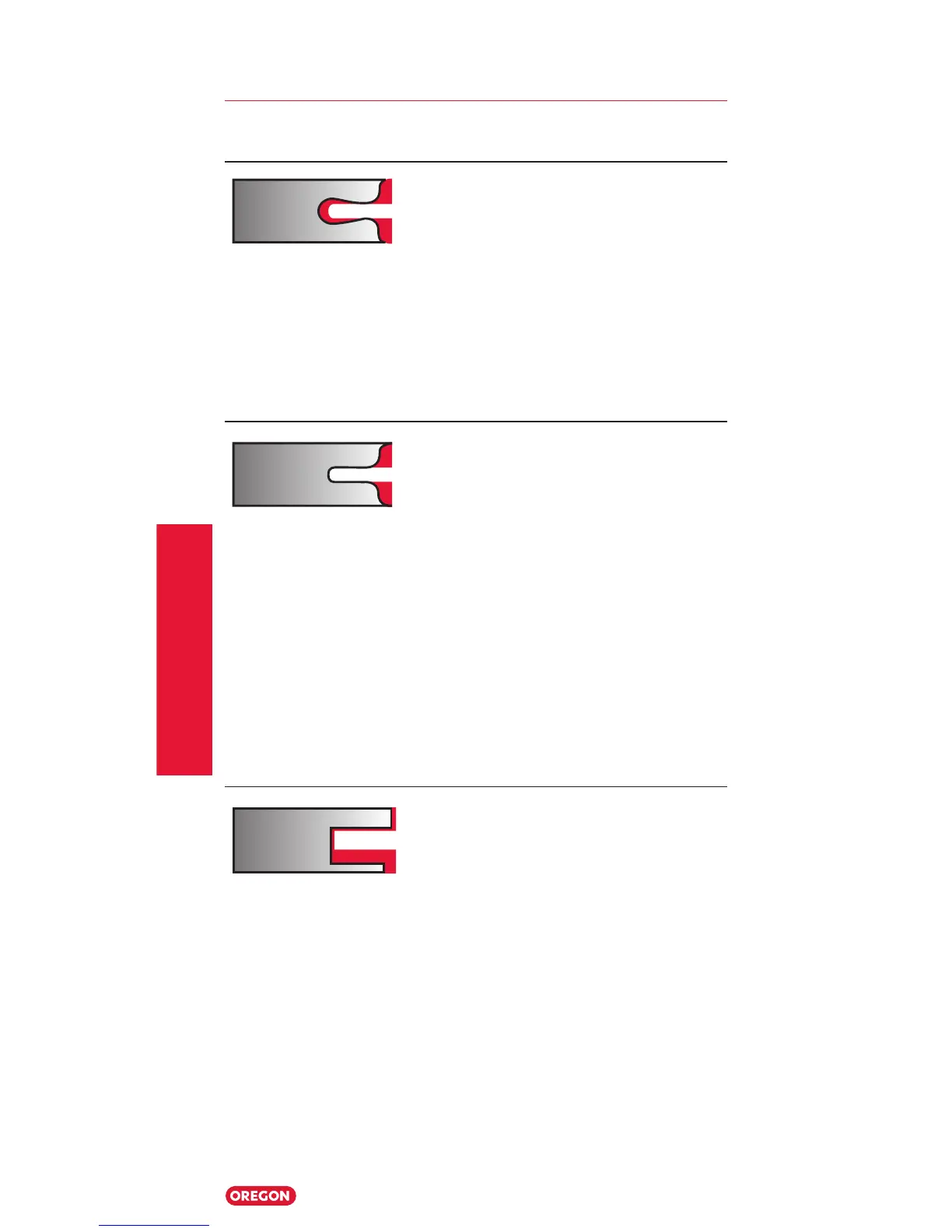
1. Rails are worn down, groove
becomes shallow.
Cause: Normal wear on rails.
Symptoms: Chain rides on groove
bottom causing drive link damage,
chain leans during cutting.
Remedy: Guide bar is at the end of
life, replace the guide bar. If wear
occurs too quickly, check for proper
lubrication, chain sharpness, and
guide bar feed load.
2. Outside edge of rails develop
wire edges.
Cause: Normal wear on rails.
Symptoms: Left alone, wire edges can
break off and chip away rail material.
Remedy: Use flat file or grinder to
square up the guide bar’s rails and
remove wire edges. If wire edges
develop too quickly, check for proper
lubrication, saw chain sharpness, and
guide bar feed load.
Note: If using a grinding wheel, direct
debris towards the tail, then clean
out the grooves. Grinding debris can
cause nose components to wear
quickly or jam.
3. Rail on one side is worn thin.
Cause: Damaged or dull cutters on
one side (see saw chain section).
Saw chain leaning over in a worn
groove or using a .063"-gauge saw
chain in a .080"-gauge guide bar.
Symptoms: Incomplete cuts, leading
cuts, guide bar bound in the cut.
Remedy: Replace the guide bar,
check for the correct saw chain
gauge, replace the saw chain if
it continues to cut crooked after
sharpening (see Sharpening Saw
Chain, pgs. 35 – 38).



 To Next Page