Guide Bar
85 Mechanical Timber Harvesting Handbook
Guide Bar Troubleshooting
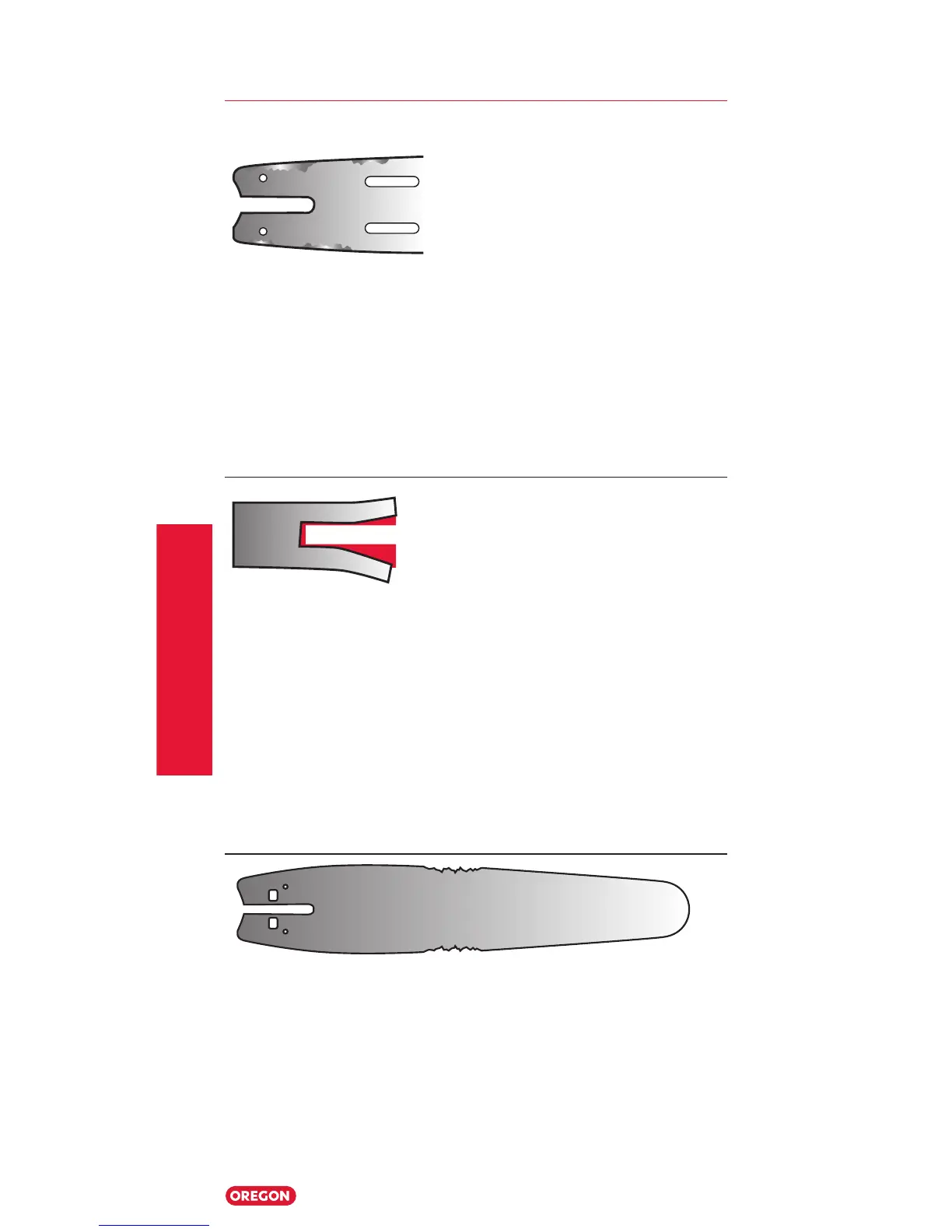
7. Blue spots at the tail of the
guide bar.
Cause: Misaligned drive sprocket
or rails pinched because debris not
removed from saw pad or guide bar
when the guide bar was installed.
Symptoms: Blue spots on rails
indicate temperatures reaching 600° F
(315° C) and softened rails. Rails wear
quickly. Saw chain drive link damage.
Remedy: Realign drive sprocket and
guide bar using proper shims. Clean
the guide bar and saw pad when
installing a guide bar. Replace the
saw chain.
8. Spread rails.
Cause: (1) Saw chain was struck
broadside by tree, log, or branch stub.
(2) Saw chain was pushed sideways,
forcing drive links to pry guide bar
rails apart.
Symptoms: Guide bar will not enter
log during cut or cannot make a
complete cut.
Remedy: Hammer rails together with
a drive link in the groove as spacer.
Adjust the saw return to allow the
guide bar to go farther into the saw
box. Sharpen delimbing knives. Avoid
moving the tree/log when the guide
bar and saw chain are out of the saw
box. Reduce the guide bar feed speed.
9. Rail chipping in the middle of guide bar.
Cause: Excessive pressure on the guide bar, excessive guide bar
feed speed, cold conditions, lack of lubrication, aggressive saw chain
when cutting in frozen wood.
Symptoms: Damage to the saw chain and reduced guide bar life.
Remedy: Replace the guide bar if rail wear is extensive. Decrease the
guide bar feed force when cutting consists mostly of small-diameter
trees. Increase lubrication, especially in cold conditions. Reduce
aggressiveness of the saw chain when cutting frozen wood.



 To Next Page