ORTEA SpA MAT200 aug21
14 / 24
WHAT TO DO HOW WHY
Check the roller
support condition
Lift the roller and check the following points:
uniformity of the force necessary to lift the rollers
continuity and regularity of the movement
uniformity of the contact pressure when the rollers
are placed back on the regulator column.
Replace any clearly defective guides.
is critical for the contact to be efficient.
If this is not ensured, the current
distribution among the rollers is
incorrect. Such condition may cause
localized overheating and major failure
on the regulator.
Check the rollers
status.
Lift the roller support and check the roller surface
status.
They must roll freely while the carriages move and
their surfaces must not show any scratches, rubs or
flat areas.
If it is necessary to replace the rollers, please contact
the Service Dept.
Stop of the roller rotation and surface
irregularities cause incorrect contact
with the copper winding. This
determines the circulation of local
eddy currents and quick overheating of
the area.
The phenomenon is self-supplied so
as time goes by, the regulator may
suffer major failure.
7.3.4 Toroidal voltage regulator
In a toroidal regulator the copper track is wound on a toroidal core. The mobile contacts are fixed on an L-shaped support
anchored to the regulator axis and move around the winding.
WHAT TO DO HOW
WHY
Check that the
regulator rollers are
not broken, chipped,
scratched or
irregularly consumed
(flat areas)
The rollers must rotate freely while their support
moves along the winding. By moving the rollers
slowly, check that their movement is smooth and
uniform. The width of the contact surface must not
be larger than the width of a turn of the winding.
Stop of the roller rotation and surface
irregularities cause incorrect contact
with the copper winding. This
determines the circulation of local
eddy currents and quick overheating of
the area.
The phenomenon is self-supplied so
as time goes by, the regulator may
suffer major failure.
Check and if
necessary adjust the
belt tension (when
applicable)
Loosen the screws that fix the
plate. The clamping holes allow for little adjusting
movements. Move the plate to adjust the belt tension
and tighten the screws back in position.
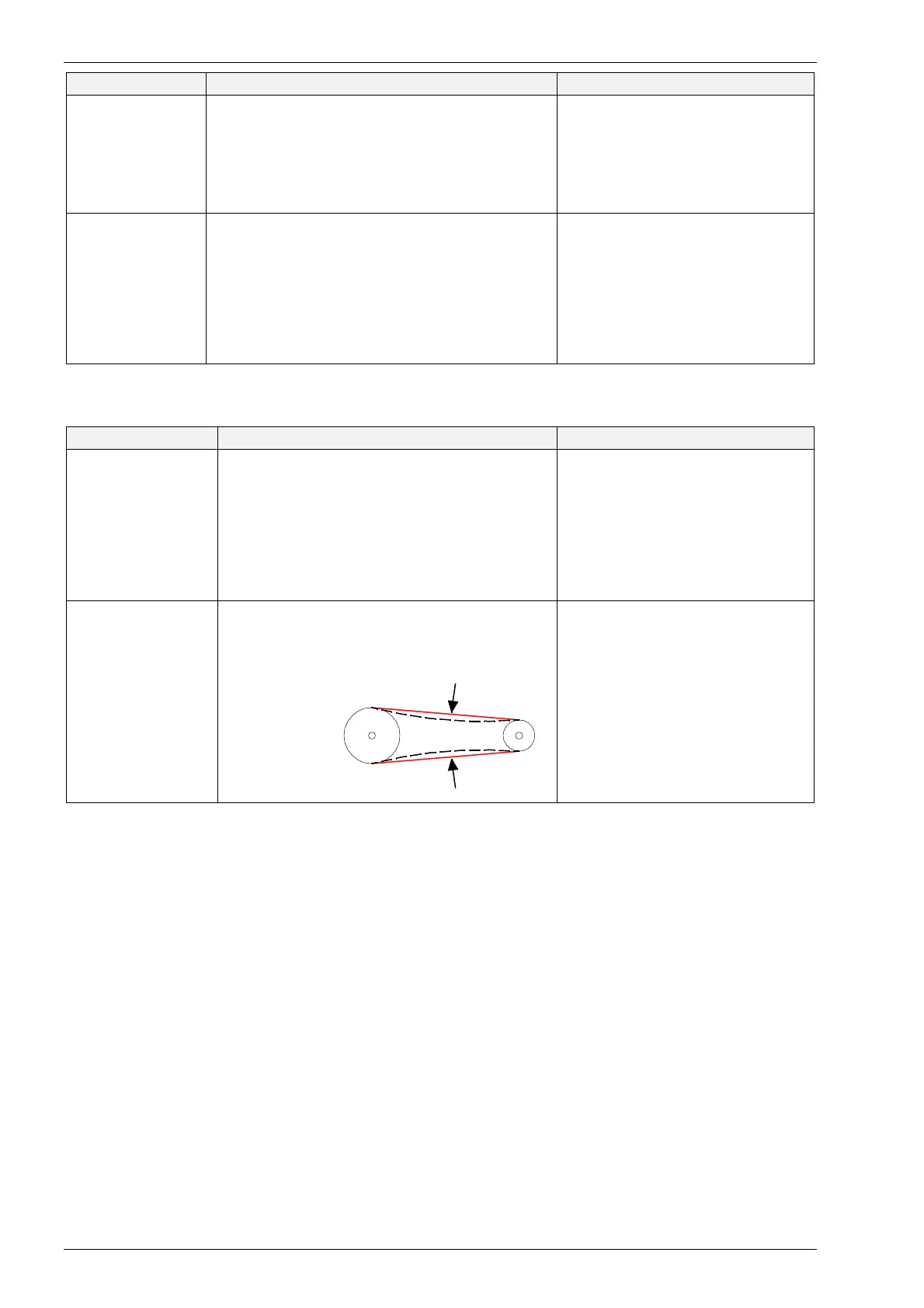
A correct tension
allows for a
deflection
towards the
inside equal to 4
or 5 times the
thickness of the
belt.
If the belt is too tight there would be
too much friction and therefore
potential damage to the motor driving
the pulley
If the belt is too loose it could fall off,
thus interrupting the transmission
chain and therefore the regulation



 To Next Page