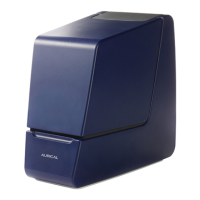
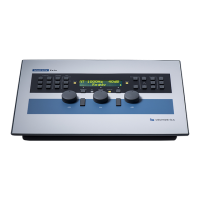
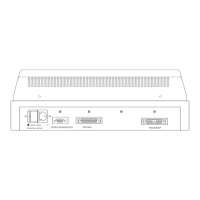
Distortion of signals occurs for higher stimulus levels. AURICAL Aud complies with IEC and ANSI standards with respect to
maximum distortion. The following specification from IEC 60645-1:2001 applies:
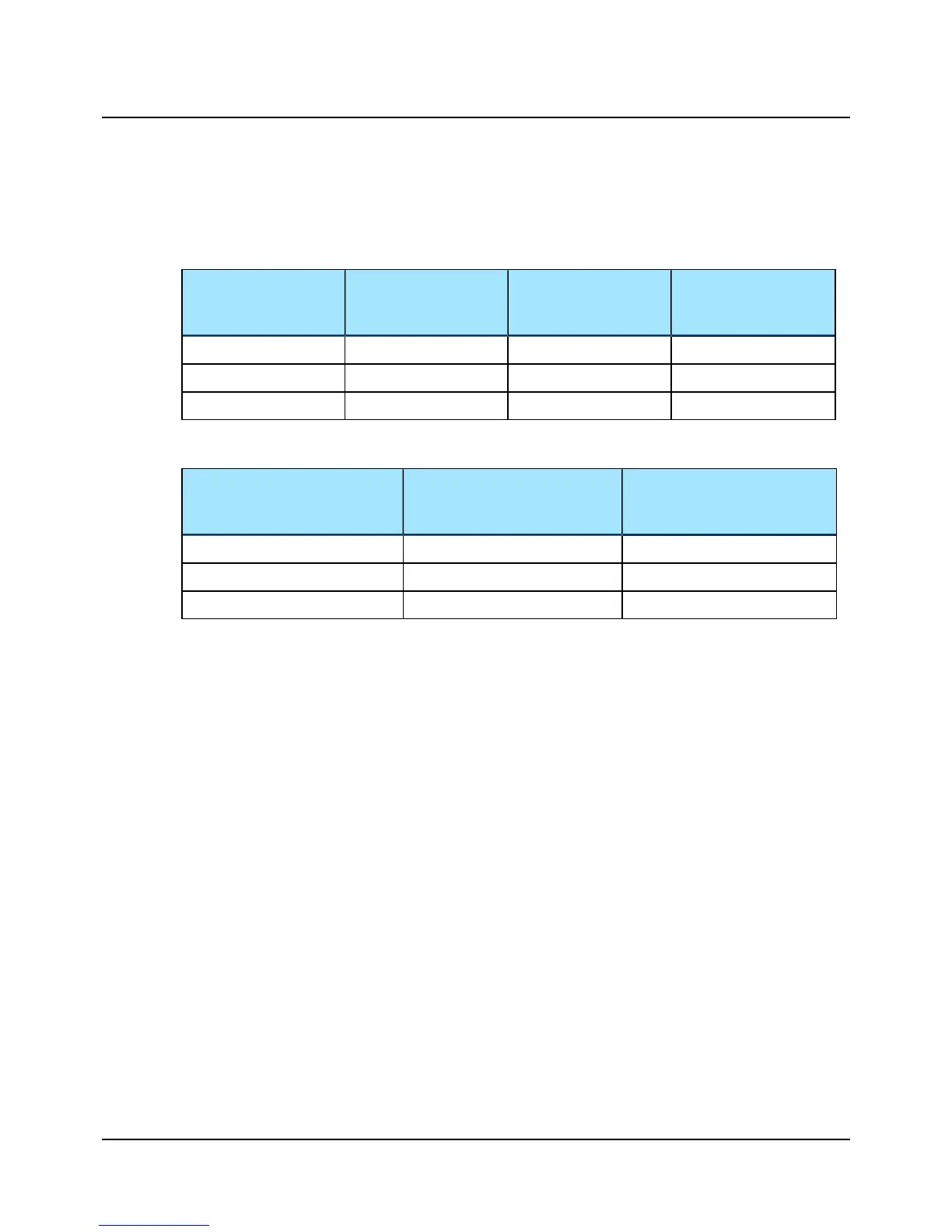
Specification of allowable distortion levels for airborne sound (test level and distortion)
Frequency (Hz) Test level for
Supra-aural earphone
(dBHL)
Test level for Circum-aural
and Insert earphone
(dBHL)
Allowed THD
(%)
125-250 75 65 2.5
315-400 90 80 2.5
500-5000 110 100 2.5
Specification of allowable distortion levels for bone conducted sound (test level and distortion)
Frequency (Hz) Test level for
bone vibration
(dBHL)
Allowed THD
(%)
250-400 20 5.5
500-800 50 5.5
1000-4000 60 5.5
For higher output levels than those specified in the tables above, transducers will produce higher distortion levels. The dis-
tortion is generated almost exclusively by the transducers, as the audiometer itself produces negligible distortion. Based
on the extensive knowledge which exists regarding the standard transducers, audiologists should determine if levels higher
than those specified above can be used for a particular test.
Total harmonic distortion
Air < 2.5%
Bone < 5%
Selectable transducers
1
AC: TDH 39
2
, ME-70, HOLMCO, HDA 200/HDA 300 headphones, and Insert
Earphones
BC: Bone oscillator (Mastoid)
SF: • Passive sound field speaker using the built-in amplifier, or
• External amplifier using the line output.
Transducer options depend on how AURICAL Aud is ordered and calibrated.
24 Otometrics - AURICAL Aud
17 Technical specifications


 To Next Page