19
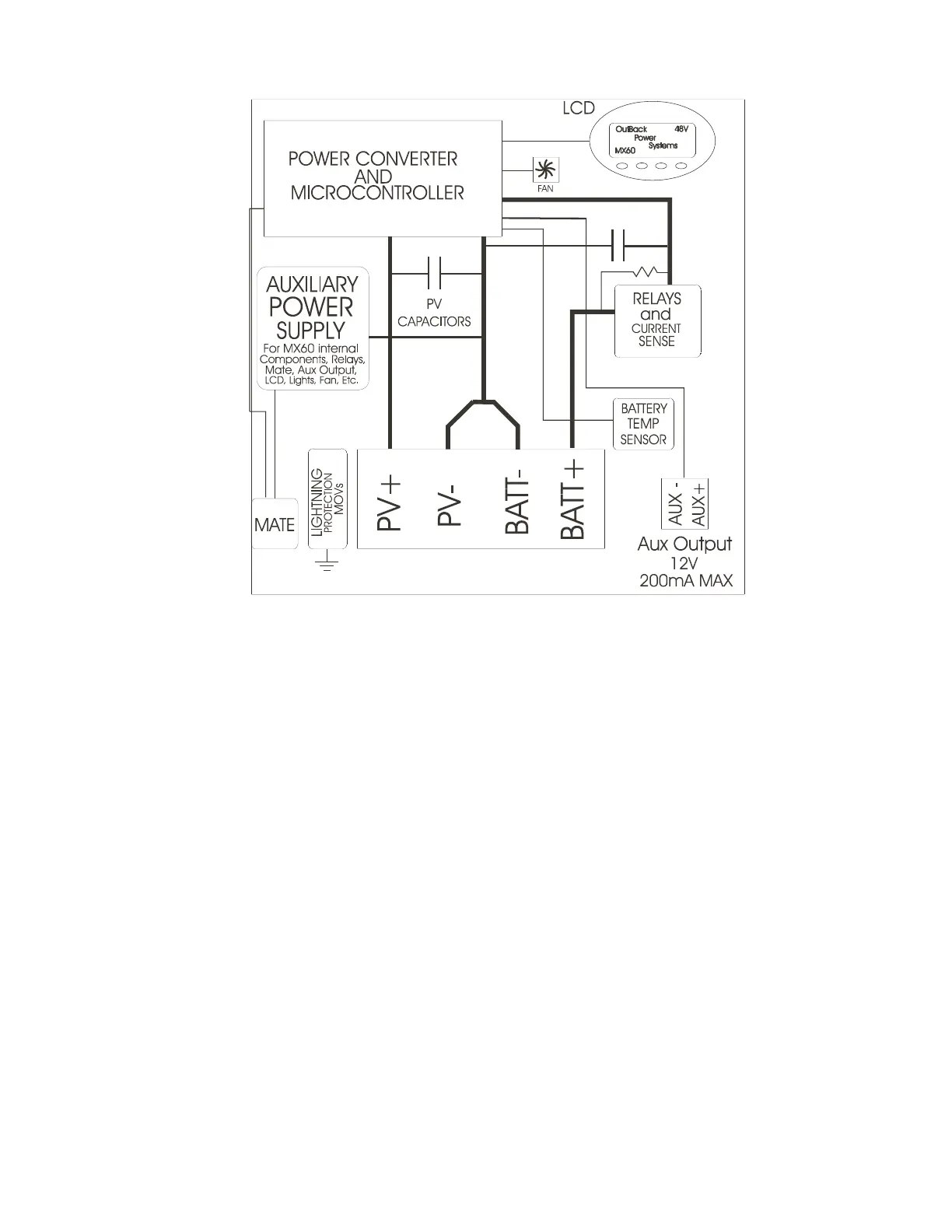
Figure 26 - MX60 Basic Block Diagram
Application Notes
Grid intertie applications:
When using the MX60 with grid intertie inverters and selling electricity back to the grid,
keep the MX60 float voltage above the voltage at which the inverter will be selling back. This
ensures that the MX60 is always trying to put out more voltage than the inverter is trying to drag
the battery voltage down to and to keep the current flowing. 0.5 Volts difference for 24V battery
systems, or 1.0 volt difference for 48V battery systems is a good rule of thumb.
Diversion using hydro or wind power:
When the wind generator or hydro generator is connected to the battery terminals as an
external DC source, keep the MX60s diversion voltage slightly above the MX60s Absorb and
Float voltages so the MX60 can do it’s job, but the wind and/or hydro DC sources stay slightly
out of the way voltage wise.
Postive grounded systems:
Telcom applications frequently require a postive grounded system. Just remember that
the MX60 switches the POSITIVE PV and battery leads and needs to keep those separate. It is
suggested to ground ONLY the battery postive lead in this case (if code allows it). Do not con-
nect the MX60’s battery plus to the PV plus input while the MX60 is running.


 To Next Page