54 SEBU8121
Maintenance Section
Alternator - Inspect
i02176674
Alternator - Inspect
Perkins recomm
ends a scheduled inspection of
the alternator. Inspect the alternator for loose
connections and correct battery charging. Inspect the
ammeter (if eq
uipped) during engine operation in
order to ensure correct battery performance and/or
correct performance of the electrical system. Make
repairs, as r
equired.
Check the alternator and the battery charger for
correct oper
ation. If the batteries are correctly
charged, the ammeter reading should be very near
zero. All batteries should be kept charged. The
batteries s
hould be kept warm because temperature
affects the cranking power. If the battery is too cold,
the battery will not crank the engine. When the
engine is no
t run for long periods of time or if the
engine is run for short periods, the batteries may not
fully charge. A battery with a low charge will freeze
more easil
y than a battery with a full charge.
i01929797
Alternator and Fan Be lts -
Inspect/Adjust/Replace
Inspection
To maximize the engine performance, inspect the
belts for wear and for cracking. Replace belts that are
worn or damaged.
For applications that require multiple drive belts,
replace the belts in matched sets. Replacing only
one belt of a matched set will cause the new belt to
carry more load because the older belt is stretched.
The additional load on the new belt could cause the
new belt to break.
If the belts are too loose, vibration causes
unnecessary wear on the belts and pulleys. Loose
belts may slip enough to cause overheating.
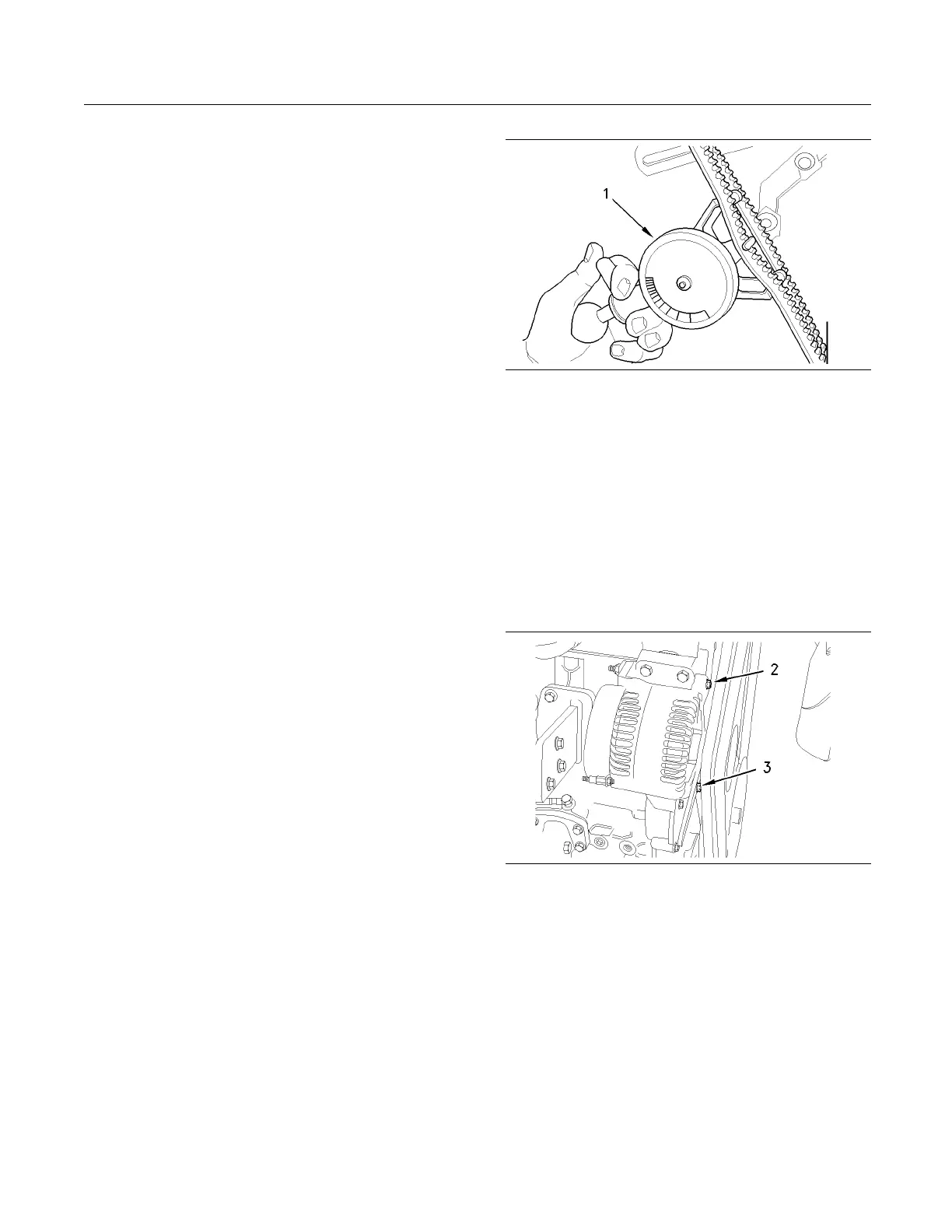
To accurately check the belt tension, a suitable gauge
should be used.
g01003936
Illustration 20
Typical example
(1) Burroughs Gauge
Fit the gauge (1) at the center of the longest free
length and check the tension. The correct tension
is 535 N (120 lb). If the tension of the belt is below
250 N (56 lb) adjust the belt to 535 N (120 lb).
If twin belts are installed, check and adjust the
tensiononbothbelts.
Adjustment
g01003939
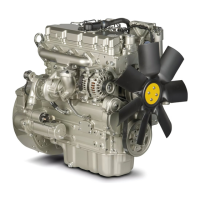
Illustration 21
1. Loosen Th
e alternator pivot bolt (2) and the bolt
(3).
2. Move the a
lternator in order to increase or
decrease the belt tension. Tighten the alternator
pivot bolt and the link bolt to 22 N·m (16 lb ft).(1).
Replacement
Refer to the Disassembly and Assembly Manual for
the installation procedure and the removal procedure
for the b
elt.



 To Next Page