26
2.7.2 High Frequency Mode
A high frequency mode is now available. This optional mode gives access to frequencies
measurements above the 2KHz nominal frequency and allows to measure up to 6KHz.
Using this measurement mode has several impacts:
- Reduction of the measuring range based on the selected frequency,
- Decrease the number of transmitted data,
- Change the center of the measuring range depending on the frequency,
- Need for a DARK procedure when changing frequency.
1- Measuring range and number of transmitted data:
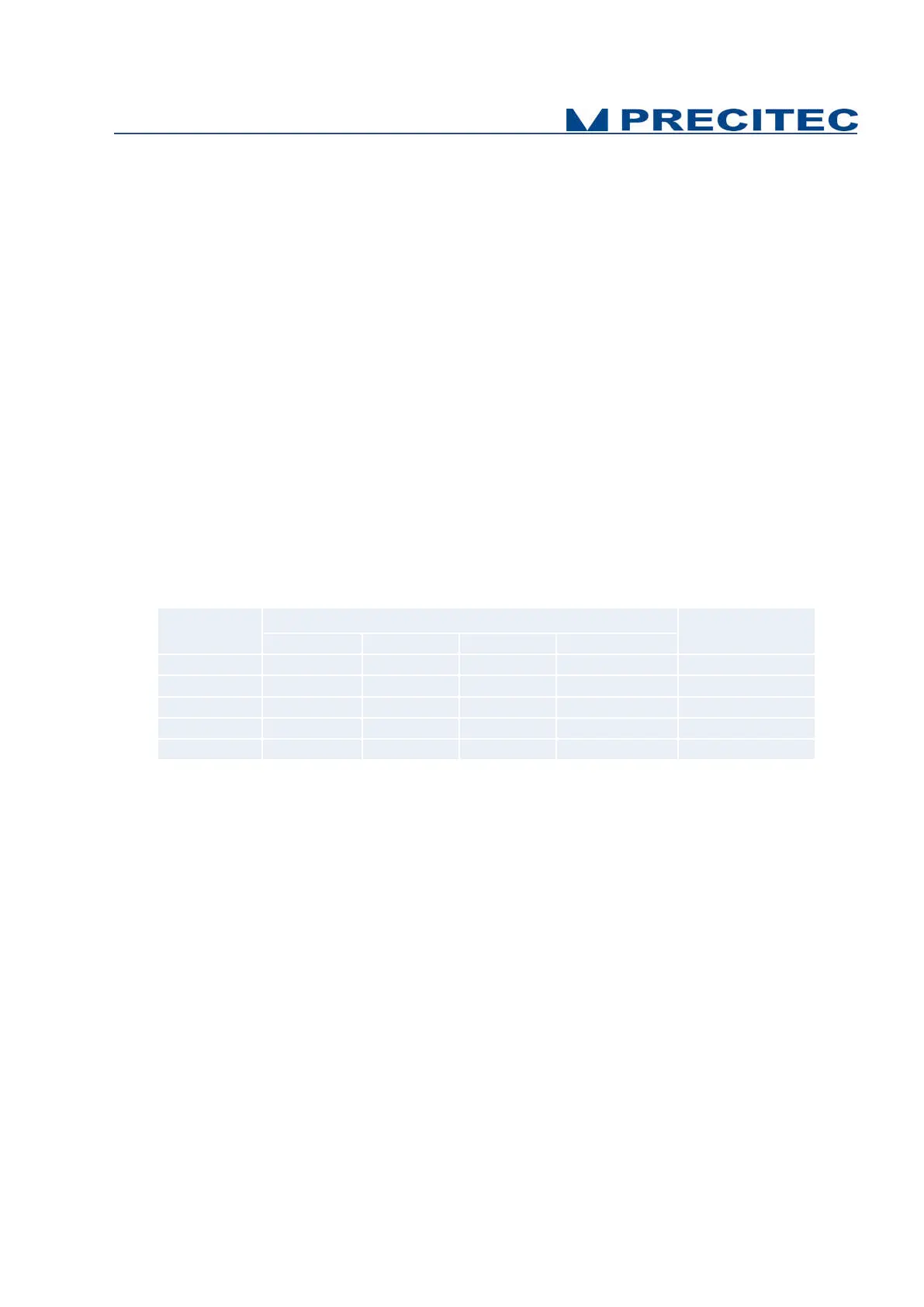
The following table defines the accessible measuring range and number of transmitted data as a
function of the selected frequency.
Frequency
Measuring Range
Maximum number
of transmitted data
CLS0.2 CLS1 CLS2.3 CLS4
Up to 2KHz 200 µm 950 µm 2300 µm 3900 µm 6
3KHz 120 µm 580 µm 1400 µm 2380 µm 3
4KHz 85 µm 425 µm 1000 µm 1740 µm 2
5KHz 65 µm 320 µm 760 µm 1320 µm 2
6KHz 50 µm 240 µm 580 µm 1000 µm 1
Table 2-7: Measurement range based on the frequency measurement
2- Need for a DARK procedure when changing frequency:
When changing measuring frequency, it is sometimes necessary to perform a Dark procedure to
ensure the performances of the sensor. A systematic Dark procedure must be done in the following
cases:
- When changing frequency from a high frequency (> 2 KHz) and a low frequency (<= 2 KHz),
- When whanging frequency from a high frequency (> 2 KHz) to any other frequency,
Only the transition from a low frequency (<= 2 KHz) to another low frequency (<= 2 KHz) does not
requires any Dark operation.
To achieve a Dark refer to section 4-2.


 To Next Page