SPRAYMASTER 200
17
(i) If a single magnet is installed (as with a standard RDS Propshaft Sensor
kit), the distance travelled for each turn of the prop shaft must be
determined. To determine this distance, drive the vehicle forwards for exactly
10 revolutions of the prop shaft. Measure this distance (in inches or metres)
and divide by 10, to find the Speed Sensor Factor.
(ii) If 2 magnets are installed (as with a standard RDS Wheel Sensor kit), the
distance is 1/2 the effective rolling circumference of the wheel. To determine
this circumference, drive the vehicle forward in field conditions (with the
implement attached if applicable), for exactly 10 revolutions of the sensed
wheel. Measure this distance (in inches or metres) and divide by 20 to find
the Speed Sensor Factor.
(iii) If 4 wheel magnets are installed, the distance is 1/4 the effective rolling
circumference of the wheel. To determine this circumference, drive the
vehicle forward in field conditions (with the implement attached if applicable),
for exactly 10 revolutions of the sensed wheel. Measure this distance
(metres) and divide by 40 to find the Speed Sensor Factor.
Carry out this test whenever soil conditions or wheel sizes change.
(iv) If an RDS Radar sensor is installed, the Speed Sensor Factor is 0.008 m (or
0.312 inches).
If the calibration factor works out at over 2.000 m (78.78 inches), consider
fitting additional magnets. Extra magnets are recommended if the vehicle has
large diameter wheels or is slow-moving. In extreme circumstances you can
find that the speed keeps going to zero as it times out before the next pulse
arrives.
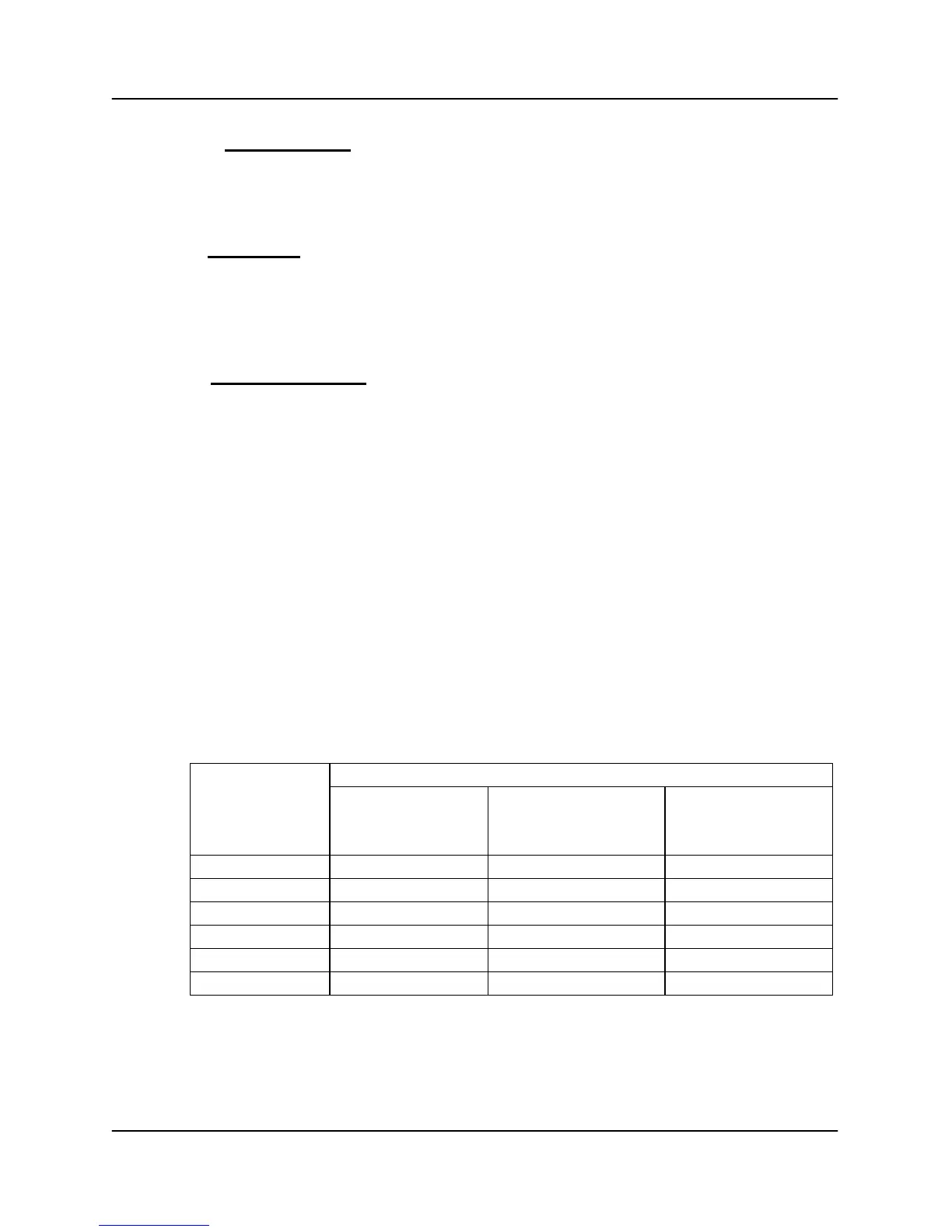
Number of Sensor magnets
The table gives the number of magnets required to enable a speed update of
approximately once per second or faster on the display.
Typical speed in normal operation:
Tire diameter
up to 5mph
(8km/hr)
6 to 9 mph
(9 to 15 km/hr)
10mph
(16 km/hr)
or over
12" (0.3m) 1 1 1
24" (0.6m) 1 1 1
36" (0.9m) 2 2 1
48" (1.2m) 4 2 2
60" (1.5m) 4 4 2
72" (1.8m) 4 4 2



 To Next Page