47
d) Adjusting the slip clutch
Theslipclutchprotectsthegearandthemotorfromoverloadingduringstart-up,forexample,onasurfacewithvery
good grip. In addition, adjustment of the slip clutch prevents the vehicle from tipping over due to the high torque of a
hypothetical brushless drive when starting-up.
Normally, there is no need to make any adjustment because the manufacturer has already chosen an optimal one.
However, very frequent start-ups with full power on a surface with good grip can cause the slip clutch linings to wear
off,wherebyareadjustmentoftheslipclutchmayberequired.Furthermore,experiencedoperatorscanindividually
adjusttheslipclutchbasedontheirpreferredstartingbehaviouronaspecicsurface.
To adjust the clutch, proceed as follows:
First, remove the plastic gear cover.
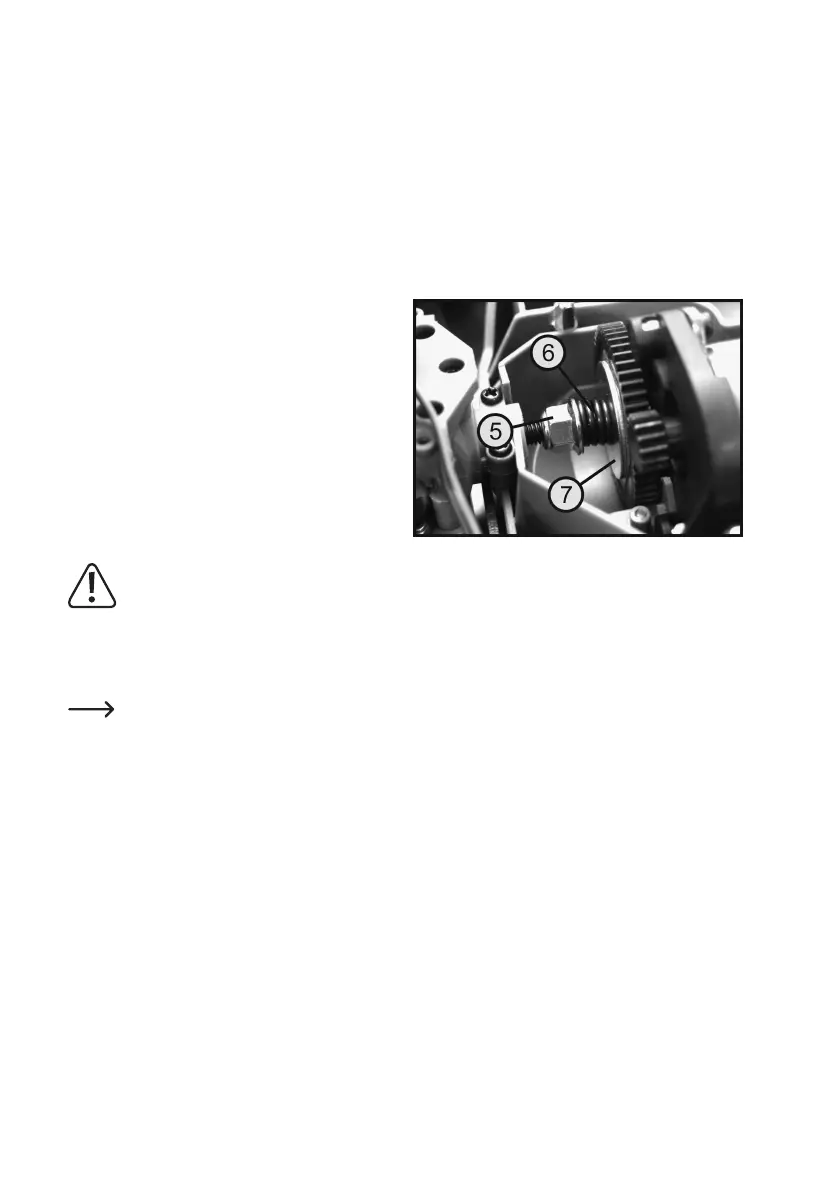
Place a 10 mm open-end wrench on the locknut (5) of the
slip clutch. If you turn the nut to the right (as viewed from
behind in the direction of travel), the compression spring
(6) will exert greater contact pressure on the coupling
plate (7). As a result, the slip point will move up and a
higher drive power will be conveyed to both differentials.
If you turn the nut to the left, the compression spring will
exertlesspressureandtheclutchwillslipearlier.
Important!
If the slip clutch is overtightened, there is a risk that the model will tip over during rapid acceleration on a
surface with good grip. In addition, the power train with differentials and the motor will be overloaded. This
leadstoanexcessivewearofthecomponents.
If the clutch is set too loose, the motor power cannot be fully utilised for propulsion. The clutch will be
overloaded due to early slippage and can thus be destroyed.
Any adjustments that may be required in this area should only be made in small steps. A test drive can help
you check the practicality of the new adjustment.
Figure 9


 To Next Page