HAZARDOUS CONDITIONS
It is important to constantly be looking out for hazardous conditions,
and know how to respond to them, should they occur. It is the captain’s
responsibility to act responsibly under hazardous conditions.
Shallow Water__________________________________
Your digital depth sounder, located as the port-most gauge on the
dash, will be most useful when navigating shallow waters, but don’t
rely on it fully. Look around for sand bars and debris, and stay in the
deepest area possible. If it looks like you will bottom out, stop and
go in reverse. Utilize sea fl oor topographical maps when possible.
Take it slow the fi rst few times until you get used to the terrain and
the tidal level. Take your speed up a notch when you feel comfortable
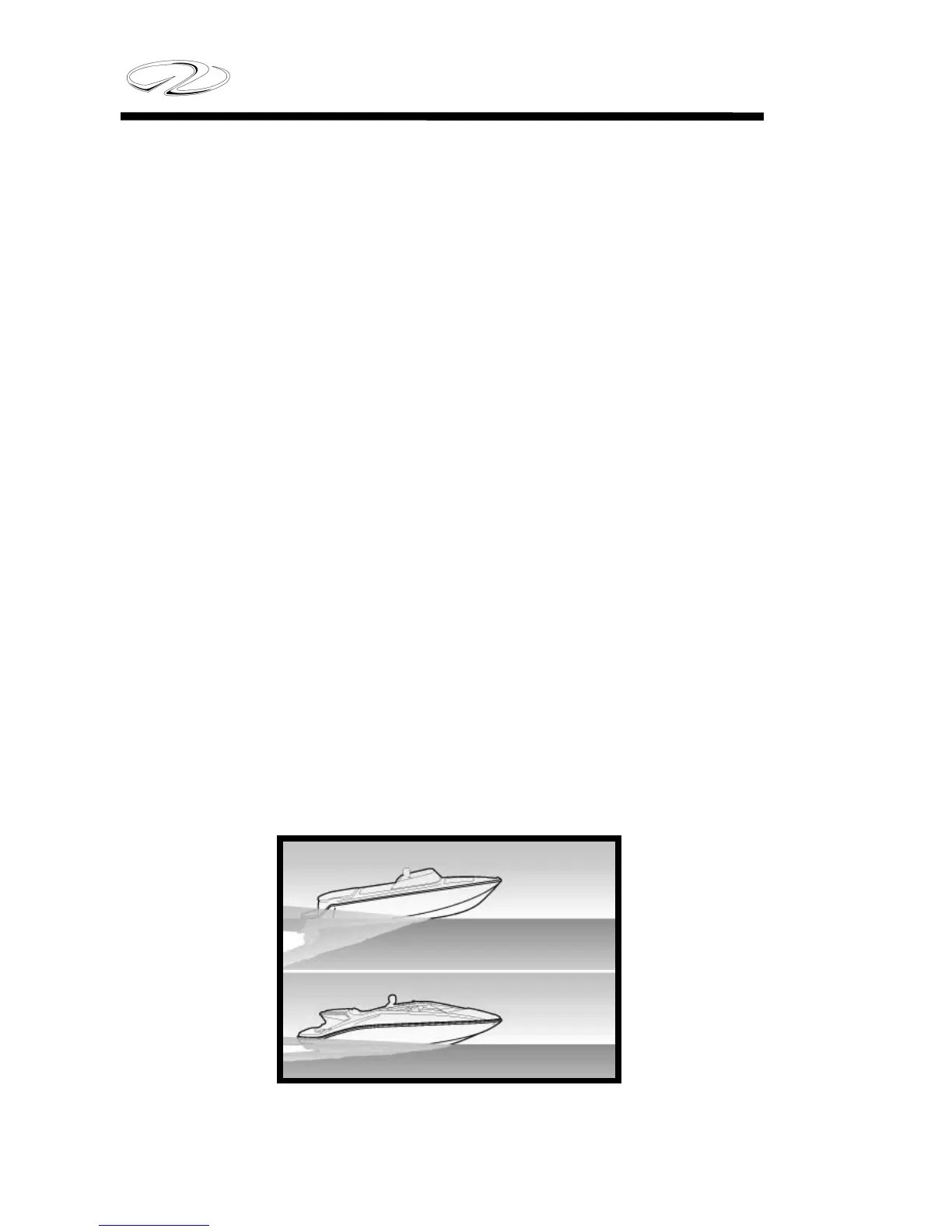
and believe it is safe to do so, because a boat’s draft will shrink when
on a plane.
If you do run aground, check the boat and engine for damage. If the
engine is vibrating, it may signal a damaged propeller. Signal for help
by radio, fl ares, fl ags, and horns. Get your boat checked out by your
Regal dealer after grounding out in shallow water.
Boat While Planing
1-32
Chapter 1


 To Next Page