10
Chapter 2
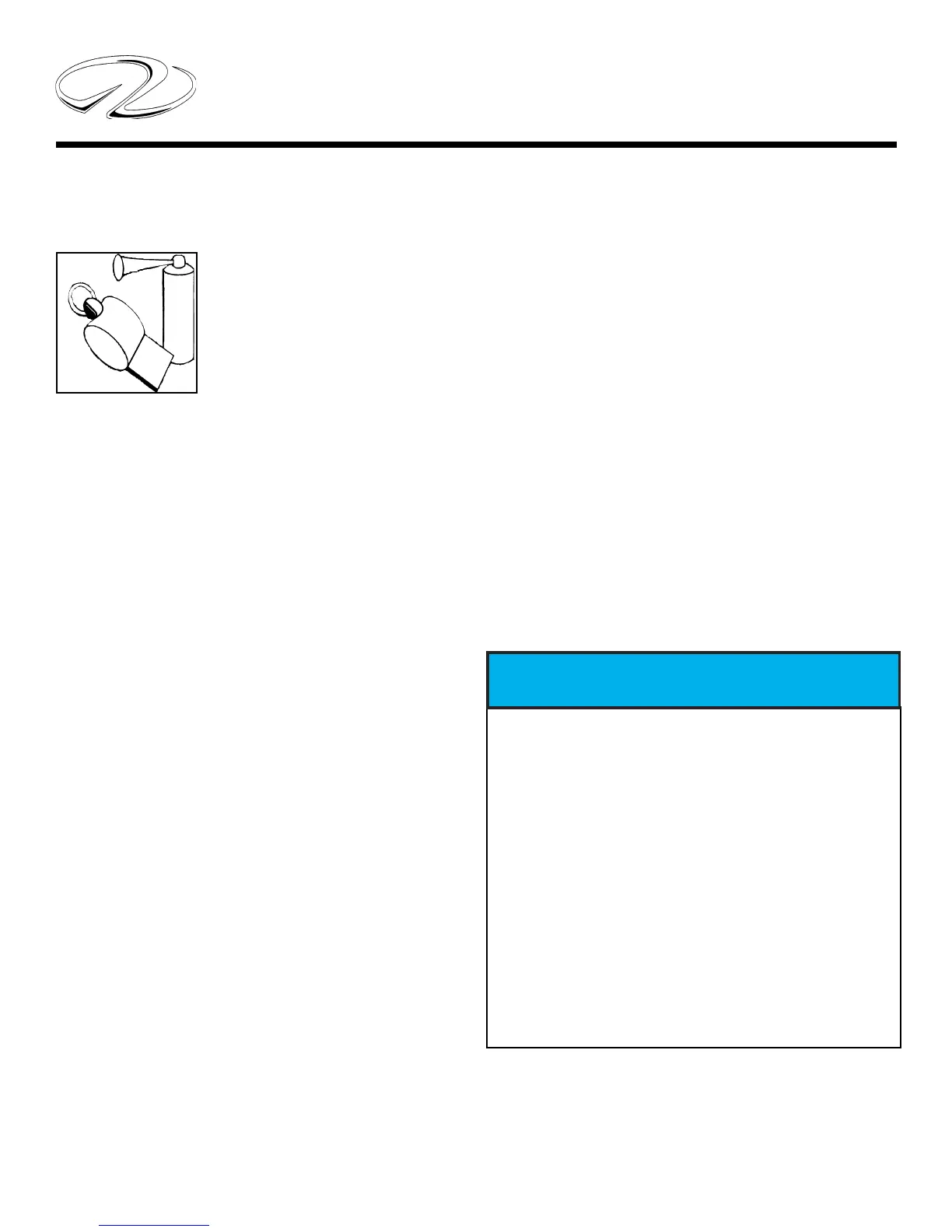
SOUND PRODUCING DEVICES
According to both Inland and
International Rules, all boats must
carry some way of producing an
efficient sound signal. If your vessel
is 12 meters (39’ 4”) or longer, a
power whistle, power horn or bell
must be carried. The bell must be a
minimum of 7 7/8’’ in diameter.
Boats less than 12 meters a horn or whistle is
recommended to signal intentions or signal position. The
sound signal made in all cases must be capable of a four
or six second blast audible for one half mile. See the
section discussing bridge and whistle signals for more
information.
RADIO COMMUNICATIONS
VHF radios are used for distress and ship to shore and
ship to ship communications today. Learn the specialized
messages such as
Mayday, Mayday, Mayday is only used when life or
vessel is in imminent danger.
NAVIGATION LIGHTS
The U. S. Coast Guard requires recreational boats
operating at night to display navigation lights between
sunset and sunrise. Navigation lights help avoid collisions
by improving the night visibility of vessels. Red and green
directional lights, white stern lights, white masthead lights
and white all-around lights must be displayed in specified
positions, depending on boat size, and mode of operation.
The configuration of visible lights tells and operator the
size, direction of travel and means of propulsion (sail,
power, rowing or at anchor) of another vessel.
This helps both operators determine who has the right of
way. Larger boats are required to carry larger, brighter lights
that are visible over longer distances. See the light
requirement chart for pleasure craft.
MARINE SANITATION
DEVICES
Recreational vessels under 65’ with installed toilet facilities
must have an operable marine sanitation device (MSD)
on board. Vessels 65’ and under may use Type I, II, or III
MSD. All installed MSD’s must be U.S. Coast Guard
certified. Most of the devices are labeled to show
conformity to the regulations.
DISCHARGE OF OIL PROHIBITED
THE FEDERAL WATER POLLUTION CONTROL
ACT PROHIBITS THE DISCHARGE OF OIL OR
OILY WASTE INTO OR UPON THE NAVIGABLE
WATERS AND CONTIGUOUS ZONE OF THE
UNITED STATES IF SUCH DISCHARGE CAUSES
A FILM OR SHEEN UPON, OR DISCOLORATION
OF THE SURFACE OF THE WATER, OR CAUSES
A SLUDGE OR EMULSION BENEATH THE
SURFACE OF THE WATER.
VIOLATORS ARE SUBJECT TO
A PENALTY OF $5,000



 To Next Page