4
Chapter 4
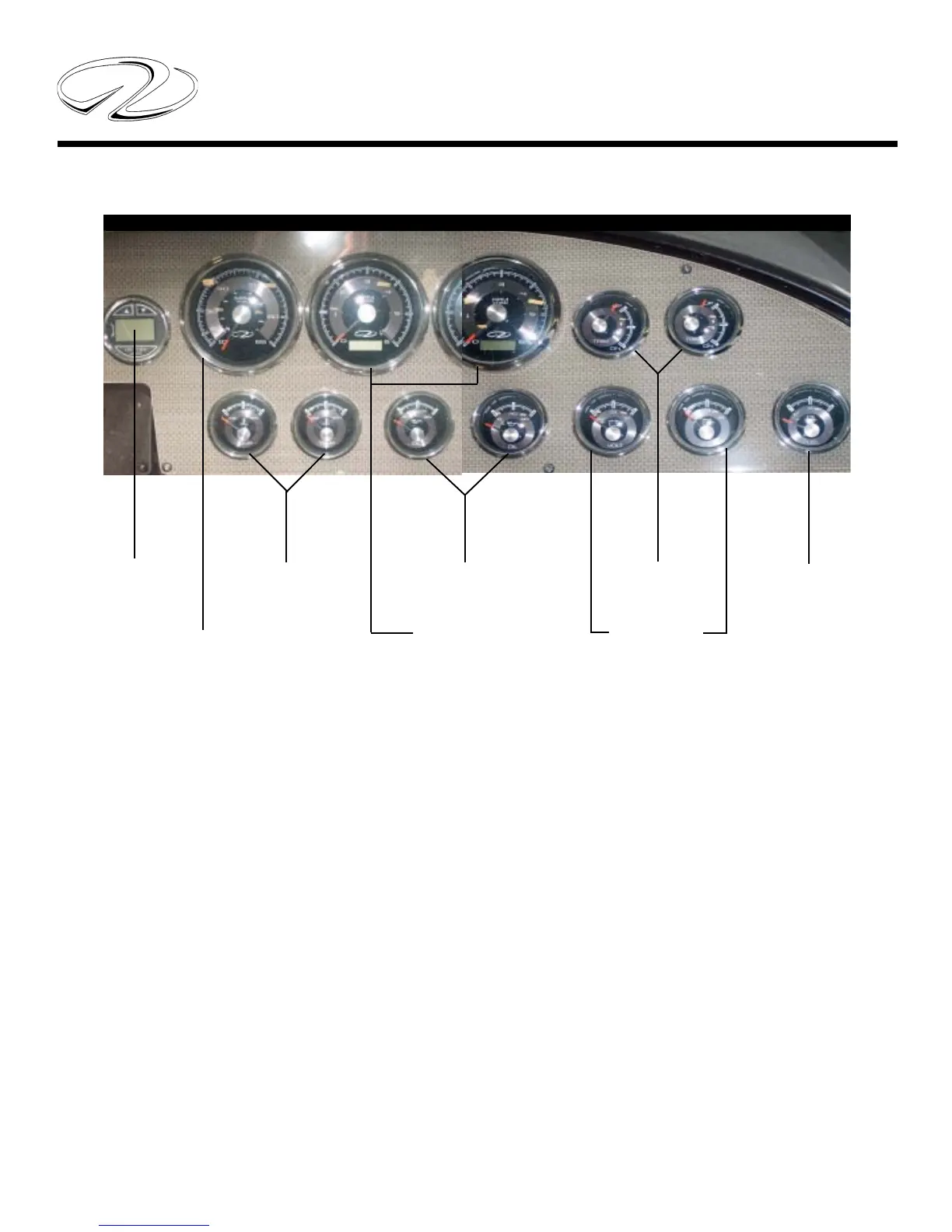
Tachometer
The tachometer (tach) indicates the speed of the engines
in revolutions per minute (rpm). Engine manufacturers
use digital rev limiters to ensure engines do not exceed
recommended rpms. Select tachometers have built in hour
meters included for scheduling maintenance. Consult your
engine operation manual for suggested maintenance
schedules as they are usually set up using engine hours as
the main ingredient.
Fuel Gauge
The fuel gauge indicates the level of fuel inside the fuel
tank(s). It is a good idea to keep the fuel tank “topped
off ” when possible to reduce fuel vapors inside the tank.
Do not run the fuel level close to empty. Figure in an
adequate “safety” factor when monitoring fuel gauges
since they are not entirely accurate. Use the 1/3 rule to
help ensure there is plenty of fuel for the return trip.
Depth Gauge
The depth gauge indicates the water depth under the keel
of the boat. It features an adjustable shallow water alarm.
By monitoring the water depth closely damage related to
props and underwater hardware can be minimized.
TYPICAL GAUGE OPERATION
TACHOMETER
HOUR METER
TRIM GAUGE
This gauge measures the stern drive tilt and indicates the
relative position of the bow, up or down when the boat
is on plane. The power trim normally begins with the
drive in the down (in) position. At this point the engine
is accelerated resulting in the boat assuming a plane
position. At this point the trim can be adjusted for the
most efficient operation for existing sea conditions. See
the additional trim system information in later chapters.
Trim Gauge
Volt Meter
The volt meter monitors the battery condition as well as
the alternator performance. Normal voltage is between
12.0 and 15.0 volts. Readings outside of this range may
indicate a charging system or battery problem.
TYPICAL INSTRUMENT PANEL OVERVIEW
Trim Gauge
Speedometer
Depth Gauge
Temperature
Gauge
Oil Gauge
Volt Gauge
Fuel Gauge
Tachometer w/
Hour Meter



 To Next Page