5
Vessel Operation
FENDERS
Before shifting into reverse or forward make sure the coast
is clear. When shifting to either gear from neutral make
sure the throttles are in the idle position. Do not pause
but engage the shifter quickly into the desired gear. Allow
your vessel to lose all headway before shifting into reverse
or forward gear. Practice shifting! You will become more
familiar with the procedure and self-confidence will build
especially in tight docking situations. Most importantly,
stay alert!
FENDER USAGE
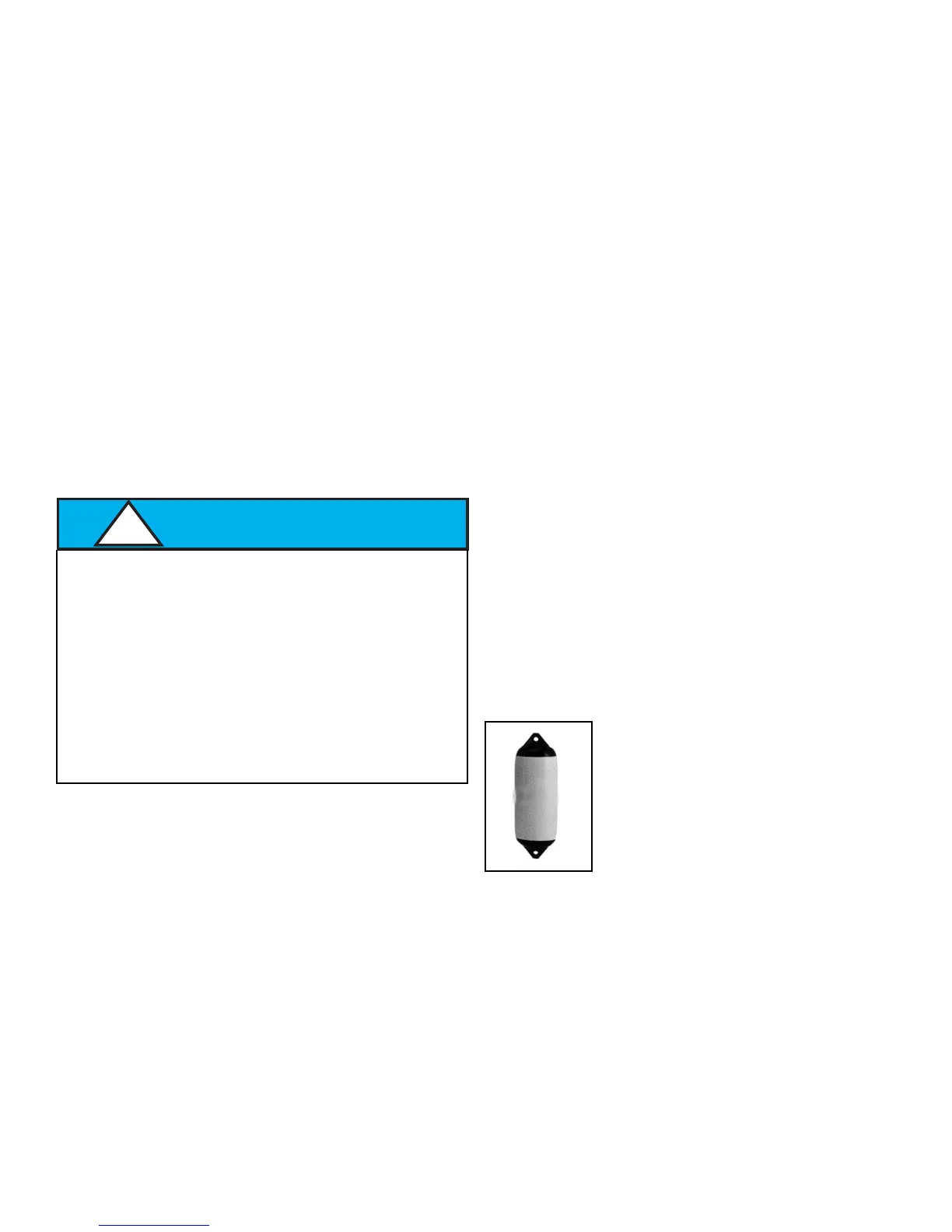
Fenders are normally made of a rubberized plastic and are
usually filled with air. Most have a fitting like a basketball
so they can be inflated or deflated. Fenders are available in
a wide range of sizes and shapes to fit both small and large
vessels. Fenders are normally designated in inches. They
are used between piers, docks, sea walls and the boat. They
protect the topsides of the boat from rubbing against rough
objects. Most fenders have eyes of attachment which allow
a line to be inserted vertically or horizontally. This will
permit the fender to be tied off to fit a variety of marina,
dock and tidal situations. Be sure the fender is correct for
the vessel size. It is a good idea to carry extra fenders but
half a dozen is normally an acceptable number. Remember
to store fenders on board so they can be easily accessed.
Some people incorrectly call fenders “bumpers”.
FENDER TYPES
There is a variety of fender styles and
types, each selected for specified uses.
When choosing fenders, contact a
marine dealer or supply house. Explain
how you moor and use your vessel so
they can recommend the best fender
type for you. We suggest the type with a
fill plug so you can inflate them with a
hand pump like the ones used for bicycles.
SHIFTING GUIDELINES
Before stopping the engine make sure it is in neutral and
at idle speed. After an outing let the engine cool down at
idle speeds for a few minutes before turning the ignition
off. Glance at the gauges one last time to monitor their
readings. Never turn the engines off while in forward or
reverse gear. Never back up in reverse at excessive speeds since
water could enter the engine through the exhaust system and cause
extensive damage. Above all, use common sense.
STOPPING GUIDELINES
WHEN BOAT IS MOVING FORWARD
AND SHIFTED IN REVERSE,
COCKPIT CAN FILL WITH WATER.
BEFORE SHIFTING TO REVERSE,
SHIFT TO NEUTRAL AND WAIT FOR BOAT
TO STOP GAINING HEADWAY.
WHEN VESSEL STOPS,
SHIFT INTO REVERSE.
!



 To Next Page