24
Chapter 5
THE BOAT TRIM SHOULD BE ADJUSTED TO
PROVIDE BALANCED STEERING AS SOON
AS POSSIBLE EACH TIME YOU ARE
UNDERWAY. SOME BOAT, ENGINE AND
PROPELLER COMBINATIONS MAY CREATE
BOAT INSTABILITY AND/ OR HIGH STEERING
TORQUE WHEN OPERATED AT OR NEAR
THE LIMITS OF THE “BOW UP” OR “BOW
DOWN” POSITIONS. BOAT STABILITY AND
STEERING TORQUE CAN ALSO VARY DUE
TO CHANGING WATER CONDITIONS. IF YOU
EXPERIENCE BOAT INSTABILITY AND/OR
HIGH STEERING TORQUE, CONTACT
YOUR AUTHORIZED REGAL DEALER
!
DO NOT RUN ENGINE ABOVE 1000 RPM
WITH THE STERN DRIVE TRIMMED FOR
SHALLOW WATER MANUVERING SINCE THE
STERN DRIVE IS OUT BEYOND THE GIMBAL
RING SIDE SUPPORT BRACKETS.
OPERATING IN ABOVE MANNER COULD
PRODUCE A DANGEROUS STEERING
CONDITION OR COULD DAMAGE
STERN DRIVE COMPONENTS.
!
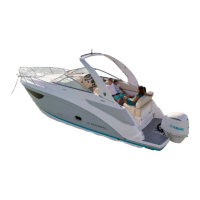
TRIM IN “BOW DOWN” POSITION
The “bow down” or in position is
normally used for acceleration onto
a plane, operating at slow planning
speeds, and running against a
choppy wave condition. It is also
used when pulling water skiers,
tubers, kneeboarders, etc. In this
position the boats bow will want to
go deeper into the water. If the boat is operated at high
speed and/or against high waves, the bow of the boat
will plow into the water.
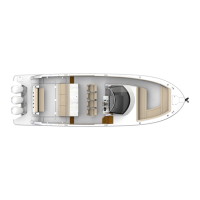
TRIM IN “LEVEL” POSITION
In normal running conditions,
distribute passengers and gear so
boat is level. At or below cruising
speeds, trim the vessel for optimum
performance. The trim gauge will
show somewhere in the center of
the gauge. This position will also
enhance running visibility and
overall stability. Again, each outing provides different
wave, load and running conditions. Be prepared to make
trim changes as needed.
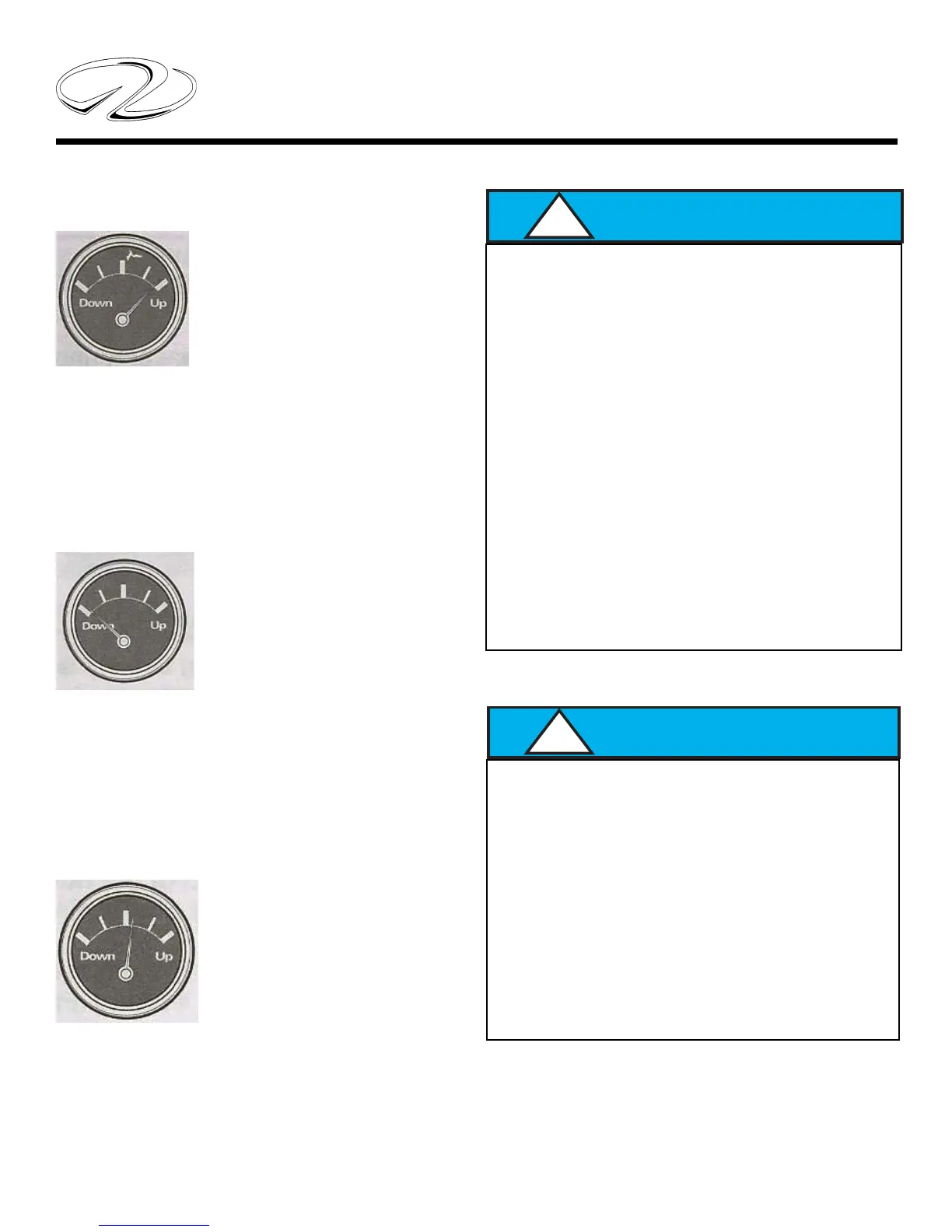
TRIM IN “BOW UP” POSITION
The “bow up” or out position is
normally used for cruising, running
with a choppy wave condition, or
running at full speed. Excessive
“bow up” trim will cause propeller
ventilation resulting in propeller
slippage. Use caution when operating
in rough water or crossing another boat’s wake. Excessive
“bow up” trim may result in the boat’s bow rising rapidly,
creating a hazardous condition.



 To Next Page