technical specifications ..............................
(up to the end of the DU)
towing a caravan .......................................
(up to the end of the DU)
towing weights ...........................................
(up to the end of the DU)
weights ......................................................
(up to the end of the DU)
transporting objects
on the roof ............................................
(up to the end of the DU)
load permitted on the roof..........................
(up to the end of the DU)
6.11
ENG_UD60448_1
Masses (en Kg) (BFB - KFB - Renault)
Weights
Towing weights
WEIGHTS (in kg)
The weights indicated are for a basic vehicle without options: they may vary depending on your vehicle’s equipment.
Consult an approved Dealer.
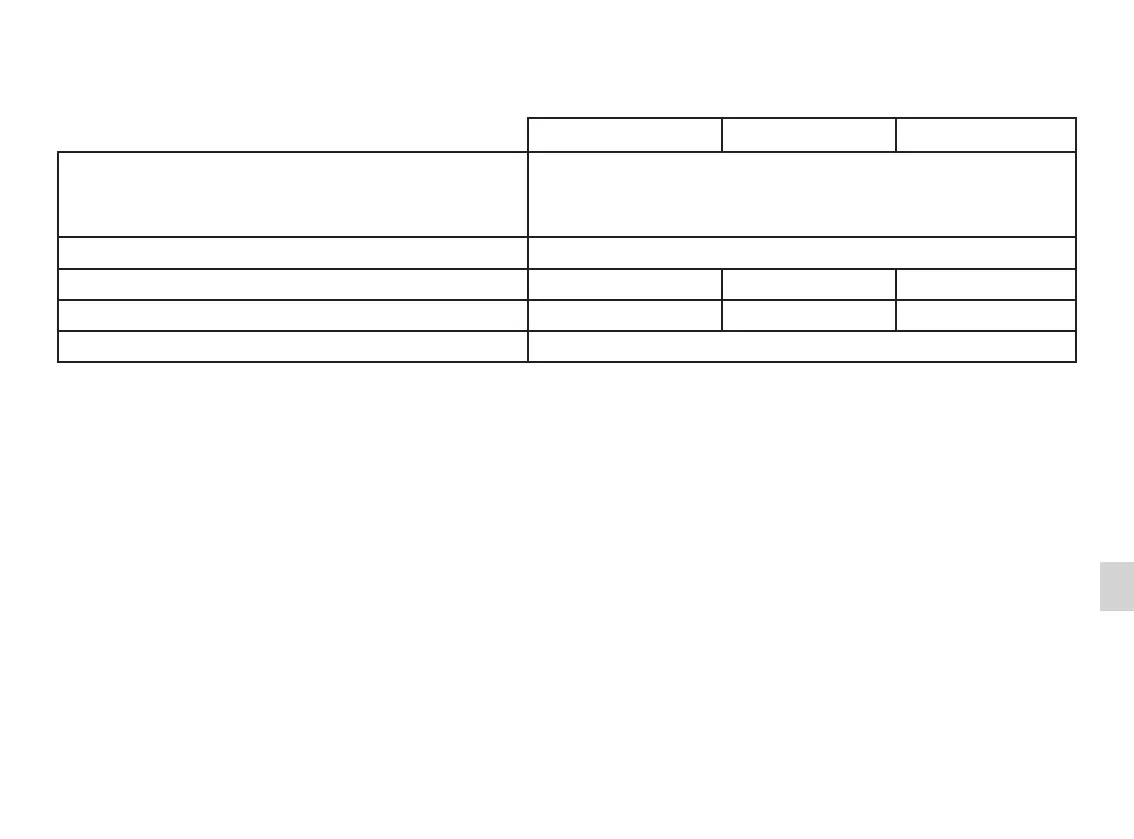
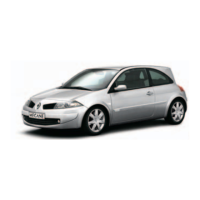
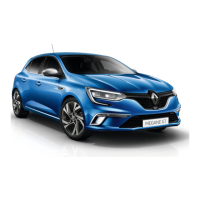
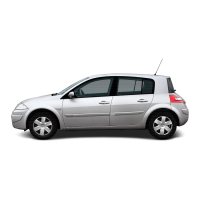
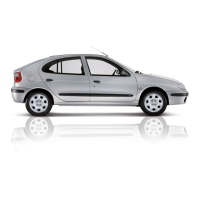
Five door Estate Four-door
Maximum permissible all-up weight (MMAC)
Maximum permissible all-up weight (MMTA)
Gross Train Weight (MTR)
Weights indicated on the vehicle identification plate ➥ 6.2
Braked Trailer Weight* found by calculating: MTR - MMAC
Unbraked Trailer Weight* 650 675 660
Permissible nose weight* 75 75 75
Maximum permissible load on roof 80 kg (including the carrying device)
* Towing weight (Towing a caravan, boat, etc.)
Towing is prohibited when the MTR - MMAC calculation is equal to zero, or when the MTR is equal to zero (or is not listed) on the
identification plate.
– It is important to comply with the towing weights, governed by local legislation in each country and, in particular, laid down in
the Road Traffic Regulations. Contact an approved Dealer about any towing equipment.
– When towing, under no circumstances may the total train weight (vehicle + trailer) be exceeded. However the following is
permitted:
– rear axle MMTA exceeded by no more than 15%,
– maximum MMAC exceeded by no more than 10% or 100 kg (whichever is reached first).
In either case, the maximum speed of the towing assembly must not exceed 60 mph (100 km/h) and the tyre pressure must be
increased by 0.2 bar (3 PSI).
– The engine output and climbing capability are reduced with altitude. We recommend that the maximum load be reduced by
10% at an altitude of 1,000 metres and by an additional 10% for each 1,000 metres thereafter.






 To Next Page