5.2.3 Fault Signal Facility
All faults on the cooling unit are registered and indicated by H1 as a fault number. The display is by
means of the left-hand number. The display cycles through all pending fault messages in a 2 second
cycle, starting with the internal temperature of the enclosure.
H1 indicates the following faults as a fault number.
1=Enclosure internal temperature too high (5 k above setpoint value)
2=Current monitor, condenser
3=Evaporator (no collective fault indication)
4=High pressure monitor
5=Current monitor, condenser fan
6=Current monitor, evaporator fan
7=Filter mat soiled
8=Temperature sensor cable break/short circuit
5.2.3.1 Fault Signal Contact (K1, potential-free)
The fault signal relay is pulled in at normal condition. Any faults will cause the relay to drop out
(except low-pressure monitor, fault number 3). Any failure of the control voltage will also lead to
drop-out of the relay and can thus be registered. The connection is made on the terminal strip
X10. For contact data and assignment, see wiring diagram.
5.2.3.2 Filter Mat Monitoring
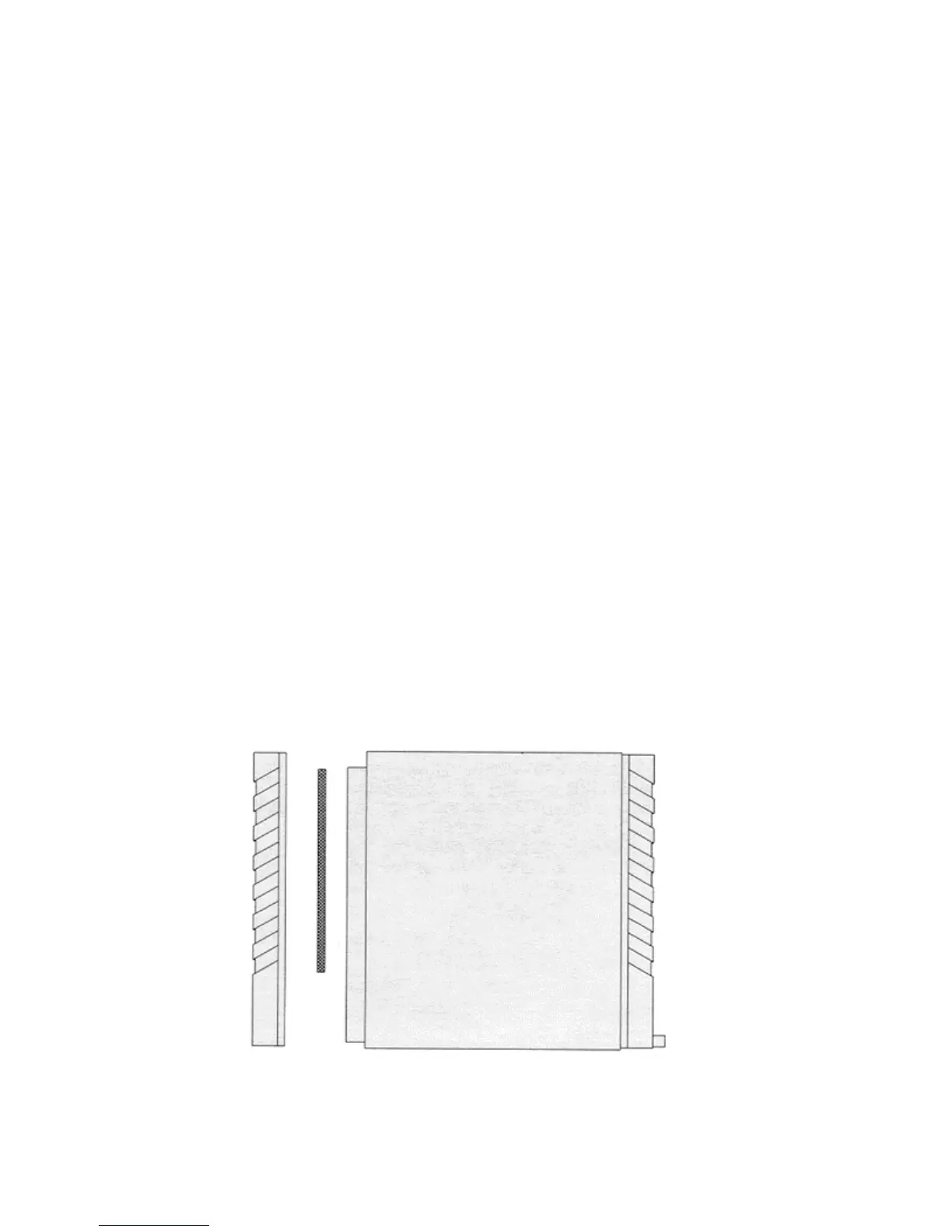
The specified filter mat has large pores and filters coarse dust and lint from the air. Oil condensate is
partially separated out. Fine dust is drawn through the filter mat and the external circuit of the unit
due to the high suction power of the fan. It does not have any damaging effect on the function of the
unit.
The filter mat is monitored for soiling by measuring the temperature difference in the external
circulation of the cooling unit. In the event of any filter mat soiling, the temperature difference will
increase. The setpoint value of the temperature difference in the external circulation is adapted to
various air conditioner operating conditions. This eliminates the need for subsequent adjustment of
the setpoint value for different operating points of the unit. (For the setting of the filter mat
replacement see table 5.1 and fig. 5.1).



 To Next Page