If the boat slows right down and feels lifeless when close-hauled, you could be
sailing too close to the wind. Ease the mainsheet and ‘bear off’ away from the wind
for a while to get the boat going again.
5.5 Sailing Downwind and Gybing
When sailing downwind, both sails should be let out as far as possible. Single-
handed sailors should adopt a relaxing, reclined pose astride the thwart area,
leaning back against the side deck. To gybe, pull the tiller towards you and, as the
boat starts to turn, step across the cockpit facing forward. Once the boat has
completed the turn, bring the tiller back into the centre before sitting down on the
new side, with the tiller extension behind your back. Often, the boom will not want to
come across until you have nearly completed the gybe, so it often pays to give the
mainsheet a tweak to encourage the boom over at the moment that you want it to
come! Once you are settled, swap the mainsheet and the tiller extension into the
new hands.
5.6 Using the Gennaker
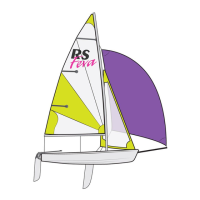
If you are inexperienced in using a gennaker, choose a fairly quiet day for you first
excursion. A gennaker nearly doubles your sail area, and should be treated with a
healthy degree of respect!
For your first hoist you should be sailing downwind on a broad reach, with the wind
coming over the helm’s left shoulder. The crew should sit in the centre of the boat,
astride the daggerboard case, and hoist the gennaker by pulling the gennaker
halyard from the right-hand halyard block (see picture 5.1).


 To Next Page