PRODUCT SPECIFICATIONS
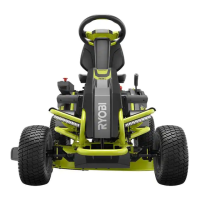
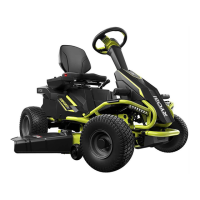
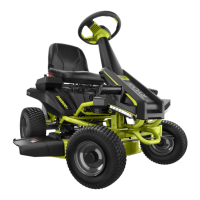
Ride-On Mower
Model RM300E
Weight 178 kg
Motor 48 V d.c.
No-load speed 3800/min
Cutting rated power 850 W
Drive rated power 1000 W
Height adjustments 35 mm to 115 mm
Wheel size
Front 13 x 5.00 - 6
Rear 16 x 6.50 - 8
Tyre air pressure 1.4 bar (140 kPa)
Cut size 76 cm
Turning radius 401 cm
Maximum speed
Forward 8.8 km/h
Reverse 4.0 km/h
Charger OP48RM
Charger input 220-240 V a.c., 50/60 Hz
Charger output 20-60 V d.c., 7.5-8 A
Charge time <12 h
Quick recharge (60%) <6 h
Battery 6-EVF-50 (12 V, 50 Ah)
Battery type: Lead-acid battery
Dimensions 224 x 135.5 x 177.5 mm
Kit Details 4 x 6-EVF-50
Total weight 60 kg
Vibration level (in accordance with EN ISO 5395-1 and
EN ISO 5395-3)
Whole body vibration 1.356 m/s
2
Hand-arm vibration (steering
wheel)
0.971 m/s
2
Uncertainty 1.5 m/s
2
Noise emission level (in accordance with EN ISO 5395-1 and
EN ISO 5395-3)
A-weighted sound pressure
level
88.4 dB(A)
Uncertainty 3 dB
A-weighted sound power level 96.2 dB(A)
Uncertainty 0.92 dB
ACCESSORIES
Catching Blades and Bagger ACRM008
(6282461)
Mulching Blades
(as installed by the operator, for
mulching and side discharge)
ACRM009
(997241)
Catching Blades
(for use with bagger)
ACRM010
(682461)
WARNING! Current attachments and accessories
available for use with the product are listed above. Do not
use any attachments or accessories not recommended by
the manufacturer of the product. The use of attachments or
accessories that are not recommended can result in serious
personal injury.
REPLACEMENT PARTS
Mulch cover 099749052018
Side discharge chute 099749052019
Front wheels 099749052020
Rear wheels 099749052021
Battery 099749052022
WARNING! The vibration and noise emission levels
given in this instruction manual have been measured in
accordance with a standardised test and may be used to
compare one tool with another. They may be used for a
preliminary assessment of exposure.
The declared vibration and noise emission levels represent
the main applications of the tool. However, if the tool is used
for dierent applications, used with dierent accessories,
or poorly maintained, the vibration and noise emission
may dier. These conditions may signicantly increase the
exposure levels over the total working period.
An estimation of the level of exposure to vibration and noise
should take into account the times when the tool is turned o
or when it is running idle. These conditions may signicantly
reduce the exposure level over the total working period.
Identify additional safety measures to protect the operator
from the eects of vibration and noise, such as maintaining
the tool and the accessories, keeping the hands warm (in
case of vibration), and organising work patterns.


 To Next Page