Saia-Burgess Controls AG
User Manual Standby System │ Document 27-645 │ Edition ENG 02 │ 2017-04-26
Process Data Synchronization
Diagnostic
2-6
2
2.3 Process Data Synchronization
All media used by the CPU1 Redundant program are synchronized between CPU1
of the Active and the CPU1 of the Standby device.
The data can be synchronized cyclically (e.g. at the end of every cycle, all the
data are transferred and the next cycle beings only after all data has been sent),
or it can be sent asynchronously without slowing the program cycles. If sent
data may be some cycles behind the Active CPU. See Data Synchronization
and Switchover (Synchronous) and Data Synchronization and Switchover
(Asynchronous)
Redundant Device
.
The PG5’s “build” generates a table of all the used media addresses, and saves
transferred, even if the data is not used by the program, so try to keep the
addresses consecutive.
If using dynamic addressing, keep the dynamic address ranges to a minimum the
device’s “Build Options” to assign the address ranges. Use the “Device / Advanced
> Clean Files” command to reset the dynamic address allocator so the addresses
are assigned consecutively and no addresses are unused.
If you use absolute addresses in the program, use addresses immediately before
or after the dynamic address ranges so that absolute and dynamic addresses
are consecutive. Synchronization data also includes the data in the “[From]
Media Exchange
also be consecutive.
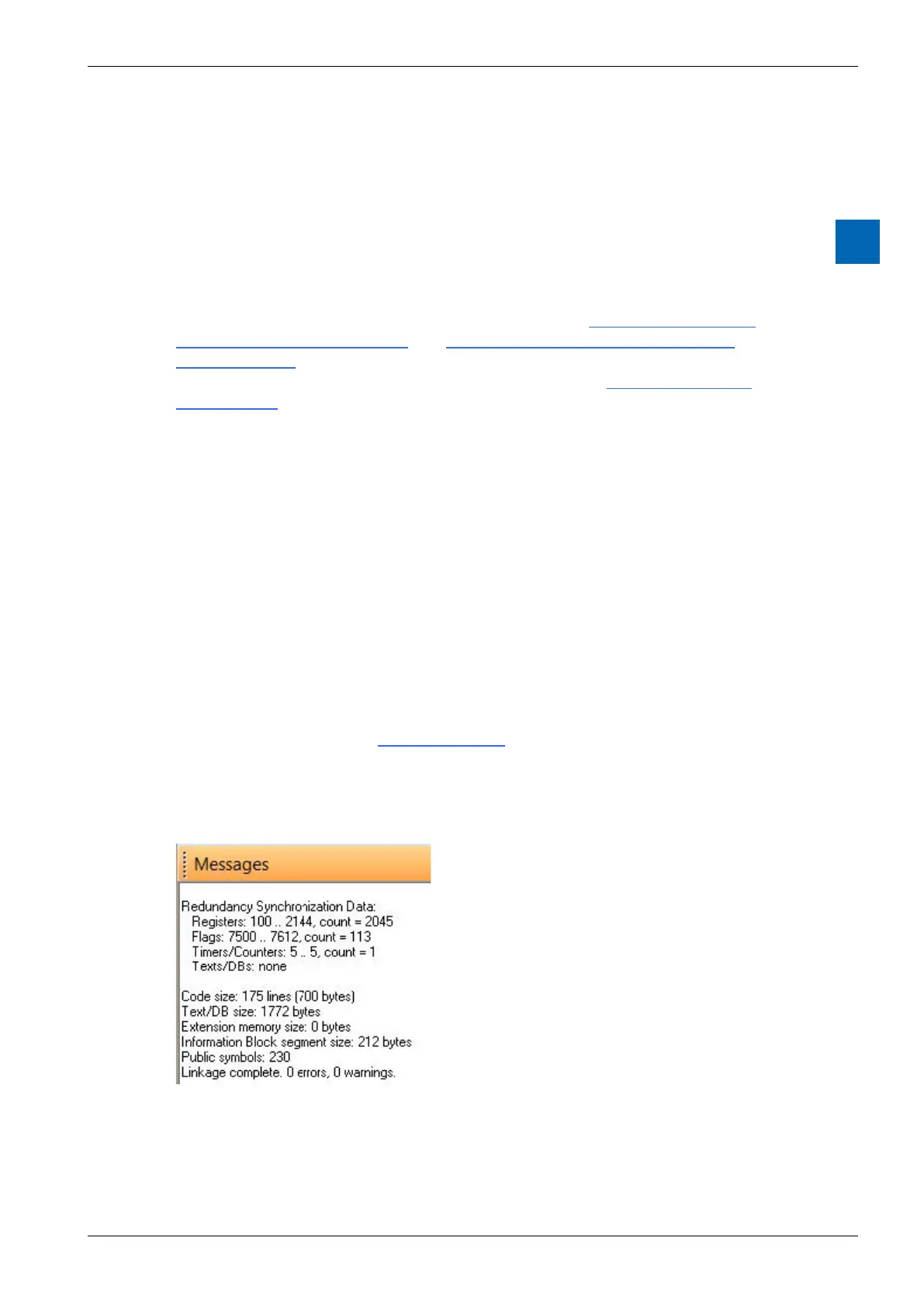
The number and addresses of the media to be transferred are shown in Project
Manager’s “Messages” window when the Redundant device’s program is built:
The worst-case data synchronization time for 16K Flags, 16K Registers, 1600 T/
Cs, 128K RAM Text/DB (200KB data) is about 200ms. But usually the amount of
used media will be much smaller, so the sync time will be faster.


 To Next Page