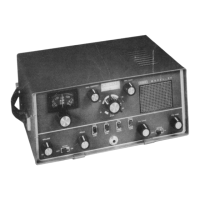
SBE SB-36 OPERATION MANUAL
6. 0 MAINTENANCE
6. 1 INTRODUCTION
This section contains general information for use in preventative or
corrective maintenance, troubleshooting, component replacement and
troubleshooting aids. This section is not intended to contain information
necessary for major repair of the SB-36, however, information
contained herein may be useful in minor corrective maintenance.
6.2 PREVENTATIVE MAINTENANCE
6.2.1 General
Preventative maintenance consists of cleaning, visual inspection,
lubrication, etc. Preventative maintenance performed on a regular basis
may prevent breakdown and improve reliability.
The SB-36 Transceiver should be cleaned as often as operating
conditions require. Accumulation of dirt in the instrument can cause
overheating and component breakdown. Dirt on component acts as an
insulating blanket and prevents efficient heat dissipation. It also
provides an electrical conduction path.
CAUTION: Avoid the use of chemical cleaning agents which may
damage the plastic used in various components in the transceiver.
6.2.2 Cover Removal
Reprove the 20 Phillips Head Screws securing the top and bottom
cover to the transceiver. The top cover may then be removed and the
transceiver may be lifted free of the bottom cover.
6.2.3 Cleaning
A. Exterior. Loose dust accumulated on the outside cover of the SB-36
Transceiver and Power Supply can be removed with a soft
cloth or squall paint brush. A paint brush is particularly
useful for dislodging dirt on and around front panel
controls.
B. Interior. Dust in the interior of the transceiver should be removed
occasionally due to its electrical conductivity under high
humidity conditions. The best way to clean the interior is to
blow out the accumulated dust with dry, low velocity air. A
NoobowSystems Lab. Tomioka, Japan 2003 http://www.noobowsystems.com/ Page 30 / 56



 To Next Page