4.1
SECTION 4 • BILGE & UNDERWATER GEAR
220 Select
ANCHOR
NAV
COCKPIT
BILGE
PUMP
BILGE
BLOWER
HORN
LIGHTS
ACCY
WIPER
THRU-HULL
EXHAUST
1. BILGE
A. FUEL & OIL SPILLAGE
Regulations prohibit discharging fuel or oily waste
in navigable waters. Discharge is defined as any
action which causes a film, sheen or discoloration
on the water surface, or causes a sludge or emulsion
beneath the water surface. A common violation is
bilge discharge. Use rags or sponges to soak up
fuel or oily waste, then dispose of it properly ashore.
If there is much fuel or oil in the bilge, contact a
knowledgeable marine service to remove it. Never
pump contaminated bilge overboard.
Fill fuel tank less than rated capacity. Allow for fuel
expansion.
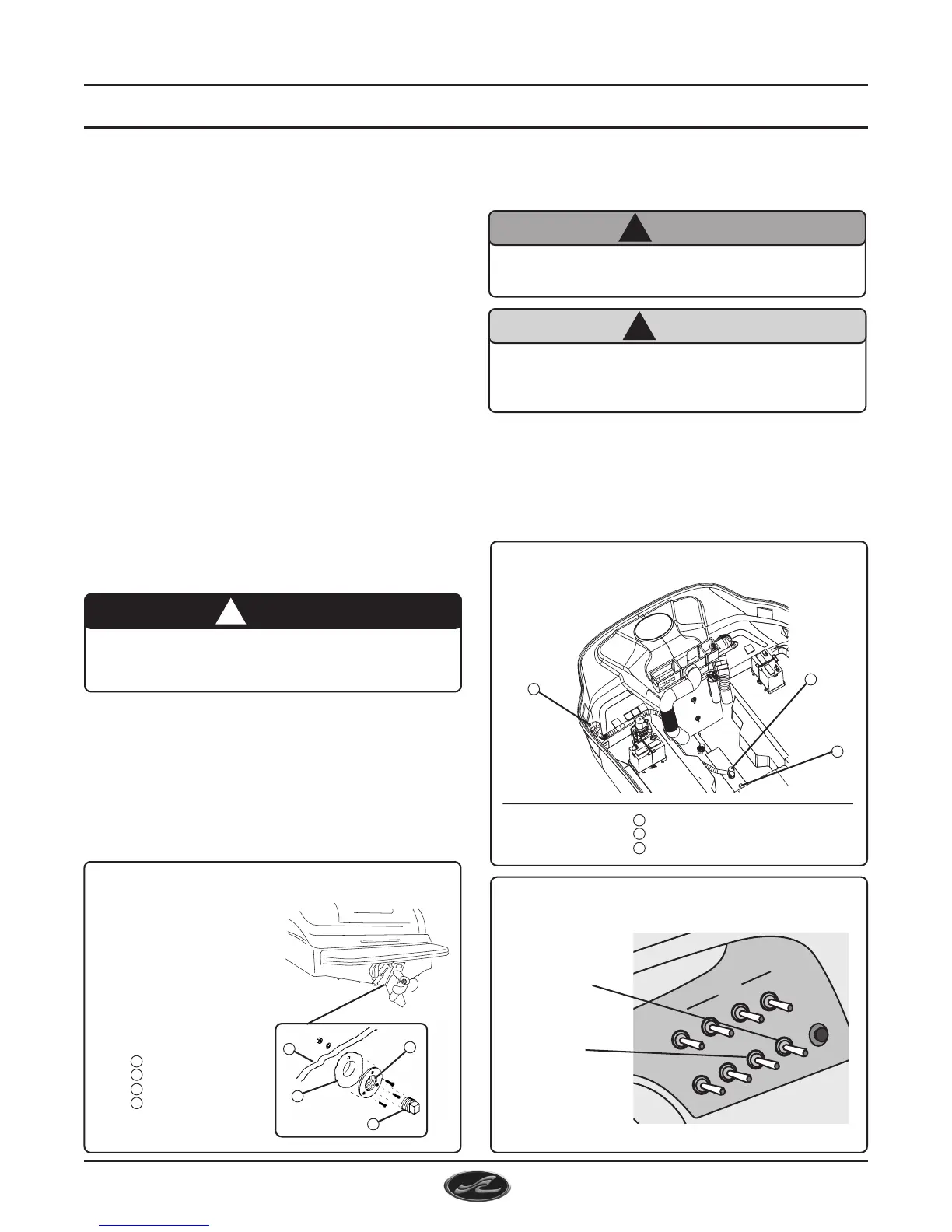
B. DRAIN PLUG
The bottom of the engine compartment is called
the “bilge”. It is the lowest and inner part of the hull.
Water and other liquids will collect here.
After removing your boat from the water, unthread
the drain plug to drain the bilge.
DRAIN PLUG
(FIG. 4.1.1)
C. BILGE PUMPS
A bilge pump and float switch are located in the
bottom of the bilge. The bilge pump is activated from
the switch panel located on the helm.
SINKING HAZARD – Ensure the bilge pumps are
operating properly.
! WARNING
Run bilge pumps in the manual position only as
long as necessary to remove water. Running bilge
pumps dry can damage the pump motor.
! CAUTION
! DANGER
Install and tighten drain plug before launching boat.
Boat will sink if drain plug is not in place and tight.
BILGE PUMP AND FLOAT SWITCH
(FIG. 4.1.2)
BILGE PUMP AND BILGE BLOWER SWITCH
(FIG. 4.1.3)
BILGE BLOWER
BILGE PUMP
TRANSOM HULL
URETHANE CAULK
DRAIN PLUG
GARBOARD DRAIN
A
B
C
D
A
B
C
D
A
B
BILGE PUMP
FLOAT SWITCH
THROUGH-HULL DISCHARGE
A
B
C
C


 To Next Page