INSTALLATION
MANUAL
Section 3: COOLING INSTALLATION
3.1 Precautions
• Installer is responsible for supplying a dedicated sea water pump and associated
plumbing. Sea water connections on the Seakeeper heat exchanger mate with ¾ inch (19
mm) hose.
• An output is available from motor drive to power and automatically control seawater pump.
This pump must operate on 230 VAC single phase and consume less than 5 amps. Pumps
requiring other voltages or higher current can still be controlled by using this supply from
motor drive to trigger an installer-supplied contactor, but a separate source of power must
be provided.
• A self-priming sea water pump (customer/installer supplied) may be required due to
installation location to maintain water flow in all underway conditions where cavitation near
the intake may occur and potentially cause an air-lock condition restricting sea water flow
to the heat exchanger.
• Maximum sea water pressure in heat exchanger is 20 psi (1.4 bar)
• Seawater flow requirement through heat exchanger is 4 GPM (15.1 LPM) minimum
and 8 GPM (30.3 LPM) maximum under all operating conditions of the boat. When
sizing sea water pump, installer should factor in losses for raw water plumbing. In addition
to initial operation at dock, new Seakeeper installations should be checked to be within
the flow requirements while vessel is at speed. Flows higher than 8 GPM (30.3 LPM) could
affect heat exchanger life.
3.2 Adding Coolant
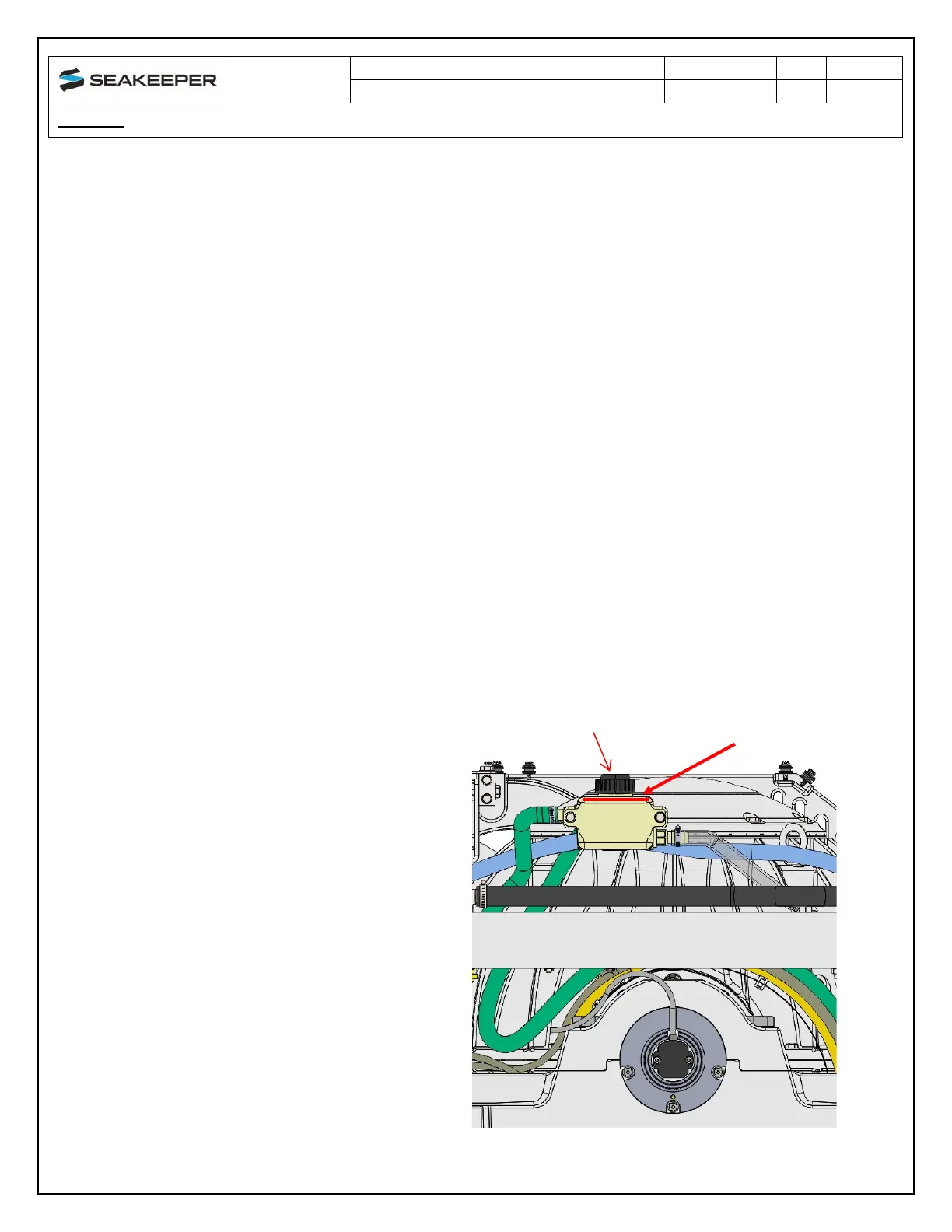
1) Cooling system is filled to proper level
when shipped, with a mixture of 50%
ethylene glycol and 50% distilled
water. The reservoir and clear tube
between heat exchanger and reservoir
should be filled with green coolant
mixture. If level has dropped, check for
evidence of leaks at all connections
before adding fluid as described below.
If coolant is at the correct level, skip to
sea water connection in section 3.3.
VENT CAP
Correct Coolant Level
FIGURE 3 – SEAKEEPER 9 COOLANT LEVEL


 To Next Page