Page 2 of 23
FRAME PREPARATION
CAUTION: Do not face or ream the bottom bracket shell! This can possibly prevent proper installation of the crank. Your Specialized
frame does not require any bottom bracket shell pre-installation preparation, as all surfaces have been precisely machined to specific
tolerances at the factory for proper interface with the S-Works Carbon crankset.
WARNING! Great care should be taken to not damage carbon fiber or composite material. Any damage may result in a loss of structural
integrity, which may result in a catastrophic failure. This damage may or may not be visible in inspection. Before each ride, and after any
crash, you should carefully inspect your bicycle for any fraying, gouging, scratches through the paint, chipping, bending, or any other
signs of damage. Do not ride if your bicycle shows any of these signs. After any crash, and before you ride any further, take your bicycle
to a Specialized Authorized Dealer for a complete inspection.
FORK PREPARATION
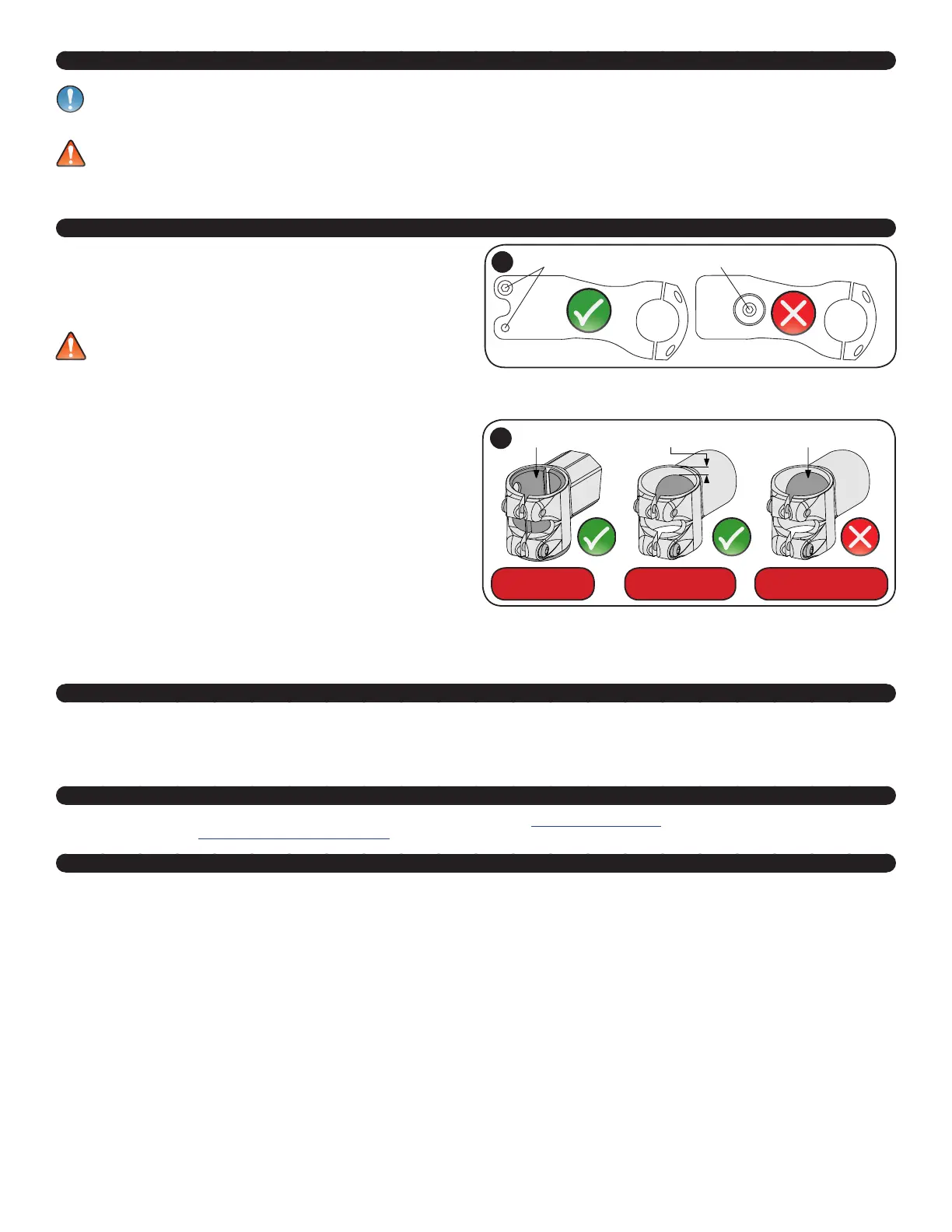
External slotted clamp
Internal Wedge
1
Inspect the fork and stem to ensure that there are no burrs or sharp edges
that can damage the surfaces in contact with each other. Remove any burrs or
sharp edges using fine grit sandpaper.
All edges of the stem in contact with the steerer tube should be rounded out to
eliminate any stress points.
WARNING! Burrs and sharp edges can damage the carbon and
alloy surfaces of the components. Any deep scratches or gouges
in the stem or fork can weaken the components.
NOTE: Specialized recommends using an external slotted clamp style stem. Internal wedge clamp style stems can cause damage to the steerer tube if
improperly installed (Fig. 1).
Specialized
multi-position stem
(with shim)
Non-Specialized-
branded stem with large
steerer tube bore
Specialized
SL stem with large
steerer tube bore
Full contact with
steerer tube
SL stem, with tested
surface area
Large hole, limited
surface area
2
SPECIALIZED BRANDED STEMS:
Specialized multi-position stems are equipped with a shim and offer a near-
continuous surface contact, which helps to evenly distribute loads (Fig. 2).
Specialized carbon road stems and Barmac Systems have built-in continuous
surface contact, which helps to evenly distribute loads.
Specialized SL stems with large bore holes are specifically designed in
conjunction with Specialized forks with carbon steerer tubes, to ensure proper
load distribution.
NON-SPECIALIZED BRANDED STEMS:
Specialized recommends against the use of non-Specialized-branded stems with
large bore holes in contact with the steerer tube. Large bore holes reduce the
clamping surface area and may concentrate the load onto the carbon steerer tube
in an unsafe manner.
As we cannot test every combination, Specialized does not warrant the use of non-Specialized branded stems with Specialized forks (carbon steerer tubes) and
Specialized Carbon steerer tube plugs, unless specified as original equipment by Specialized. Specialized hereby disclaims all warranties, including the warranties of
fitness for particular purpose and merchantibility.
SEATPOST PREPARATION
Remove all burrs and square edges from the seat tube and seatpost surfaces in contact each other. These edges and burrs can dig into the material,
compromising the strength of the carbon. (Fig.2).
Remove any grease from the internal surface of the seat tube. Composite seatposts are non-metallic, they cannot seize in the seat tube. Applying grease
reduces the friction that is critical to proper seatpost grip.
SUPPLEMENTAL DOCUMENTATION
For additional instructions, please refer to the Carbon Crank Instruction Guide IG0338 and techdocs.shimano.com for all Shimano guides. Shiv installation
videos are also available at http://servicevideos.specialized.com.
WARRANTY
For the complete warranty provisions, please refer to www.specialized.com.



 To Next Page