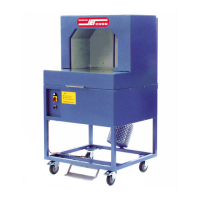
Siebeck GmbH Translation of the original operating manual jet_in_bed_0315
Seite 18
Faults and their causes
Never rework the surface of the twine button housing! This
surface has an exactly specified contour. The notch is intentional
and has not been created by wear. Only ever make the necessary
settings by adjusting the string brake and twine button spring.
1. Threading: Make sure that threading has been performed properly. The
string taking the wrong course is the most common cause of string breaks
(see "Threading diagram" on pages 22-24).
2. String: The machine is set to a certain string thickness. Always use
the same quality and thickness of string in order
to achieve the best results..
a) String, which is too weak often breaks on the twine button
instead of being pulled out without hindrance
b) If the string is too thick, it will not be released by the knotter
c) String, which is too thin causes a loose knot
3. Twine button:
If you are using a good quality of string of the correct
thickness and it still breaks and leaves behind residual fibres in the twine
button, this is generally caused by excessive spring tension on the twine
button.
Reduce the spring tension. Make sure that the setting wheel re-engages
properly and the retainer screw is tightened.
4. String tension:
You achieve the best results with an even, smooth
string brake setting. Check the setting by pulling out a few metres of string
from the tying arm tube. You can change the string tension by turning the
knurled nut on the string brake
Every person on the user's premises given the task of setting
up, commissioning, operating, maintaining and repairing this
machine must have read and understood this operating
manual, and in particular the chapter "Safety".


 To Next Page