㧉
␂㧉
抏⒉
䫽帳
㡐恾
恾
投♧
戢⒉
㟔椫
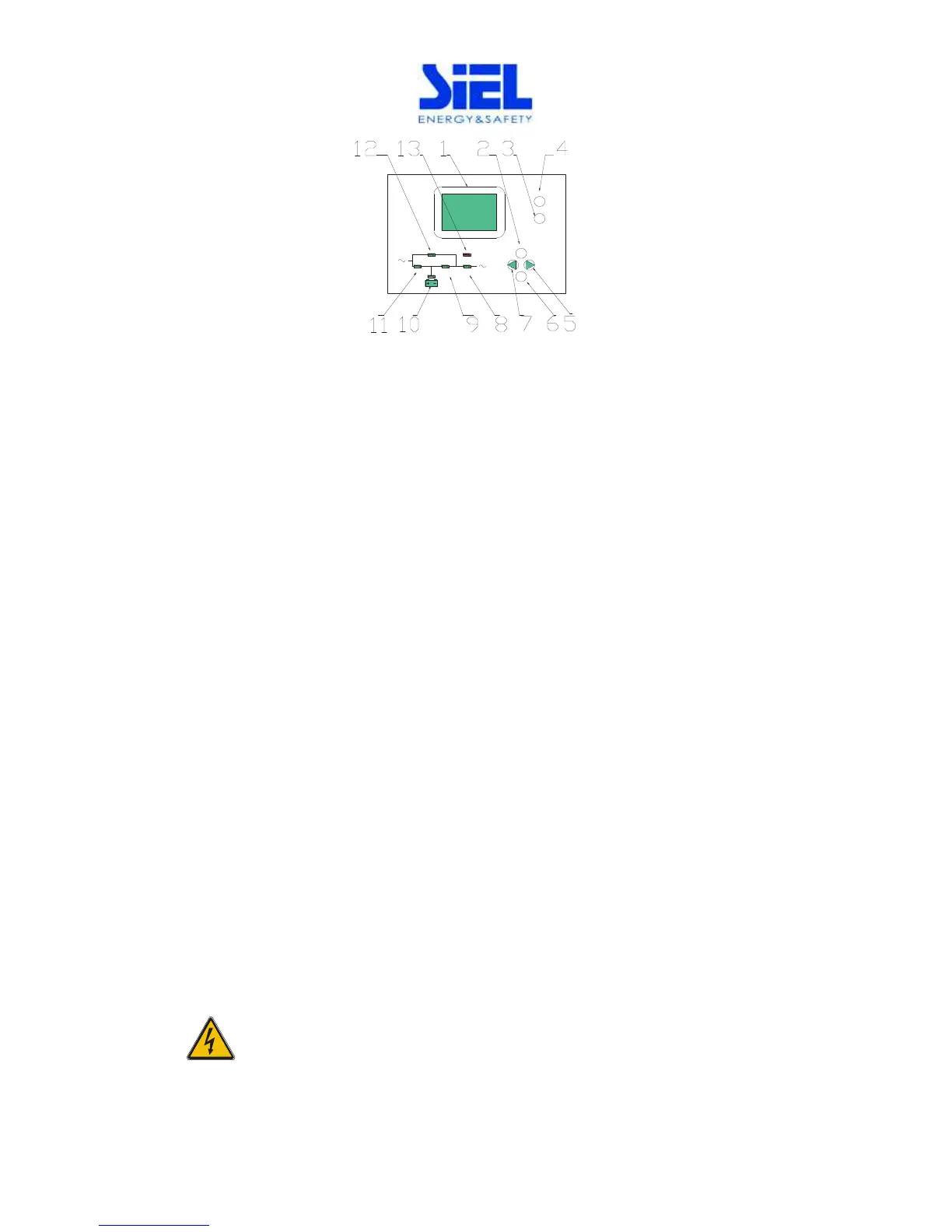
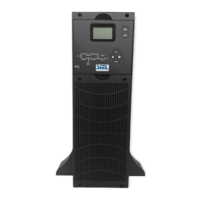
LCD control panel introduction
᧤1᧥LCD screen ᧤2᧥ESC ᧤3᧥OFF button ᧤4᧥ON button ᧤5᧥forward button
᧤6᧥Enter᧤7᧥backward button ᧤8᧥Output Indicator ᧤9᧥Inverter Indicator ᧤10᧥
Battery Indicator ᧤11᧥Mains (AC) Indicator᧤12᧥Bypass Indicator ᧤13᧥Fault Indicator
3.4 Installation notes
ٟPlease place the UPS in a clean, stable environment, avoid the vibration, dust,
humidity, flammable gas and liquid, corrosive objects. To avoid from high room
temperature, a system of room extractor fans is recommended to be installed. Optional air
filters are available if the UPS operates in a dusty environment.
ٟThe environment temperature around the UPS should keep in a range of 0Ԩᨺ40Ԩ. If
the environment temperature exceeds 40Ԩ, the rated load capacity should be reduced by
12᧡ per 5Ԩ. The max temperature can't be higher than 50Ԩ.
ٟIf the UPS is dismantled under low temperature, it might be in a condensing
condition.The UPS can't be installed unless the internal and external of the equipment is
fully dry. Otherwise, there will be in danger of electric shock.
ٟBatteries should be mounted in an environment where the temperature is within the
required specs. Temperature is a major factor in determining battery life and capacity. In a
normal installation, the battery temperature is maintained between 15°C and 25°C. Keep
batteries away from heat sources or main air ventilation area, etc.
WARNING!
Typical battery performance data are quoted for an operating temperature
between 20°C and 25°C. Operating it above this range will reduce the battery
life while operation below this range will reduce the battery capacity.




 To Next Page